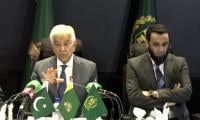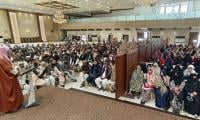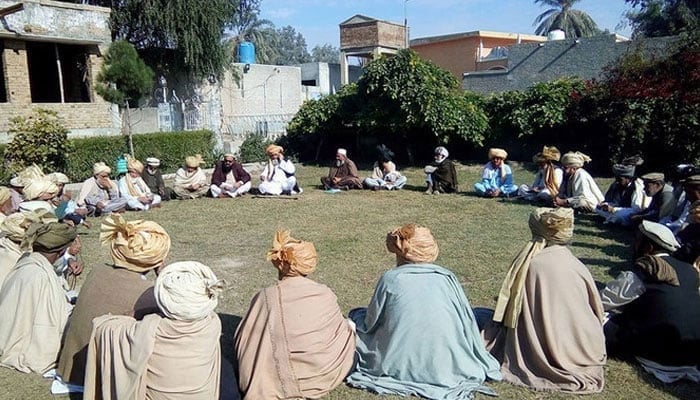
LANDIKOTAL: Khyber political alliance here on Monday convened a jirga to raise voice over the bad governance and deteriorating health and education situation.
A number of political and social leaders, tribal elders, local government representatives and people from various walks of life attended the jirga. The jirga focused on the pressing issues faced by residents of Landikotal and explored possible long-term solutions.
Khyber Political Alliance President Murad Hussain Afridi, Malik Darya Khan Afridi, Tehsil Chairman Shah Khalid Shinwari, Zarbullah, Shakir Afridi, Maulana Azeem Shah, president of the teachers’ union Sharifullah Afridi, Maroof Khan Afridi, Akhtar Ali, Sattar Afghan, Farman Shinwari and others spoke on the occasion. Speakers warned that prolonged neglect was pushing the area towards deeper social and economic crisis.
They said the closure of the Pak-Afghan Torkham border had affected the livelihoods of hundreds of thousands of people, resulting in rising poverty, anxiety and social unrest in the region.
Expressing concern over the deteriorating condition of the District Headquarters Hospital, the speakers said the facility lacked basic medical services, forcing patients to go to Peshawar.They noted that effective treatment was largely limited to cough, flu and fever, calling it a grave injustice to the local population.
Highlighting the education crisis, the speakers said severe shortages of teachers and basic facilities compelled students to sit on mats in classrooms, which they described as unacceptable in the modern era. They warned that failure to address these issues could push the younger generation towards negative activities, with far-reaching consequences for society.
The jirga also expressed grave concern over the acute shortage of clean drinking water.Speakers said residents were facing severe water scarcity, forcing women to fetch water from distant locations by carrying it on their heads, a practice they termed degrading to human dignity. They demanded the implementation of water supply projects.
The speakers stressed that development schemes should be initiated on a collective rather than individual basis to ensure equal benefits for the wider population and sustainable regional development.