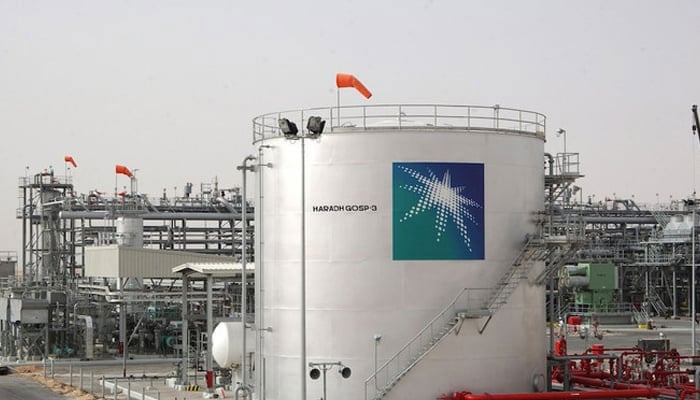
Power has been centralised — yet capital is not moving. The Saudi Aramco-Pakistan Refinery, a $10 billion greenfield project at Gwadar, was announced and stalled. The Khalifa Coastal Refinery (KCR), a $6 billion, 300,000 bpd project, was announced and stalled. The Pakistan State Oil-Frontier Works Organisation refinery, a $4 billion project, was announced and stalled. Each stalled for a reason — and all for the same reason.
The Saudi Aramco refinery stalled over uncertainty around guaranteed returns, tax and tariff concessions, and location economics. The KCR stalled due to disputes over pricing formulas and tax incentives. The PSO-FWO refinery failed to secure long-term pricing certainty. The pattern repeats beyond refining.
Saindak expansion and downstream processing ($3 billion) is stalled. Thar coal downstream gasification ($5 billion) is stalled. Copper, gold and chromite blocks in Chagai and Zhob ($12 billion) are stalled. That is nearly $20 billion in frozen capital — stalled by provincial-federal conflict, unclear royalty regimes, and tax ambiguity. Power has been gathered. Command has not been exercised.
Gwadar Free Zone Phase II ($4 billion) is stalled. Port Qasim downstream petrochemicals and logistics parks ($5 billion) are stalled. Rail freight modernisation (ML-1 private participation; non-Chinese, $4 billion) is stalled.
All stalled for the same reason. Weak dispute resolution. Land acquisition delays. Tariff and access uncertainty.Put together, the picture is stark. Outside Reko Diq, mining projects worth $15–20 billion remain stalled. Transmission and grid investments of another $8=10 billion are frozen. Ports and logistics projects representing $10-12 billion have failed to reach financial close. In aggregate, $33-42 billion of capital is stranded — not for lack of resources or interest, but for lack of command clarity.Red alert: Capital keeps knocking. Pakistan keeps it waiting.
We must establish a National Capital Command (NCC) — a single capital authority with statutory control over land acquisition, tariffs, tax concessions, sovereign guarantees, and, remember, unity of command wins battles — capital is no different.
We must create a special commercial court for strategic projects — dedicated benches for projects above a billion dollar threshold. Judges must be selected for commercial competence, not seniority. These courts must have binding timelines (90-120 days) — no endless stays.
We must issue ‘contract sanctity orders’ — once financial close is achieved, contracts must be inviolable. No retroactive tariff changes. No unilateral reopenings. No post-signing policy reversals.
Caution: Centralisation creates a narrow execution window — not a permanent condition. Economic history shows that markets grant regimes 12-24 months of benefit; beyond that, delays are punished and the risk premium returns.
Power has been centralised ——yet capital is not moving. Capital moves when command is clear, contracts are final, and delay is punished. Until power is exercised over land, tariffs, courts, and guarantees with the same discipline used on the battlefield, billions will remain stranded.
The writer is an Islamabad-based columnist.