When President James Monroe articulated his doctrine in 1823, European powers viewed it as a defensive warning that the Western Hemisphere was no longer open for colonial expansion.
The doctrine was meant to protect the sovereignty of newly independent Latin American states. However, two centuries later, the doctrine seems to have undergone a quiet transformation. The US adventurism in Venezuela resembles an assertion of American dominance rather than an act of protection against external interference. The old guard is the new insurgent.
The current confrontation between Washington and Caracas did not emerge out of thin air. Venezuela has been a strategic US partner providing the global superpower with much-needed energy security. Venezuela served as a guarantor of American oil interests in the region and was a significant player in the political economy the US had developed around this precious global commodity.
However, this strategic relationship changed after the rise of Hugo Chavez and Nicolas Maduro, two assertive Venezuelan statesmen who steered the OPEC giant away from American interventionism. Their governments openly challenged US influence and aligned with rival powers, attracting economic sanctions and diplomatic isolation.
The Monroe Doctrine evolved from a deterrent to European colonialism into a justification for US intervention in Latin America. It gave Washington the license to intervene under the excuse of maintaining order. During the cold war, the doctrine underpinned coups and regime changes from Guatemala to Chile and though the ideological justifications shifted over time, the underlying assumption remained consistent: Latin America remained within an exclusive US sphere of influence. The rhetoric surrounding Venezuela may have changed, but the power logic remains the same. Where past interventions were justified in the name of anti-communism, today’s language emphasises human rights and democratic restoration.
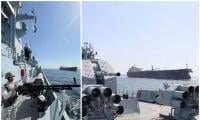
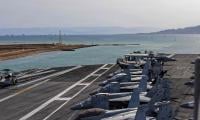
Today, Venezuela has fallen victim to this doctrine, as the US justifies its interventions through several arguments defending democracy, combating drug trafficking and protecting regional security. However, these justifications sit uneasily alongside the methods employed. Consequently, broader economic sanctions have devastated Venezuela’s economy, worsening humanitarian suffering without producing effective political reforms. Naval interdictions and oil seizures have also effectively served as stumbling blocks. Orchestrated through military force, these actions have done more harm than good.
The authoritarian governments elsewhere rarely elicit comparable responses, particularly when they fall outside Washington’s strategic neighbourhood. The sovereignty, it appears, is defended vigorously when violated by rivals, but treated as conditional when applied to smaller states central to American interests. Unilateral action, regardless of moral justification, undermines the sanctity of the international legal order that the US claims to uphold globally.
Beyond legal concerns, this act has several regional consequences. As Latin America has long struggled to assert autonomy amid great-power rivalry, US sanctions against Venezuela risk reinforcing historical mistrust and validating fears that regional sovereignty remains negotiable. Rather than isolating Caracas, such actions may push other states to hedge their bets, deepening ties with China and Russia as counterweights to American dominance.
Ironically, this dynamic weakens the influence Washington seeks to preserve. History shows that power exercised without legitimacy rarely produces stability. A region treated as a geopolitical backyard is unlikely to respond with trust or cooperation. Instead, it will accelerate the erosion of US authority in its own hemisphere. In an increasingly multipolar world, unilateralism is not only controversial but strategically short-sighted. At the same time, none of this is to deny Venezuela’s internal failures, which include democratic backsliding, economic mismanagement and human rights abuses.
These are real and serious issues in Venezuela. Yet, acknowledging these realities does not automatically imply an endorsement of external coercion as the primary solution. History suggests that regime change imposed from outside rarely produces a durable democracy. More often than not, such moves are counterproductive as they destabilise societies and leave them more paralysed than before.
At its core, the Venezuelan crisis forces a reckoning with an uncomfortable truth. The Monroe Doctrine was never fully abandoned, but it was merely rebranded. It is not wrong to say that the language of empire has been replaced with the language of norms, but the hierarchy of power endures. Henceforth, the US continues to reserve for itself a decisive role in shaping the political futures of its neighbours, often without their consent and sometimes without legal sanction.
If the doctrine continues to gain traction, the main question is not whether Venezuela meets democratic standards or fails, but whether it raises international concerns about power and its misuse, specifically, whether Latin America, two centuries after independence, is still permitted full sovereignty. In answering that question, the US must decide whether it wishes to lead by example in a rule-based order or revert to a past in which power, rather than principle, determined whose rules matter.
Asad Ejaz Butt teaches economics at the University of Massachusetts in Boston.
Rabia Aslam is an engineer with a strong passion for international affairs.