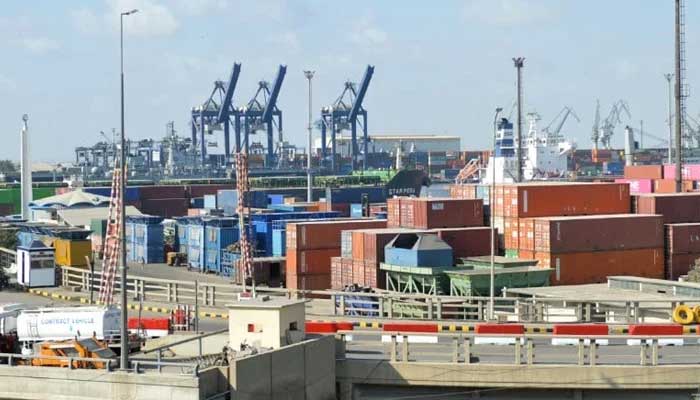
The renewed call by a prime ministerial panel, led by the minister for planning and development, for “urgent ease of doing business reforms” to more than double Pakistan’s exports to over $60 billion within three years is, on its face, ambitious and necessary.
Yet for anyone who has followed Pakistan’s economic policy discourse over the past two decades, the language is depressingly familiar. Committees are formed, consultations are held, constraints are identified and grand targets are announced for the entire exercise to dissolve into another chapter of unimplemented recommendations once political attention shifts elsewhere. The fact that this panel was constituted specifically to chart an exit strategy from the IMF programme only heightens the irony, because Pakistan’s repeated returns to the Fund are themselves the cumulative outcome of these unfulfilled reform cycles.
The panel’s conclusion that Pakistan’s current economic structure cannot deliver sustained progress for a population of over 250 million due to cross-cutting constraints affecting priority export sectors and drivers is not controversial. On the contrary, it is widely accepted. High and volatile energy costs, policy unpredictability, a distorted and inequitable tax regime, logistics inefficiencies, weak trade facilitation, institutional fragmentation and an excessive regulatory burden have been exhaustively documented by successive governments, donor agencies, multilateral institutions, chambers of commerce and independent analysts. What is striking is not the accuracy of the diagnosis, but the state’s persistent inability or unwillingness to act on it.
This persistence points to a deeper problem. Pakistan’s economic malaise is not rooted in analytical failure but in governance failure. The country does not suffer from a shortage of policy papers or reform blueprints. It suffers from a political economy that systematically rewards delay, discretion, and rent extraction while penalising rule-based reform. Every government promises to fix energy pricing, broaden the tax base, rationalise regulation and improve export competitiveness. Every government then retreats in the face of vested interests that benefit from the status quo. In this context, the panel’s recommendations risk becoming yet another entry in a long list of ignored prescriptions.
Against this backdrop, the panel’s implicit suggestion that restrictive IMF financing is a major reason for the government’s inability to implement aggressive growth-enhancing reforms is deeply misleading. It shifts responsibility away from domestic policy failures and onto an external scapegoat that is politically convenient but analytically weak. IMF programmes are primarily designed to restore macroeconomic stability, not to engineer export-led growth. They impose fiscal discipline, seek to contain balance-of-payments pressures, and attempt to anchor expectations in an economy prone to boom-bust cycles. To blame the IMF for the absence of structural reform is to confuse stabilisation with stagnation.
In fact, the IMF does not prevent governments from reforming their economies; it often creates the very conditions that make reform unavoidable. When the Fund demands higher tax revenues as a share of GDP, it does not prescribe that governments should squeeze the already documented segments of the economy. It implicitly encourages broadening the tax base, reducing exemptions and tackling elite capture. When it emphasises fiscal consolidation, it does not mandate cuts in development spending; it leaves governments with the policy space to reduce wasteful current expenditure, loss-making state-owned enterprises, and inefficient subsidies. That Pakistan consistently chooses the politically easiest but economically damaging options is not an IMF imposition it is a sovereign choice.
The IMF also does not obstruct improvements in the business climate. On the contrary, it has repeatedly underscored the need for predictable policies, transparent regulation, and a level playing field. These are precisely the conditions Pakistan has failed to institutionalise. Businesses do not hesitate to invest or export because of IMF conditionality; they hesitate because of arbitrary taxation, sudden policy reversals, delayed refunds, unreliable energy supply, inconsistent enforcement and a regulatory environment that treats discretion as a feature rather than a flaw. None of these is dictated by Washington; they are produced in Islamabad.
The government’s tendency to blame IMF programmes for economic stagnation also serves a more insidious purpose: it obscures the ruling elite’s reluctance to dismantle entrenched rent-seeking structures. Pakistan’s economy is riddled with politically protected monopolies, cartels and preferential arrangements that distort prices and suppress competition. Energy pricing remains opaque because it facilitates cross-subsidies and inefficiencies. Tax exemptions persist because they benefit powerful groups. Import barriers and regulatory hurdles endure because they protect domestic rent-seekers at the expense of exporters and consumers. Genuine reform would threaten these interests and that is where political resolve falters.
This is why the call for ‘ease of doing business’ reforms often rings hollow. Improving Pakistan’s ranking on paper by tweaking procedures is not the same as creating a genuinely rules-based economy. Investors and exporters care less about slogans and more about enforcement. They want assurance that policies will not change overnight, that contracts will be honoured, that taxes will be predictable and that regulatory decisions will not depend on personal connections. Without these fundamentals, export targets, whether $40 billion, $60 billion or $100 billion, remain aspirational numbers disconnected from economic reality.
The focus on priority export products and drivers also risks missing the forest for the trees. Pakistan’s export stagnation is not merely a sectoral issue; it is systemic. Even competitive sectors struggle because they operate within a dysfunctional ecosystem. High energy costs erode margins. Cumbersome customs procedures delay shipments. Weak logistics increase transaction costs. Fragmented institutions create compliance fatigue. Addressing these issues requires horizontal reforms that cut across sectors, not selective incentives or ad-hoc packages tailored to favoured industries. History shows that such selective approaches rarely produce sustained export growth.
Time is another critical dimension that the rhetoric glosses over. Doubling exports within three years is an extraordinarily ambitious goal even for economies with strong institutions and policy coherence. For Pakistan, where reforms are slow, contested, and often reversed, the target borders on implausible unless accompanied by unprecedented political commitment. Export growth is not switched on by announcements but built through credibility, consistency and cumulative improvements in productivity. These take time, patience and a willingness to absorb short-term political costs for long-term gains.
The broader implication is sobering. As long as Pakistan’s leadership treats reform as a technocratic exercise rather than a political one, outcomes will not change. Committees can diagnose problems indefinitely, but only elected governments can confront vested interests and enforce rules impartially. Blaming external constraints, whether the IMF, global conditions or geopolitics, may provide temporary political cover, but it does nothing to alter the underlying dynamics that keep the economy trapped in low growth and repeated crises.
Ultimately, the choice facing Pakistan is stark. It can continue to recycle familiar rhetoric about exports, self-reliance, and breaking the ‘begging bowl’, while quietly preserving the structures that make such dependence inevitable. Or it can finally walk the talk by committing to a rules-based economic order that prioritises productivity over patronage and competitiveness over convenience. The IMF will come and go; panels will be formed and dissolved. What will endure for better or worse is the quality of domestic governance.
Unless the government demonstrates the political will to implement difficult reforms, create a predictable business environment and dismantle rent-seeking arrangements, the promise of doubling exports will remain exactly what it has always been: an attractive slogan masking an absence of resolve. Without that resolve, Pakistan’s economic trajectory will continue to oscillate between crisis management and unfulfilled ambition, and the rhetoric of reform will remain a substitute for reform itself.
The writer is a trade facilitation expert, working with the federal government of Pakistan.