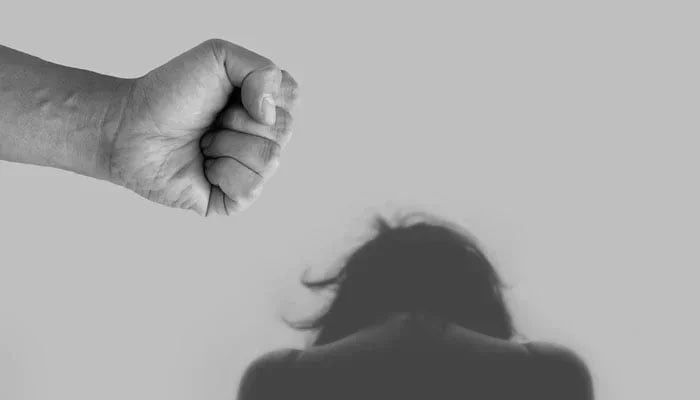
Mardangi, or masculinity, is frequently misunderstood in Pakistan. Instead of being associated with sensitivity, accountability, or respect, it is often linked to domination, repression and manipulation. Acts of violence, intimidation or assault against women are wrongly justified as expressions of mardangi. This misinterpretation is dangerous. We must be clear and unequivocal: violence against women is not mardangi. It is the absence of it.
True masculinity is defined by upholding others’ dignity rather than instilling fear in them. Hitting a woman, silencing her voice or brazenly insisting on marrying an underage girl in violation of the law reflects insecurity, not strength.
Globally, progress on gender equality is facing growing resistance, even as violence against women and girls remains one of the most pervasive human rights violations worldwide. These trends are deeply interconnected. Backlash against women’s rights thrives in environments where power is rigidly gendered and masculinity is defined through control. Gender equality cannot be achieved without fundamentally rethinking how masculinity is taught, rewarded and institutionalised.
It is not enough to acknowledge men as passive allies standing on the sidelines. Rather, it requires their active engagement, including not assuming what women and girls need, but asking, listening and following through with action rather than rhetoric. Investing in men and boys in Pakistan and globally must be done thoughtfully, ensuring it does not become a diversion from women’s rights. On the contrary, it is a necessary strategy to dismantle harmful masculinities rooted in dominance and entitlement.
Men are not born believing in control or superiority; these behaviours are learned. From early childhood, families, schools, media, peer groups, religious narratives and economic systems shape how boys understand power and self-worth. Across regions, boys are often taught to suppress vulnerability, equate strength with authority, and measure their value through economic success. Crying is discouraged. Care work is feminised. Aggression is normalised and misread as confidence. Over time, these lessons harden into social norms that reward control and penalise compassion -- not by accident, but through systems that rarely question how power is exercised.
Yet there is cause for optimism. Mardangi is not innate; it is constructed. And what is constructed can be challenged, deconstructed and transformed. This understanding aligns with UN Women’s global efforts, such as the HeForShe campaign, which recognises that masculinities are learned and shaped by context and can therefore be reshaped. Promoting positive masculinities grounded in care, accountability and equality is not optional; it is essential to preventing violence and advancing and sustaining gender equality.
A growing body of international evidence reinforces this. Unicef research shows that children internalise rigid gender norms as early as age three, long before they can question them. Multi-country studies consistently find that adolescent boys are more likely than girls to endorse unequal gender norms, revealing how ideas of male entitlement take root early. Psychological and sociological research further demonstrates that rigid adherence to traditional masculine norms, such as emotional repression, dominance and control is linked to poorer mental health outcomes and a higher likelihood of using violence to resolve conflict. Gender-based violence, therefore, is not merely an individual failure; it is a predictable outcome of social norms that privilege power over partnership.
These dynamics are particularly visible in Pakistani households. Boys are often raised with both privilege and pressure. They may be excused from household chores yet reminded that they will eventually bear responsibility for family honour and financial survival. They are taught authority and perseverance, while girls are taught compassion and compromise. Emotional expression is discouraged, silence is normalised and vulnerability is framed as weakness.
Over the past year, I have had many conversations attempting to unpack and understand the dynamics of masculinity in Pakistan. In one such conversation, a Pakistani friend from an urban middle-class family reflected: “My father never hit my mother, but he never asked her opinion either or engaged in meaningful discussion”. Years later, he found himself repeating the same pattern, making decisions alone, withdrawing during disagreements and equating leadership with emotional distance. “No one ever taught me how to talk”, he admitted. His experience illustrates a critical point: violence is not only physical. Control, exclusion and fear shape relationships long before a hand is raised.
Economic insecurity further intensifies these risks. Research from the World Bank and the ILO shows that in many societies, including Pakistan, men are socialised to tie their identity almost exclusively to their role as economic providers. When unemployment or financial strain disrupts this role, shame and anxiety often follow. The WHO reports that under conditions of financial stress, men who strongly adhere to rigid masculine norms are significantly more likely to engage in harmful behaviours, including intimate partner violence. Contrary to popular belief, poverty alone does not cause violence; restrictive models of masculinity are a far stronger determinant of how stress is expressed.
This is why laws, response services, and awareness campaigns, while essential, are not sufficient on their own. Survivors must have access to justice, safety and support, and accountability must remain non-negotiable. However, punishment alone cannot prevent violence. Prevention is most effective when boys and men are supported, early and consistently, to understand that respect is strength, care is courage and equality is not a threat.
UN Women’s assessments have identified multiple examples across regions demonstrating how engaging men and boys can contribute to shifts in gender norms. These include HeForShe campaigns in Mexico that mobilised men and institutions to challenge harmful stereotypes; programmes in the Caribbean engaging male perpetrators, associated with reduced intimate partner violence and more fluid gender roles; community dialogue initiatives in Ethiopia bringing men and women together to address leadership and participation; and values-based leadership initiatives in Samoa engaging men, women, and youth to promote respect for women and girls. These examples reflect UN Women’s unique role in translating evidence into scalable, norm-changing action across policy, community and institutional levels.
Evidence from fatherhood programmes shows that when men share unpaid care work, household conflict decreases and relationships improve. Youth initiatives using sports and community platforms demonstrate how boys can be supported to challenge harassment, peer violence and harmful norms. These experiences reinforce a critical truth: violence is learned, but so is non-violence.
Ending gender-based violence will not be achieved by asking women to adapt to unequal systems, nor by treating men as passive supporters. It requires deliberate investment in education systems, media narratives, leadership models and policies that redefine power itself. Men and boys must be supported to reflect on how they have been shaped, how power operates in their lives, and how they can choose differently.
The future of gender equality in Pakistan and beyond depends not only on empowering women, but on confronting and reshaping long-held ideas of manhood. Mardangi, rooted in fear and control, is not strength. Accountability, care and the courage to choose equality are.
The writer is the country representative for UN Women Pakistan.