Millennia ago, Thucydides captured the naked exercise of power with brutal clarity. He said: “The strong do what they can; the weak suffer what they must.” In modern times, this depravity has been baptised as the doctrine of preemptive force.
It has metastasised into a moral inversion; a belief system so fundamentally at odds with the preservation of human life that it can only be described as an abomination. This abomination has done away with the boundaries that once restrained war.
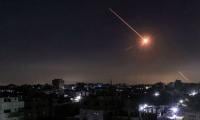
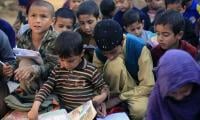
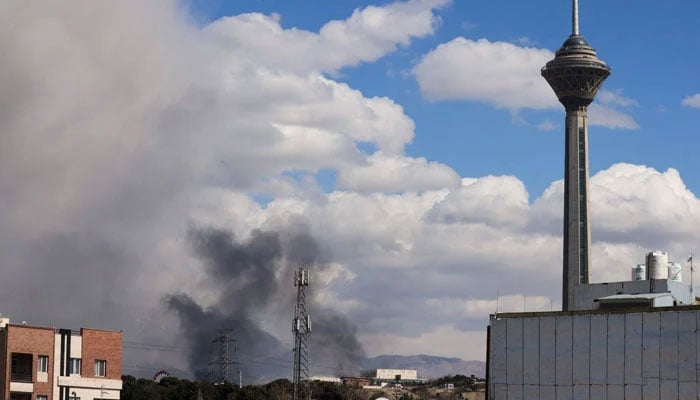
It allows powerful states to strike not in response to an armed attack but in anticipation of one. Suspicion, or rather accusation, becomes proof. Each invocation lowers the threshold for future atrocities. The US-Israel strikes against Iran have been justified under this expanding logic. The onset saw 180 innocent lives, 85 of them children, extinguished when a girl’s elementary school in Minab was bombed. Twenty girls attending their volleyball training sessions met the same fate as a missile slammed into their sports hall.
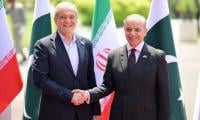
The martyrdom of Ayatollah Ali Khamenei and his family members, including his daughter and grandson, is being widely characterised as a diplomatic ambush. Just 48 hours before the strikes, US and Israeli officials signalled through the Omani mediators that a final draft of a de-escalation agreement was ready for signature.
The Iranian leadership gathered at the Supreme Leader’s headquarters in the Pasteur Street district of central Tehran to review this draft agreement. This was the time when a salvo of precision-guided missiles and bunker-buster bombs hit the location. Experts describe it as a layering technique where consecutive bombs hit the same spot to collapse the building and then strike the ruins to ensure that no one survived. Amongst the ruins, détente and the foundation of global statecraft also lay shattered.
By weaponising the negotiating table, diplomatic engagement has been cast as a lethal security risk. Precedents reinforce this perception. In the early 2000s, Libya’s Muammar Gaddafi renounced his nuclear ambitions by dismantling his nuclear program and re-entering diplomatic engagement with Western powers. A few years later, a Nato-led coalition flew 26,000 sorties to bomb Libya’s military targets, effectively crippling Gaddafi’s ability to resist. Subsequently, the Libyan state fragmented into anarchy. A pertinent fact: Iran is not Libya. The lesson was not lost on Pyongyang. North Korea accelerated and consolidated its nuclear capability. How can one blame it for calculating that possession of a credible deterrent offered greater protection than compliance or negotiations?
One state dismantled and fell, while another armed itself with nuclear weapons and endured. For leaders assessing existential risk, the conclusion is obvious. Preemption, paradoxically, breeds the very conditions it claims to forestall.
Preemptive logic has already left a deep scar across the world. The invasion of Iraq was defended as necessary to neutralise a looming threat. The state was dismantled on concocted claims of Iraq’s weapons of mass destruction. Hundreds of thousands perished. In a 1996 interview, Madeleine Albright was asked whether the death of half a million Iraqi children due to sanctions was worth the cost. Her chilling response was “yes - the price was worth it”. This preemptive doctrine has been invoked repeatedly across Muslim countries.
Libya, Syria, Afghanistan and Yemen saw strikes, interventions and occupations cloaked in the garb of preventing a greater catastrophe. Infrastructure was razed to the ground; civilian populations were decimated, with generations growing up amid displacement. In practice, non-state actors multiplied amid chronic insecurity. Objections from the UN regarding the prohibition on the use of force against a sovereign state are disdainfully flitted away. The unmistakable message is that rules are not meant for the powerful.
Last month, US Ambassador to Israel Mike Huckabee was asked about Greater Israel in an interview. The Bible describes it as extending from the Nile River in Egypt to the Euphrates in Iraq and Syria. When asked if it would be acceptable for Israel to claim this entire area, Huckabee replied, “It would be fine if they (Israel) took it all”. In the same interview, he also explicitly stated that “Area C (60 per cent of the West Bank) is Israel.” This is an endorsement of the full annexation of the same.
Giving carte blanche to a genocidal Netanyahu for expanding Israel is a deadly convergence of preemptive doctrine and ideological absolutism. It lays bare a moral dichotomy. It is Islam that is condemned and persecuted endlessly as being inherently violent, expansionist and theocratic.
The cumulative effect of these contradictions is corrosive. International law was designed to narrow the circumstances under which force could be used. If anticipation or accusation becomes the trigger, every non-compliant rival becomes a candidate for preemptive neutralisation.
If negotiations do not shield states from attack and compliance does not ensure security, then the incentive shifts toward deterrence at any cost. In the space for diplomacy, hardliners are strengthened and moderates stand discredited. The human toll remains the most enduring consequence. Its reverberations are felt over generations. Children do not draft strategic doctrines and families do not formulate deterrence theories, yet it is they who have to live with the tragic aftermath.
In a world of nuclear weaponry and compressed decision cycles, miscalculation carries enormous risks. Each preemptive strike establishes precedent. Each precedent widens the permissible scope of force, as we see in the dangerously ever-expanding present situation. Escalation becomes easier to justify and impossible to contain.
Thucydides’ words endure only because international law and covenants have been subordinated to power. Now, the primal hierarchy substitutes human equality. Dictated survival is enforced rather than negotiated consensus.
If war depends on the self-judgment of those most capable of violence, peace becomes an abstraction that is invoked rhetorically or dismissed haughtily. The tragedy is that the price is paid by those who never chose to fight.
The writer is a freelance contributor. He can be reached at: [email protected]