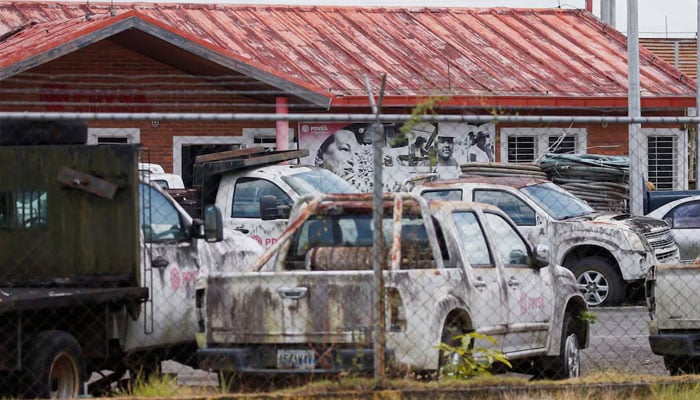
WASHINGTON: Oil executives weighing a potential investment in Venezuela’s fields may want to check out the view from space. Satellites have detected enormous amounts of methane billowing from the country’s abandoned oil rigs,
rusty pipelines and other dilapidated energy infrastructure, foreign media reported.
The emissions not only reflect potential lost revenue — they’re also likely to give US oil majors pause about operating in Venezuela. That could leave smaller, less experienced companies and private equity firms to attempt to fulfill US President Donald Trump’s plan to revive the nation’s heavy crude output after capturing President Nicolas Maduro. Recurring emissions are a “red flag” to oil and gas operators, said Clayton Nash, director of strategic development at Tegre Corp, a Colorado-based engineering and design consultancy. “That’s one way that you’re going to know that you’ve got facilities that are not operated well.”
Roughly 13 billion cubic meters of Venezuela’s natural gas is flared, vented or leaked into the atmosphere every year, wasting about $1.4 billion of potential revenue, according to Capterio Ltd, a British company that helps to reduce such emissions. About a quarter of Venezuela’s gas output is lost to the atmosphere, the highest rate in the world and nearly 10 times above the global average, according to a satellite analysis published last month in Nature Communications. All that methane is dangerous: The greenhouse gas is 80 times more potent than carbon dioxide at warming the planet over a 20-year period.
Much of Venezuela’s methane emissions problem stems from natural gas that is produced alongside more valuable oil. Petroleos de Venezuela SA, the state-run oil company, doesn’t have enough pipelines, storage facilities or a liquefied natural gas export facility to capture and transport the extra fuel. So the gas is flared, vented or simply leaks away.