ALPURI: Reports about the possible imposition of income tax, the continuation of sales tax and other fiscal measures in Shangla district and across the Malakand Division, including Kohistan, have triggered concern.
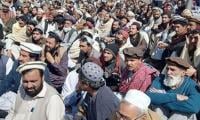
The public action committees, political party leaders, traders, business and social organizations, legal experts and economists belonging to Malakand Division believed that any such steps would amount to another grave injustice to the people of the area.
They said that these unilateral decisions would not only harm public interest but would also constitute a clear violation of the historic agreement made at the time of the merger of the former Princely State of Swat with Pakistan.
According to stakeholders, the people of Malakand Division were in no position to bear any additional tax burden, as trade and business activities were already extremely weak due to years of instability and recurring natural disasters.
Experts pointed out that a 10 percent sales tax had already been imposed in the region, the negative effects of which were clearly visible on daily life, businesses and the local economy.In such circumstances, discussions about imposing income tax were being termed as placing further economic pressure on a region that suffered militancy, military operations and natural calamities for more than two decades.
Elders recalled that at the time of the merger of the Princely State of Swat into Pakistan in July 1969, a formal written agreement was reached.Under this agreement, the then State of Swat comprising present-day Malakand Division, including Kohistan was declared a tax-free zone for 100 years.
They emphasized that this was not a temporary concession but a binding legal and moral commitment, clearly stating that no direct taxes would be levied on the people of the region.In return, the state and later the government of Pakistan were to ensure the provision of basic facilities, they added.