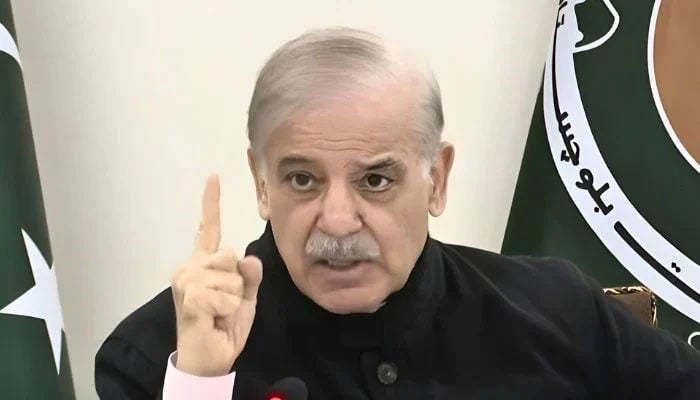
Prime Minister Shehbaz Sharif’s visit to Balochistan, accompanied by pledges of development, security and renewed engagement, comes at a moment of exhaustion for the province. Years of militant violence, heavy-handed responses and chronic underdevelopment have left Balochistan trapped in a vicious cycle where insecurity feeds deprivation and deprivation fuels alienation. The province needs peace from terror and development that actually reaches its people. One without the other will not work. We must be absolutely clear and unambiguous. Terrorism is terrorism. The deliberate targeting of civilians, political workers, labourers, teachers, engineers or security personnel by militant, terrorist and separatist groups is indefensible. No grievance, no historical wrong can ever justify such suicide bombings, targeted killings, train derailments or attacks on infrastructure. Groups such as the Balochistan Liberation Army and their affiliates have repeatedly shown contempt for human life and for the very people in whose name they claim to fight. They have murdered Baloch citizens, Pashtun workers, Punjabi labourers and anyone else caught in their path.
The prime minister’s visit was therefore rightly framed around security and stability. The state has a duty to protect its citizens and to dismantle networks that seek to plunge the province into chaos. Counterterrorism operations, intelligence coordination and protection of key infrastructure are all necessary. But if there is one lesson from decades of unrest in Balochistan, it is that force alone cannot deliver lasting peace. Military action may suppress symptoms but it does not cure the disease. The disease is political alienation, economic exclusion and a deep mistrust between the people of Balochistan and the state. That mistrust has been shaped by years of neglect. Despite being rich in gas, minerals and coastline, Balochistan remains Pakistan’s poorest province by most social indicators. Access to clean water, healthcare, education and jobs is limited. Large development projects are announced with fanfare but too often fail to translate into tangible improvements in local lives. Terrorists and militants then step in to exploit that resentment. This is why development must be visible, equitable and participatory. Roads, hospitals, universities and water schemes must be designed with local input. Jobs must go to local youth. Royalties and revenues must be seen to benefit the communities from which those resources are taken.
At the same time, the human rights dimension cannot be brushed aside. Enforced disappearances, shrinking civic space and the marginalisation of nationalist voices have deepened the sense of injustice. This does not excuse militancy but it does help explain why the state struggles to win hearts and minds. The prime minister spoke of unity and inclusion during his visit. Those words must now be matched with action. Dialogue with legitimate political stakeholders, including nationalist parties, is a sign of confidence in the political process. Restoring provincial autonomy in spirit as well as in letter, strengthening local governments and respecting the mandate of elected representatives are crucial steps. So too is ending the practice of blanket measures such as prolonged internet shutdowns. None of this diminishes the need to confront armed groups. Violence must always be condemned, absolutely unconditionally. Those who take up arms against civilians and the state must face the law. Pakistan cannot afford an endless cycle where each attack is met with condemnation and each promise of development fades into bureaucratic inertia. Without security, investment will not come. Without justice and inclusion, security will not last. The people of Balochistan deserve both.