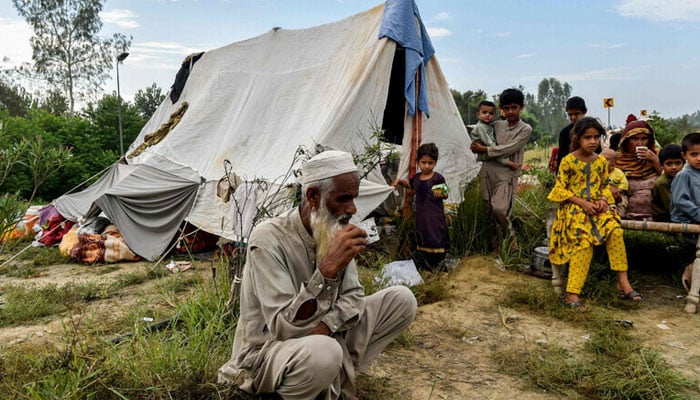
BARA: Dozens of families displaced from the Maidan area of Tirah Valley ahead of a possible military operation are facing immense difficulties during the registration process at the Dwatoi checkpost.
Limited registration staff has resulted in long queues of vehicles, forcing men, women, elderly people, and children to wait for hours in biting cold weather.According to reports, many families were compelled to spend the previous night in their vehicles amid harsh weather conditions.
Talking to journalists, Noor Haleem Afridi, General Secretary of Jamiat Ulema-e-Islam-Fazl (JUI-F) Tirah chapter, expressed concerns over the situation.He said that insufficient registration staff had led to people waiting in queues for hours.
Noor Haleem added that the severe cold was proving extremely difficult for women, children, and the elderly, with the continuous drop in nighttime temperatures further exacerbating their plight.
“Women and children are shivering with cold, and several families spent the entire night in vehicles, which is against all human compassion,” he said. The JUIF leader warned that children and elderly people were at serious risk of falling ill due to the extreme weather conditions.
He urged the district administration and concerned authorities to take immediate action.The JUIF leader demanded an increase in staff at the Dwatoi registration point, acceleration of the registration process, and the emergency provision of warm clothes, blankets, and basic facilities for the affected population.
“These displaced people are the same people who sacrificed for peace in the past, so it is the responsibility of the government and administration to ease their suffering,” he said.When reached for comments on the situation, Bara Assistant Commissioner Talha Rafiq explained that vehicles at Dwatoi reached late on Tuesday night which led to congestion.
However, he added, the clearance process continued till 10 pm to facilitate the people. “The dislocated people spent the night at Peendi Cheena but arrangements such as tents were made for their lodging,” he elaborated.