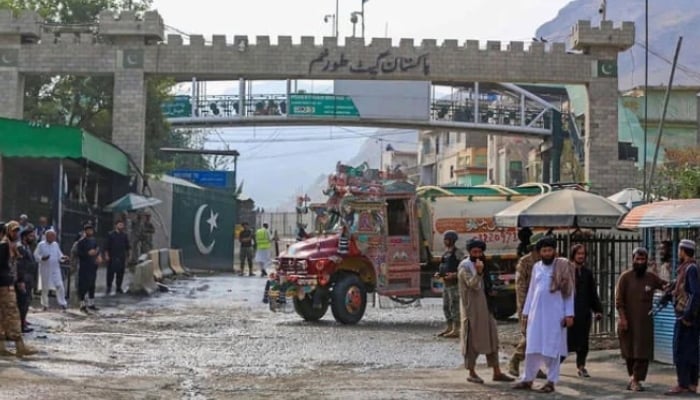
As winter settles along the Afghan-Pakistani border, markets in Peshawar are eerily quiet. Afghan traders, once thriving in Pakistan’s bustling markets, are now staring at empty stalls as goods worth billions of dollars remain stranded at the border.
In Afghanistan, farmers are watching their pomegranates rot, unable to sell them in Pakistan. This trade standoff, initially driven by cross-border terrorism and political tension, has evolved into an economic crisis that threatens millions of livelihoods on both sides.
For decades, Pakistan has been Afghanistan’s largest trading partner and key transit corridor, providing humanitarian aid and access to global markets. Afghan businesses flourished in cities like Peshawar, Karachi and Quetta, and millions of Afghan refugees found sanctuary in Pakistan.
Even after the Taliban’s 2021 takeover, Pakistan continued to facilitate trade, medical evacuations and the movement of supplies to Afghanistan. But today, relations between the two countries have reached their lowest point in decades.
The core issue is not just trade disruptions but security. Pakistan accuses the Taliban of enabling militant groups like the TTP, whose attacks have killed hundreds of Pakistani security personnel. Despite Pakistan’s diplomatic efforts and intelligence-sharing, the Taliban have failed to take action, leaving Pakistan with limited options.
Since 2021, TTP operations have increased, including cross-border attacks and suicide bombings traced back to Afghan sanctuaries. Despite evidence, the Taliban continue to deny hosting these groups. This inaction has led Pakistan to close key border crossings like Torkham and Chaman, aiming to disrupt terrorist infiltration but also severing critical trade routes.
The closure has caused severe economic disruption. Afghan goods, including coal, cement, pomegranates and medicines, are stranded, and Afghanistan’s attempts to shift trade to Iran and Central Asia have been costly and inefficient. Afghanistan can’t replicate the speed and affordability of trading through Pakistan, making it increasingly isolated.
The border closure has also affected Afghan refugees in Pakistan. Pakistan has hosted the world’s largest refugee population for decades. But security concerns have led to the deportation of over a million Afghans this year, many linked to militant groups. While Pakistan has always welcomed refugees, the Taliban’s refusal to cooperate on verifying undocumented Afghans has led to stricter border controls.
Afghanistan’s worsening humanitarian crisis is a direct result of the Taliban’s failure to address the TTP and other militant groups. More than half of Afghanistan’s population requires humanitarian aid, but shipments have been blocked at Pakistani ports. Afghan farmers, once dependent on Pakistani markets, are selling their goods at discounted prices. The Taliban’s decision to sever trade ties with Pakistan only deepens Afghanistan’s economic isolation.
Pakistan has consistently been supportive, facilitating trade and hosting Afghan refugees. However, the Taliban’s failure to act against terrorism and their harmful economic policies have strained the relationship. Their decisions, like urging Afghan businesses to leave Pakistan, have caused growing frustration in Pakistan.
The core issue of this standoff is cross-border terrorism. Until the Taliban take verifiable action against groups like the TTP, no diplomatic effort will succeed. Pakistan remains willing to facilitate trade and humanitarian aid, but it cannot compromise its national security.
Afghanistan’s suffering is real, but its roots lie in Kabul’s choices, prioritising ideology and terrorist groups over regional cooperation. If both countries want a peaceful future, they must prioritise collaboration over confrontation, ensuring mutual economic growth and regional stability.
_____
The writer is a former technocrat.