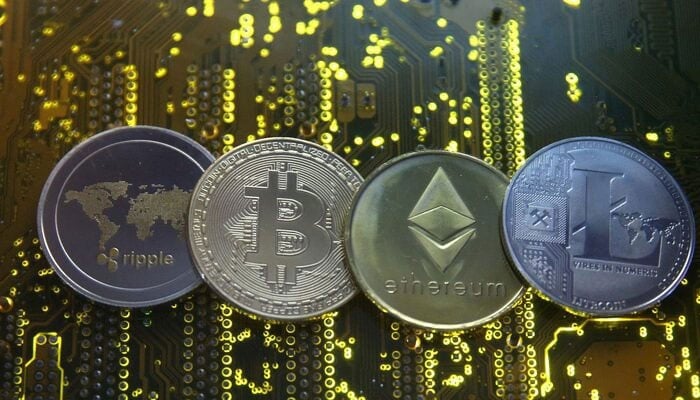
Crypto has moved from the margins to the centre of public life. Over the past year, it has shown up in places it rarely used to: election speeches and mainstream finance headlines. Pakistan is seeing the same shift. The official tone is moving away from outright prohibition and toward pragmatic regulation.
Why the change? Some commentators read it as political signalling -- an attempt to make a positive impression in Washington. Others see it as simple realism. By one widely cited benchmark, Chainalysis’s 2025 Global Crypto Adoption Index ranked Pakistan third globally for crypto adoption. And if regulation comes with a clear, enforceable tax framework, it could open a new revenue line as well. A July 2025 Cryptonary report estimated Pakistan could generate around $90 million annually by applying a 15 per cent tax on crypto trading under a formal regime.
So what changed, structurally, that made crypto politically valuable?
Look at the US; President Donald Trump’s public position on crypto clearly evolved during the 2024 election season. He moved from criticism to actively courting crypto voters and donors, and later embraced policy signals the industry welcomed. Democrats also softened in certain areas. One moment that surprised many observers was the US SEC approving the listing of spot Ethereum ETFs in May 2024, after a long period when approval looked unlikely. Reuters reported the decision on May 23, 2024, and the story changed overnight from ‘never’ to ‘it’s happening’. When a government allows major regulated products around crypto assets, it sends a straightforward message: this technology is being absorbed into the financial mainstream.
In everyday life, most people meet crypto through price. Bitcoin surges, bitcoin crashes. Or a meme coin trends for a week and disappears. But one of the most widely used crypto products is not a volatile coin at all. It’s the stablecoin. A stablecoin is best understood as a digital version of a currency -- most commonly the US dollar -- that can move quickly on blockchain networks. Inside the crypto economy, stablecoins function as the default ‘cash’. If you are buying or selling bitcoin, ethereum, or thousands of other tokens, much of that trading still happens in dollar stablecoins.
Behind the scenes, the biggest stablecoin issuers hold large reserves -- often in US treasury bills -- to back their coins. Tether (USDT), the largest stablecoin issuer, reported that as of September 30, 2025, its total exposure to US treasuries (direct and indirect) was approximately $135 billion. Tether also claimed that this size would place it around 17th globally when compared to national holdings of US treasuries. The direction is clear: USD stablecoins are becoming meaningful buyers of US government debt.
This helps explain why policymakers pay attention. Some financial commentators argue that global use of US dollar stablecoins can reinforce international demand for dollars. You don’t have to fully accept that argument to see the logic: crypto markets increasingly run on ‘digital dollars’, and those digital dollars often link back to US financial instruments.
Because the US is the world’s largest economy, its regulatory posture shapes others -- directly and indirectly. When Washington moves towards regulated adoption, other capitals feel pressure to modernise their stance and avoid being left behind.
Pakistan is now in that moment. In 2025, the Ministry of Finance publicly announced the creation and meetings of a Pakistan Crypto Council. The State Bank of Pakistan also signalled that work was underway on a legal and regulatory framework for virtual assets. Separately, the SBP governor spoke about preparing a pilot for a digital currency and finalising legislation to regulate virtual assets.
This is exactly why Pakistan needs urgent public literacy. The regulatory window is opening now. The choices made in the coming months could shape our digital financial infrastructure for years. Yet the public debate often swings between two unhelpful instincts: uncritical excitement on one side, outright suspicion on the other. In the middle, most people are stuck with second-hand information -- WhatsApp forwards, influencer clips, or cynical ‘it’s all a scam’ talk -- without the basics.
That is what this column series aims to address. We need to see the big picture and separate the ideas clearly.
Blockchain is a technology: a way to keep records and move value or data under a set of rules. Cryptocurrency is one application of blockchain (just as email is one application of the internet). In this context, ‘crypto’ refers to the use of cryptography to secure and verify transactions, rather than relying on a central authority -- such as a state bank in the case of fiat currency. Stablecoins are another application: a digital representation of money, designed to be stable. And there are non-financial uses too, including supply-chain records, land registries, digital identity, voting systems, audit trails, and more.
Now comes the policy question Pakistan cannot avoid.
Most major public blockchains -- ethereum, solana and others -- require their own native coins (ETH, SOL, etc) to pay transaction fees and run applications. Even if Pakistanis transact in PKR stablecoins, the network ‘toll’ is still paid in a foreign crypto asset. Those fees ultimately reward a global set of validators or operators. The result is limited visibility, limited control, and limited ability to capture the economic value created on those rails -- unless Pakistan itself becomes a major operator inside those networks, which brings its own complications.
There are broader concerns too. Regulatory visibility is harder when the base infrastructure sits outside your jurisdiction. Settlement assets can introduce volatility or external dependency. Enforcement, consumer protection and dispute resolution become more complex.
None of this denies the value of public blockchains. They are powerful global innovation platforms. But a national digital financial backbone is a different category of decision entirely.
A practical middle path is a sovereign, permissioned blockchain: a network where validators are known institutions operating under Pakistani law, and where the primary settlement asset is PKR in digital form (a PKR stablecoin or a regulated digital PKR instrument). If designed properly, such a network could keep transaction fees and digital economic activity largely within Pakistan’s financial system; provide governance and oversight through institutions such as SBP, SECP, and the Ministry of Finance; enable innovation via a controlled smart-contract framework where applications are approved and audited; and support local talent by giving Pakistani developers a national platform to build compliant products.
I hope to write more on how blockchain technology has evolved, why Pakistan needs its own sovereign, permissioned blockchain with a PKR-pegged stablecoin as its native settlement instrument, how that instrument could be issued under strict rules enforced by the protocol, who can become validators and how a smart-contract framework on this proposed network can support both financial and non-financial public services. The aim is to help readers distinguish what is useful from what is risky, and to show what a Pakistan-aligned digital infrastructure could look like in the real world.
For now, I’ll leave readers with one question: if Pakistan’s digital economy grows on foreign blockchain rails, who earns the fees, who sets the rules, and who captures the data and the infrastructure?
That is the debate Pakistan must have practically -- and with facts.
The writer is the principal blockchain researcher working with the Ensemble team at Enoda Ltd.