In Pakistan’s public memory, individuals are often separated into compartments: the institution-builder here, the activist there; the man of culture in one chapter, the woman of conscience in another.
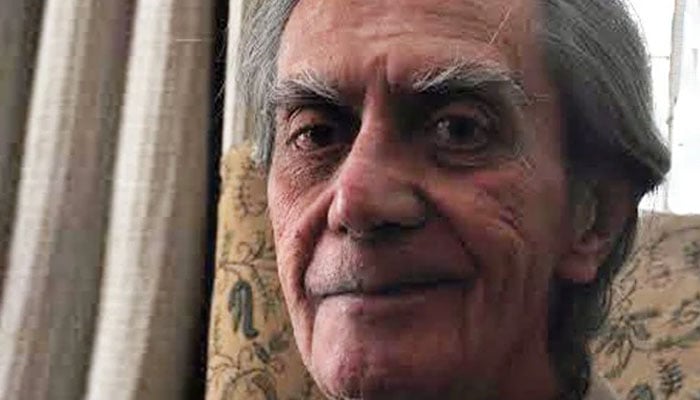
The lives of Aslam Azhar — whose 10th death anniversary falls on December 29 — and Nasreen Azhar – who celebrated her 90th birthday in early December — resist such partition.
My association with this family goes back to the 1980s when I was still in my 20s and Aslam Azhar had already established and quit the PTV and was leading Dastak Theatre in Karachi with his friends Abida and Mansoor Saeed. The Aslam-Nasreen story is best understood not as two parallel biographies but as a single, intertwined project sustained over more than six decades. They married in the early 1960s, before either name acquired the weight it would later carry. They shaped a partnership that was neither ornamental nor hierarchical.
From the outset, Nasreen Azhar was not a companion to Aslam’s career; she was a co-traveller in a life that would repeatedly place principle above comfort. Long before Women’s Action Forum or Dastak Theatre acquired their symbolic capital, there was the daily discipline of shared belief — sustained through uncertainty, professional displacement and periods of stark financial strain. Aslam Azhar’s public reputation rests most visibly on his role in founding Pakistan Television. When PTV began transmissions in the mid-1960s, it did so under the assumption — now almost quaint — that a national broadcaster could cultivate taste rather than merely chase attention.
Azhar was instrumental in assembling writers, performers, technicians and producers who believed that seriousness need not be exclusionary. Television drama, documentary and music were not treated as disposable commodities but as contributions to a shared cultural archive. Yet even at the height of that institutional success, the Azhars’ lives were not insulated by privilege. Pakistan’s state has always been an unreliable employer for those who value independence. Shifts in political climate were often accompanied by subtle marginalisation and, at times, abrupt professional reversals. The security that seniority was supposed to guarantee proved fragile.
Nasreen Azhar’s role during these periods was not merely supportive in the emotional sense but stabilising in the practical one. She managed households through uncertainty, recalibrated expectations, and refused the quiet resentments that often corrode
such partnerships.
The rupture came with the military coup of 1977 and the long, austere rule of General Ziaul Haq. What followed was not simply a change of government but a recalibration of moral authority. Culture was policed; dissent was recoded as deviance; conformity acquired a theological gloss. For those whose lives had been built around intellectual exchange and artistic expression, the consequences were immediate and punishing.
Aslam Azhar’s relationship with state institutions became increasingly tenuous. Work dried up. Projects were shelved. Invitations ceased. This was a systematic narrowing of acceptable voices. The years that followed were marked by acute financial hardship. The myth that artists suffer nobly is usually propagated by those who have never had to choose between rent and rehearsal. Nasreen Azhar stood through these years as a partner who absorbed risk without complaint.
It is important to say this plainly, because histories of resistance often romanticise courage while obscuring endurance. Activism and art are rarely remunerative under authoritarianism. What allowed Aslam Azhar to continue working — albeit on the margins — was the quiet, relentless steadiness of a household that refused despair. That refusal was political. It was during this period that Dastak Theatre emerged as one of the most intellectually serious theatrical initiatives in Karachi. Its choice of repertoire — Brecht, Chekhov, Gorky — was deliberate. These were writers concerned with power, compromise, moral responsibility and the costs of silence.
In the Pakistan of Ziaul Haq, these themes required no annotation. Aslam Azhar directed and acted, often performing roles that mirrored the anxieties of intellectual life under coercion. His portrayal of Galileo, a man forced to choose between truth and survival, resonated deeply with audiences who understood the price of dissent. These productions were mounted with limited resources, relying on collective commitment rather than institutional backing. Rehearsals were held under conditions that would defeat less resolute ensembles.
Nasreen Azhar’s involvement in Dastak was both visible and structural. She was part of the organisational backbone, ensuring that productions could continue despite logistical and financial constraints. More importantly, she bridged theatre with activism. By the early 1980s, she was among the founding members of the Women’s Action Forum. WAF’s early meetings were acts of defiance in themselves.
The Azhars’ home became a site of convergence. This was not salon culture in the leisurely sense. It was urgent, sometimes anxious, and always purposeful. Children grew up overhearing debates about censorship, constitutional rights, translation choices and ethical compromise. Nasreen Azhar’s activism extended beyond protest into institution-building. Her long association with the Human Rights Commission of Pakistan reflected a strategic understanding of power. Street mobilisation mattered, but documentation, legal advocacy and sustained engagement with policy were equally essential. Over decades, she served in various capacities, including coordinator and council-level responsibilities, contributing to reports and mentoring younger activists.
What distinguished her approach was restraint. She did not perform outrage. She practised accountability. In meetings, she is known for precision rather than rhetoric, for insisting on facts even when emotions run high. This discipline mirrors Aslam Azhar’s artistic ethic: clarity over noise, substance over spectacle. Their marriage endured because it converted stress into shared purpose. During the Zia years, when financial insecurity intersected with political risk, many couples fractured. The Azhars did not.
Aslam Azhar’s mother lived into her nineties. In her last years, she was largely confined to bed, requiring constant attention. Old age has a way of revealing the true values of a household. In many families, care becomes transactional, delegated or quietly resented. In this one, it became collective. There was no gendered arithmetic of obligation, no whispered suggestion that a daughter-in-law was merely fulfilling a burdensome duty, no assumption that grandchildren were exempt. Care was understood as shared, indivisible and non-negotiable.
The children grew up within this atmosphere of seriousness without solemnity. Osama, the eldest, chose a life largely away from public cultural production. Based in Germany, he nonetheless remained tethered to the family’s centre of gravity. Arieb, the second son, absorbed the household’s musical and intellectual inheritance in a different register. A singer and composer, he developed a voice that blends folk traditions with contemporary sensibilities, refusing easy categorisation. His work carries the Azhar signature: art as inquiry rather than commodity. He has also been involved in film and documentary production, particularly projects concerned with cultural memory.
Then there is Omaima, the daughter— less visible in public narratives, and therefore easier to miss, yet central to the family’s emotional ecology. She also dances — freely, joyfully, without self-consciousness — and in doing so keeps something alive that authoritarian decades work hard to extinguish: unguarded delight. She brings lightness where gravity might otherwise dominate.
To describe their contribution as formative to my own thinking is not an act of sentimentality. It is an acknowledgment of debt. They showed that intellectual life in Pakistan is not sustained by brilliance alone, but by relationships that survive pressure. That survival, in their case, was a joint achievement.
Pakistan has produced louder figures and more visible heroes. It has produced fewer couples who understood that resistance is not episodic but marital — that it must be rehearsed daily, under conditions that are often unglamorous and occasionally brutal. Aslam and Nasreen Azhar lived that understanding for more than 60 years. The culture they defended remains unfinished. The conscience they cultivated remains necessary.
The writer is dean of the faculty of liberal arts at a private university in Karachi. He tweets/posts @NaazirMahmood and can be reached at: [email protected]