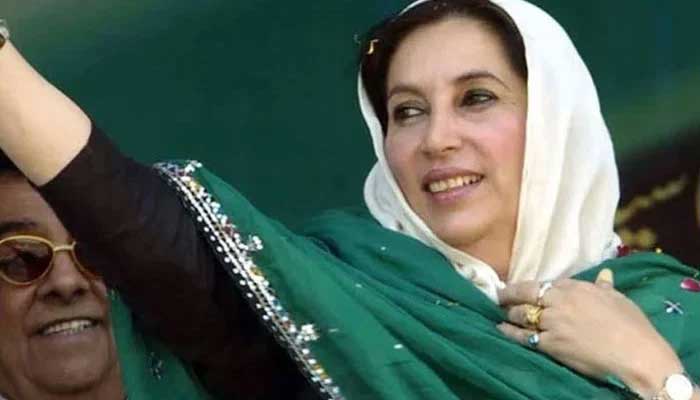
Benazir Bhutto’s return to Pakistan in October 2007 was a conscious political choice rooted in courage, conviction and an unwavering faith in democracy.
When she landed in Karachi after years of enforced exile, Pakistan was already a country under siege from suicide bombings, creeping Talibanisation and a political order increasingly reliant on management rather than mandate. That very night, her homecoming procession was attacked, killing scores of her supporters. It was an unmistakable warning that democratic participation itself had become dangerous. Benazir Bhutto chose to stay.
She had earned the authority to make that choice. Twice elected prime minister, Benazir Bhutto was not merely a symbol of democratic aspiration but a governing leader who took office after eleven years of military rule and attempted, under extraordinary constraints, to restore civilian politics to a state long resistant to it. Her first term reopened political space. The press was freed, political prisoners were released, student and labour unions revived and Pakistan was reintroduced to the democratic world.
Her second term focused on institutional rebuilding and social policy. The Lady Health Worker Programme, launched under her government, remains one of Pakistan’s most significant social interventions. These were not cosmetic achievements but structural efforts to reshape the state’s relationship with its citizens.
That vision of social protection was carried forward after her assassination through the Benazir Income Support Programme, which institutionalised the principle that the state bears a direct responsibility to protect its most vulnerable citizens.
What defined Benazir Bhutto throughout her political life was intent and courage. She sought to civilianise a state accustomed to exercising veto power beyond parliament and to anchor authority firmly within constitutional and democratic norms. That intent, reinforced by fearless resolve, made her threatening even to those who wielded the gun.
By 2007, Benazir Bhutto posed a challenge that few others could. She combined mass electoral legitimacy with international credibility and an unequivocal rejection of extremism. At a time when the state was still entangled in the dangerous fiction of good and bad militants, she warned that militancy could not be managed. It would metastasise. Democracy, she argued, could not survive political engineering, selective accountability or power operating beyond constitutional control.
Her assassination on December 27, 2007 was meant to extinguish that argument.
On that day, her vision was answered with violence. In her final public address in Rawalpindi, she spoke of Pakistan’s future: of reclaiming the state from fear, dismantling the machinery of extremism and defeating terrorism through democratic legitimacy, civilian authority and rule of law. She warned that militancy could not coexist with the constitution, that the gun could not replace the ballot, and that Pakistan’s survival depended on restoring the people’s faith in democracy. Moments later, she was assassinated.
Fearless to the end, she was eliminated because of that very intent, because of her love for her country and her people, and because she carried forward her father’s vision and legacy of a democratic, constitutional Pakistan. Her martyrdom was the ultimate price she paid for choosing democracy over terror.
The aftermath compounded the tragedy. Investigations into her killing were marked by extraordinary failures. There were grave security lapses before the attack and the destruction of evidence afterward. Accountability never followed. The lesson absorbed by the public was stark: political violence would go unpunished, and the cost of democratic struggle would be borne in blood.
Pakistan stood at a moment of profound uncertainty. It was then that President Asif Ali Zardari articulated a response that shaped the country’s immediate future -- “Pakistan Khappay”; Pakistan must survive. Those words were not rhetorical restraint but a political decision to prevent grief from fracturing the federation. Rather than allowing violence to dictate outcomes, the PPP committed itself to constitutional continuity.
That commitment translated into governance. Between 2008 and 2013, Pakistan witnessed its first democratic transfer of power from one elected civilian government to another. The passage of the 18th Amendment restored parliamentary sovereignty, strengthened provincial autonomy and rolled back decades of constitutional distortions imposed by repeated authoritarian interventions.
Benazir Bhutto’s legacy did not freeze in time. It evolved across generations. Her son, Bilawal Bhutto Zardari, was just 18 years old when he was entrusted with the chairmanship of the PPP at a moment of national trauma. He assumed that responsibility with resolve, political maturity and an indomitable courage reminiscent of his mother’s own. As the party’s youngest chairman, he led it through a critical phase of transition and continuity, eventually becoming Pakistan’s youngest foreign minister. In that role, he distinguished himself on the global stage, representing the country with clarity and confidence and articulating a foreign policy rooted in parliamentary diplomacy, multilateralism, climate justice and democratic legitimacy.
Today, that continuity is also reflected in Benazir Bhutto’s youngest daughter, Aseefa Bhutto Zardari, who serves as first lady of Pakistan not as a ceremonial presence but as an advocate for public health, women’s empowerment and social welfare, causes that defined her mother’s political life.
This continuity matters because it challenges the misconception that Benazir Bhutto was an interruption in Pakistan’s political history. In reality, she inaugurated a democratic project rooted in constitutionalism, federal unity and civilian authority.
Benazir Bhutto did not return in 2007 for personal redemption or political restoration alone. She returned because she believed Pakistan’s democratic journey had to be anchored in participation rather than fear. That belief found expression in constitutional continuity, in peaceful transfers of power, and in the endurance of democratic institutions.
Her legacy endures not as confrontation but as commitment. It rests on the understanding that democracy in Pakistan is strengthened by continuity, resilience and faith in constitutional processes. On every December 27, that legacy reminds the nation not of rupture, but of resolve.
The writer is a member of the National Assembly. She holds a PhD in Law, and serves on the National Assembly’s Special Committee on Kashmir.