LAHORE: For decades Pakistan prioritised sectors that could generate immediate foreign exchange or absorb surplus labour. Capital-intensive, institution-heavy sectors such as mining, chemicals or defence manufacturing were repeatedly deferred.
The year 2025 may mark a quiet but consequential break from this cycle going for these long-term projects. Faced with depleted fiscal space, high debt servicing and limited borrowing capacity, policymakers have nevertheless chosen to initiate long-gestation projects in minerals and chemicals, indigenous coal development and defence production -- sectors traditionally avoided precisely because they do not deliver quick political or financial returns.
This shift, modest in appearance but profound in implication, stands out as one of the most underappreciated silver linings of Pakistan’s economic journey in 2025.These projects required patient capital, contract sanctity, skilled manpower, and above all, policy continuity -- qualities Pakistan’s political economy struggled to provide. What makes 2025 different is not an abundance of resources but an acceptance of constraint. With the government fiscally boxed in, planners have implicitly acknowledged that the state can no longer be the financier of growth. Instead, it must act as a facilitator, regulator, and risk-sharing partner, seeking foreign investment from friendly countries and mobilizing domestic private capital.
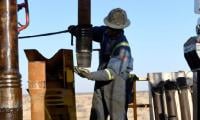
The renewed focus on minerals and downstream chemicals is perhaps the most telling. Pakistan has long possessed geological wealth, yet remained a marginal player in global mineral markets. In 2025, the emphasis has shifted from rhetoric to frameworks—legal clarity, security arrangements, revised contracts, and discussions around local processing rather than raw exports. While revenues will take years to materialize, the decision to treat minerals as an industrial foundation rather than a speculative asset marks a structural correction. Mining, once activated, catalyses chemicals, metallurgy, engineering, logistics, and high-skill employment.
Equally significant is the pragmatic reassessment of indigenous coal development. For years, coal remained politically uncomfortable and strategically sidelined. In 2025, energy security considerations have overridden ideological hesitation. Localisation of coal is not about exporting fossil fuels; it is about stabilising input costs for industry, reducing exposure to external shocks, and restoring predictability to long-term investment decisions. No industrial economy can scale on imported uncertainty. Coal, in this context, is not an environmental debate but an economic stabiliser -- especially when paired with cleaner technologies and transitional planning.
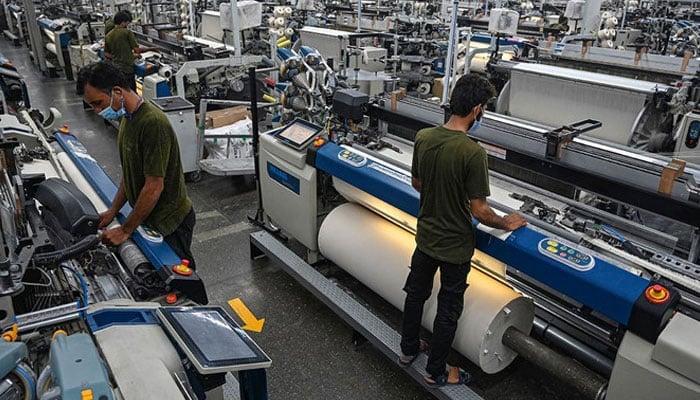
Defence production—signals an even deeper ambition. Defence manufacturing is no longer being discussed solely through the lens of security or self-reliance, but as an export-oriented industrial ecosystem. Even limited success in defence exports carries disproportionate benefits: precision engineering, electronics, materials science, and skilled human capital that spill over into civilian manufacturing. Unlike traditional industries, defence production builds capabilities that are difficult to replicate and harder to relocate.
Critics rightly point out that Pakistan has announced similar ambitions before. What distinguishes 2025 is the absence of fiscal illusion. The government is not pretending it can bankroll these projects alone, nor is it promising immediate economic miracles. Instead, it is openly courting foreign partners, particularly from friendly countries seeking resource security, diversified supply chains and cost-effective production bases.
Another factor working quietly in favour of this shift is necessity. Reforms born of optimism often fade; reforms born of survival tend to endure. Pakistan’s constrained macroeconomic reality in 2025 has narrowed choices, forcing policymakers to confront uncomfortable truths.
None of this implies quick relief. These sectors will not meaningfully boost exports, employment, or revenues in the short term. Their payoff lies in the late 2020s and 2030s. The real risk is not failure, but abandonment -- policy reversals, contract uncertainty or politicisation once initial enthusiasm wanes.
Yet, even acknowledging these risks, the direction matters. Economic turnarounds are not always announced with fireworks; sometimes they begin with reluctant realism. By choosing to invest political capital in long-term sectors at a time of acute fiscal stress, Pakistan in 2025 has signalled a willingness to trade speed for sustainability.
If this course is sustained, historians may look back at 2025 not as a year of dramatic growth, but as the moment Pakistan finally chose difficult, slow transformation over easy, fragile survival. In an economy long addicted to short-term fixes, that choice alone qualifies as a silver lining.