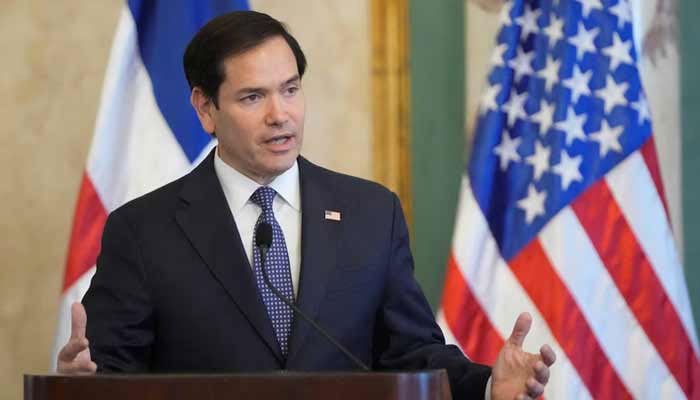
US Secretary of State Marco Rubio’s comments on Friday have once again brought into focus the still-unanswered question of whether Pakistan will be part of the proposed International Stabilisation Force (ISF) for Gaza. Speaking to reporters, Rubio said Washington was grateful to Pakistan for offering to consider participation in the force, but he also made it clear that the US still owes “them a few more answers before we can ask anybody to firmly commit”. That clarification matters, especially at a time when speculation has raced far ahead of facts. Rubio explained that “the next step” would be announcing “the border of peace…the Palestinian technocratic group”, which would then allow stakeholders to “firm up the stabilisation force, including how it’s going to be paid for, what their rules of engagement are, what their role will be in demilitarisation…”. In other words, even from Washington’s perspective, the plan is incomplete. Meanwhile, before Rubio’s statement, Pakistan’s Foreign Office had stated that no decision has yet been taken on participation in the ISF for Gaza. While Foreign Minister Ishaq Dar said last month that Pakistan was ready to commit troops to a Gaza peace force, he also clearly distanced Islamabad from any role in disarming Hamas.
That distinction goes to the heart of what kind of mission the ISF is ultimately meant to be. The confusion dates back to September, when US President Donald Trump unveiled a peace plan for Gaza that envisaged the deployment of troops from Muslim-majority countries during a transitional ‘stabilisation’ phase. In November, the UN Security Council adopted a US-drafted resolution endorsing Trump’s plan, including the deployment of the ISF. Yet it remains unclear whether the proposed force would operate as a UN peacekeeping mission or as a peace-enforcing force. The difference is fundamental. A UN peacekeeping mission, with a clear ceasefire mandate and UN oversight, is something many Muslim countries would consider acceptable, particularly as it would guarantee an end to the genocide that has been going on for over two years now. A peace-enforcing mission tasked with disarming Hamas is an entirely different proposition. This is precisely why many Muslim countries have demanded clarity. If the ISF’s mandate includes confronting or disarming Hamas, most Muslim states have already indicated they would not participate.
Whether Pakistan becomes part of the ISF will hopefully ultimately depend on the mandate of the force. Despite reports suggesting Pakistan has already committed to sending troops, Rubio’s remarks make it clear that nothing has been finalised. Observers also note that, given the scale of atrocities committed by Israel against the hapless Palestinians over the past two years, no Muslim country would be willing to act against the wishes of the Palestinian people. It is telling that Russia and China abstained from the UN Security Council resolution endorsing the plan, citing concerns over the lack of Palestinian participation in the force and the absence of a clear UN role in Gaza’s future. These concerns are widely shared. Any stabilisation force that sidelines Palestinians or is perceived as doing Israel’s dirty work would be politically untenable across the Muslim world. No government would risk the anger of its own people by participating in such a mission. This explains why, so far, none of the Muslim countries involved in Trump’s earlier discussions has given an unambiguous nod to the plan. Pakistan’s position, in particular, must be seen in the context of its long-standing, principled stance on Palestine, including its refusal to recognise Israel. Observers are right to argue that Islamabad will not make the mistake of sending its troops if doing so runs counter to the wishes of the Palestinian people. Until there is absolute clarity on the ISF’s mandate, its rules of engagement and the role of the UN, Pakistan’s cautious approach is not only understandable but necessary.