ISLAMABAD: The Power Division has prepared Pakistan’s first National Integrated Energy Plan (IEP), which is set to be reviewed and approved by the Cabinet Committee on Energy (CCOE) on Thursday (today).
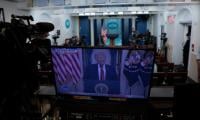
The plan is designed to ensure coordinated, evidence-based decision-making across the country’s power, petroleum and water sectors. Prime Minister Shehbaz Sharif will chair the CCOE meeting.
Officials said the plan had been developed in response to the longstanding challenges of fragmented decision-making, siloed planning and resource inefficiencies in the energy sector.
The CCOE will also take up the framework guidelines for wheeling auctions, 2025 under Strategic Directive 87 of National Electricity Plan and Rules of Supplier Rules 2023 for competitive trade of 800MW, and the Power Division will clarify the shortfall of Rs67 billion in recoveries in the circular debt report of months of July, August and September.
The IMF had previously urged the government to finalise the IEP at the earliest, emphasizing cost-side reforms, subsidy rationalization and measures to curb circular debt.
Among the recommendations are the unification of gas pricing across indigenous gas and imported RLNG, implementation of a new gas subsidy framework and establishment of a Competitive Trading Bilateral Contract Market (CTBCM) to enable a wholesale and retail electricity market.
Officials said resistance from Sindh, Balochistan, and Khyber Pakhtunkhwa had complicated efforts to implement the Weighted Average Cost of Gas (WACOG), as the provinces oppose blending imported RLNG with locally produced gas, citing constitutional rights over gas distribution.
In the power sector, the National Electric Power Regulatory Authority (Nepra) has approved the transfer of licenses from the National Transmission and Dispatch Company (NTDC) to the Independent System and Market Operator (ISMO), a joint entity formed after merging CPPA-G and NPCC. This move is expected to introduce a competitive wholesale electricity market, allowing multiple buyers and sellers to trade electricity while paying transmission and distribution charges, replacing the current government monopoly.
The Prime Minister’s Office directed the Ministry of Energy (Power & Petroleum Divisions) to develop the IEP in consultation with federal and provincial stakeholders. The plan is also mandated under the National Electricity Policy 2021, approved by the Council of Common Interests.
The prime minister was also given a presentation on Integrated Energy Plan with an emphasis not to approve any summary of Power Division (PD) without input of the Petroleum Division and vice versa.
An inter-ministerial meeting on 11 September 2025 endorsed the high-level Integrated Energy Planning ecosystem, and a secretary-level meeting on 30 October 2025 agreed on the proposed secretariat’s structure and roadmap for 2025-27, paving the way for cabinet approval.
Officials emphasized that the IEP would provide a unified, long-term framework for energy planning, enabling Pakistan to make efficient, evidence-based policy decisions while navigating global energy trends, technological transitions and environmental imperatives.