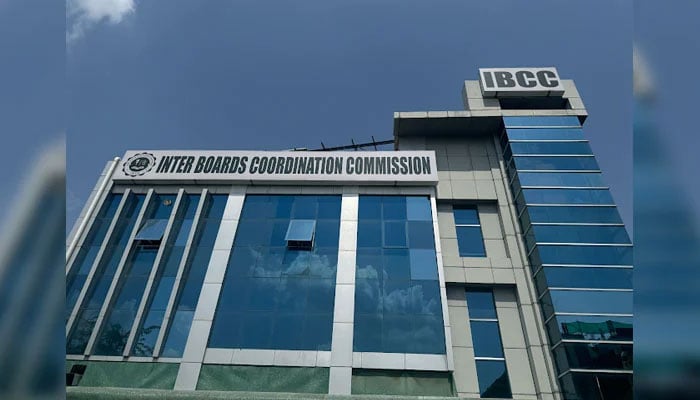
Following its recent move to allow matriculation arts students to seek admission in science streams, the Inter Boards Coordination Commission (IBCC) has decided to abolish subject groupings at intermediate level.
Under the proposed reforms, the traditional categories of pre-engineering, pre-medical, commerce, arts and science general would be phased out, enabling students to independently choose subjects of their preference in line with international standards.
IBCC Executive Director Dr Ghulam Ali Mallah said the proposal was originally floated during the tenure of former Sindh Higher Education Commission chairman Dr Asim Hussain, who had advocated aligning Pakistan’s matriculation and intermediate education system with global practices.
“After extensive consultations with stakeholders and education experts, we first opened pathways for matriculation arts students to enter intermediate science. The next step is to eliminate rigid groupings at intermediate level,” Dr Mallah said, adding that the objective is to improve academic quality by giving students greater flexibility in subject selection.
He said that a high-level meeting on the proposed reforms has been convened next month to finalise the framework. Drawing parallels with international examination systems, he noted that institutions such as Cambridge do not impose fixed groupings.
“At O and A level, students are free to select any combination of subjects. Many A level students study biology alongside mathematics and computer science, a flexibility that is currently unavailable in the intermediate system.”
He also disclosed that with the IBCC’s approval, the Ziauddin Examination Board has introduced a three-year Matric Advanced programme modelled on the O level system, which would be followed by a two-year Intermediate Advanced programme aligned with A level standards. “We want other educational boards to follow the Ziauddin Board’s example and move towards a more modern, flexible academic structure,” the IBCC executive director added.