During my brief visit to Peshawar early this week, what should have engaged my mind the most? One option, of course, was to delve into the state of national politics by probing the popular mood in a province that is governed by Imran Khan’s beleaguered party. That is what a journalist would do, rushing to pass judgment on the basis of potentially deceptive evidence.
Though I am a journalist, too, I generally prefer to write about my own personal engagements and dabble more in social rather than political issues. Besides, I travelled from Karachi to Peshawar to participate in a media fellowship workshop aimed at building participants' capacity to understand and cover, mainly, gender-based violence and women's status.
This in itself is a very relevant subject, particularly in the tribal and traditional environs of Khyber Pakhtunkhwa. And I was all set to write this column on my interaction with the KP journalists coming from various districts with, expectedly, a poor gender balance.
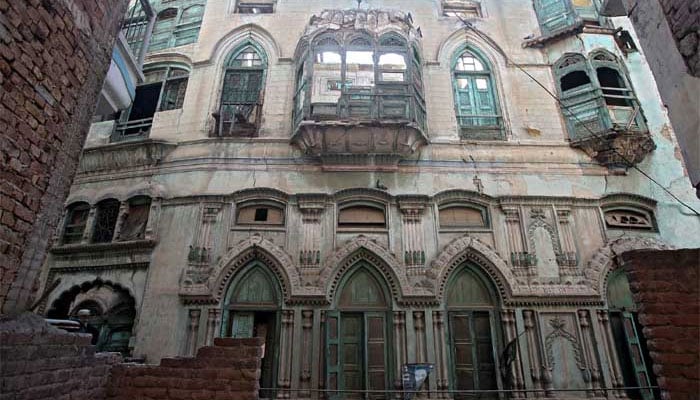
Ah, but an impromptu encounter changed my mind. My focus now is on Pakistan's immense archaeological wealth, much of it in KP. But there is a tragic neglect in what we are doing with it. The citizens of this country are not cognizant of the worth and the meaning of this treasure. Here, also, is an example of how we are unable to connect with our heritage.
Let me explain why I got so distracted. It so happened that the workshop was held on the University of Peshawar's campus, the university among the project's sponsors. It is being conducted in the building of the Sir Sahibzada Abdul Qayyum Museum of Archaeology. So, after I had done my session, I had the privilege of visiting the museum and this became such a gratifying experience because I was guided through all the exhibits by research officer Muhammad Waqar. I was pleasantly surprised to find someone so committed to his assignment.
This was a very educational tour of the museum. It was also an introduction to the work of Prof Ahmed Hasan and to how he, almost single-handedly, changed the country's archaeological landscape. He was the one who established the department of archaeology at the University of Peshawar, which was the first of its kind. He was an authority on Buddhism and Central Asian archaeology and history.
Strangely, I first became aware of the excavations being conducted in what is now KP while in Rome in the 1980s. I was visiting Italy on a journalistic project when I was taken to the office of ISMEO – the International Association for Mediterranean and Oriental Studies. There, I was informed about the work being done in Swat by the Italian Archaeological Mission in Pakistan, which was established during the 1950s.
I met some archaeologists who were working in Pakistan, and one of them, Pierfrancesco Callieri, became a friend, and we have remained in touch and have stayed in each other’s homes in Rome and Karachi. So far as I recall, this mission ended in the late 1990s. Callieri would speak fondly of wooden mosques in Swat and the efforts to preserve them.
Anyhow, the high point of my visit to Peshawar this week was an extended conversation with Dr Nidaullah Sehrai, the present curator of the university’s museum. He gave me the lowdown on the entire scene, with an interesting historical perspective. His anecdotes offered an insight into a situation that is not so inspiring. He talked about excavations done by the Italians and remembered Callieri speaking fluent Pashto. We sat in the sun on the outer veranda and had a really good time.
Whatever else may be of interest in the city, the Peshawar Museum is famous worldwide for its unique and rare collection of Gandhara sculptures. It was established in the Grand Victoria Memorial Hall in 1906. Dr Sehrai had also been its curator for four years. I sensed his pride in having held that position.
It is not possible for me to sum up the views that were expressed. Luckily, I also met Vice Chancellor Dr Johar Ali in his office and we shared our thoughts on the present state of higher education in the country and the need to put more emphasis on social sciences.
However, it is the archaeological heritage that remained on my mind. We know how Pakistan figures in economic and social indicators in the world – near the bottom. But our archaeological sites put the country near the top. For instance, we have six World Heritage Sites, designated by Unesco: Moenjodaro, Taxila, the Buddhist ruins of Takht-e-Bahi, the necropolis of Makli in Thatta, Lahore Fort and Shalamar Gardens and Rohtas Fort.
I can imagine some of these sites being mentioned more in classrooms in faraway countries than in our schools. The cultural stature of what we have in our Lahore and Peshawar museums is just not appreciated by our educated citizens.
Years ago, I quizzed the students of a class in a prestigious college in Karachi about the famous landmarks they had seen. Quite a few hands were raised for places like the Eiffel Tower, London Bridge and the Statue of Liberty. There were two hands even for the Great Wall of China. Then I asked the question: how many of you have been to Makli, about two hours from where you live? I admit that there was one boy who had been there.
I have avoided talking about my session with more than 30 KP journalists, most of whom work in broadcast or digital media. I do want to interact with our youth, though the experience is usually very depressing. Their poor reading habits attest to our academic and intellectual deprivations. In the case of our archaeological and cultural heritage, it seems to be a more serious deprivation of values that sustain a civilisation.
The writer is a senior journalist. He can be reached at: [email protected]