As 2025 draws to a close in a few days, it is time to reflect on the chain of events that have shaped the year. Beyond the typical highs and lows, the year saw unprecedented events that will have a lasting impact.
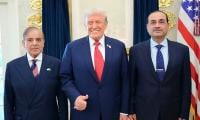
In world politics, Pakistan successfully managed its relations with both the US and China. High-level visits and economic cooperation marked a revival in US-Pakistan relations. Pakistan also reinforced its ties with China.
In addition to high-level visits, the latter half of the year saw the launch of the second phase of CPEC and the Joint Action Plan to enhance political, security, economic, and people-to-people ties. Apart from security cooperation with the US and China, a vital defence agreement has been signed with the Kingdom of Saudi Arabia, reinforcing bilateral ties. Likewise, Pakistan also signed a $4.6 billion deal for JF-17 Thunder fighters with Azerbaijan, diversifying its security partnerships. In addition, the leadership change in Bangladesh has marked a reset in the bilateral relationship, creating new opportunities to address prior rifts.
Overall, it is evident that Pakistan demonstrated a balanced approach on the diplomatic front. In 2026, this trend requires further consolidation and prudent tactical adjustments, particularly for middle powers, while adhering to our long-term goals.
In its neighbourhood, Pakistan had turbulent episodes with two wars witnessed on its eastern and western front. The Indian aggression in May unfolded into a full-blown conflict between the two nuclear power states, ending with Pakistan getting a decisive military advantage over India.
The historic victory was followed by intensive diplomatic efforts to advance Pakistan’s narrative on the international stage. It is important to note that Indian sabre-rattling and military adventures are likely to continue due to next year's state elections. Pakistan must remain prepared militarily and diplomatically to counter any potential misadventure from the Indian side. There was also a standoff with Afghanistan shortly afterwards. Despite the ceasefire requested by the Afghan side, the situation is likely to remain volatile in 2026. Hence, Pakistan must focus on constructive engagement with Afghanistan to address the underlying areas of contention.
Security was the foremost and most acute challenge this year. Terrorism trends continued to trend upward. In August alone, 143 attacks made it the deadliest month in a whole decade, notably in Khyber Pakhtunkhwa and Balochistan. In this context, the role of Indian proxies was vivid this year with increased attacks by Fitna-al-Khawarij and Fitna-al-Hindustan. In 2026, a focused effort to address internal threats and vulnerabilities, as well as external destabilising influences, is required.
On the economic front, growth is expected to be 3.5 per cent, with inflation at around 7.2 per cent. It is noteworthy that the economic indicators reflected a positive trend, with economic recovery and stabilisation, as expected following the IMF tranche of $1 billion in late 2024. However, the core challenge lies in inadequate reforms, bureaucratic hurdles, excessive regulations, and a lack of confidence in the system. Without addressing the root cause, any amount of financial capital inflow will not have the needed impact.
The existing structural weaknesses have driven financial capital, industries and human resources out of the country. Nearly 615,000 individuals have left the state in the first ten months. Unemployment rate has surged to an all-time high in 21 years (7.1 per cent) across all age groups. It is projected that nearly 1.4 million youth will be unemployed over the next four years, undermining social cohesion and increasing public frustration. Hence, there is a pressing need to bridge the gap between policy formulation and execution regarding economic reforms that replace coercive governance with competitive economic models. In this context, taxation should shift toward the undocumented economy, regulations should be reformed and public-private partnerships should be embedded in the financial system.
On the political front, ongoing instability continues to adversely affect policy continuity, governance effectiveness, and the confidence of international actors. There is a pressing need for cohesive and effective institutions for long-term stability.
On the technological front, the launch of three satellites, including the hyperspectral satellite (HS-1), marked a milestone. The associated capabilities must be optimally leveraged to achieve Suparco’s vision of becoming a mid-tier space player by 2050. The launch of a federal cybersecurity authority has also been announced this month. The real success lies in integrating technological advancements with broader economic and security objectives to achieve long-term gains.
Lastly, the damage caused by recurring floods, irregular monsoon patterns, and urban flooding underscored the urgent need to address climate change. Disaster prevention, as opposed to disaster management, is crucial via establishing climate-resilient infrastructure and effective urban planning.
As per Socrates’ famous saying, an unexamined life is not worth living. As we gear up for next year, it is essential to analyse the existing gaps and explore solutions for the future. This year revealed the structural vulnerabilities in our systems across the political, economic and security fronts.
In parallel, it also brought to the fore the resilience embodied in our nation. Looking ahead, 2026 will come with its own set of challenges, opportunities – even unprecedented events. In such scenarios, success will rely on learning from the past, societal cohesion, visionary leadership and national direction.
The writer is a researcher at the Centre for Aerospace and Security Studies (CASS), Islamabad. She can be reached at: [email protected]