A three-pronged threat to world order is unprecedented in recent times. The war in Ukraine, fragile peace in Gaza and the emerging armed conflict between the US and Venezuela tend to deepen the crisis in world order. Other threats adding to this fragility include the Indo-Pak standoff following the May 7–10 armed conflict, Pak-Afghan border skirmishes and the marginalised role of the UN in salvaging global peace.
What is world order and why is it perceived as fragile? What issues raise questions about the failure of the so-called custodians of world order to maintain international peace and stability? How will the transformation of world order ensure multilateralism instead of unilateralism? The role of non-state actors in shaping world order also matters in adding to the fragility of the international system. The challenge of climate change and the surge of economic predicaments also augment the crisis in world order.
According to the Political Science Institute, “World order refers to the structured arrangement of international relations and the distribution of power among nations on a global scale. It’s a broad term encompassing various patterns of power dynamics such as egalitarian, hegemonic or oligopolistic structures. These patterns are not static; they evolve with shifts in global power and the interactions among countries”.
Following the end of the Second World War, the multipolar system was replaced with a bipolar world order in which the US-led Western world and the Communist bloc led by the then-Soviet Union shaped the characteristics of the global system. The Soviet disintegration and the collapse of the Warsaw Pact in 1991 led to the transformation of the world order from bipolar to a US-dominated unipolar world. The then American president George H W Bush described the new world order as based on shared principles and responsibilities.
In recent times, with the resurgence of Russia and the rise of China as the world’s second-largest economy, the world order is transforming into a multipolar system. The war in Ukraine, fragile peace in Gaza and the potential outbreak of armed conflict between Venezuela and the US raise questions about whether there is any crisis management mechanism in the world order.
With a population of around 8 billion, 193 members of the UN and global military expenditures of $1.5 trillion, the world is also facing a major crisis because of water, food and energy shortages. Multilateral institutions like the UN, BRICS, G20, G7 and SCO are unable to deal with the menace of unilateralism.
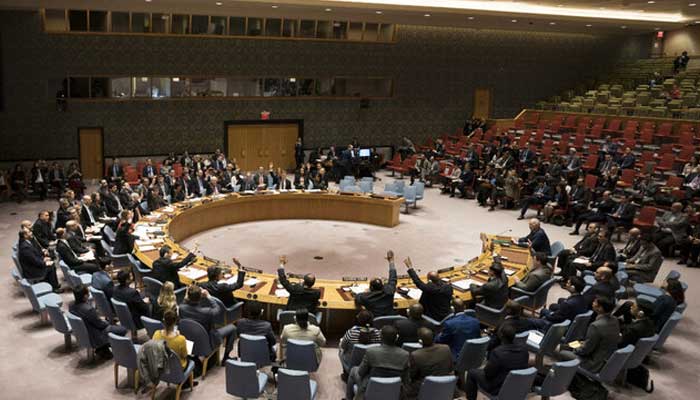
Recently, the UN Security Council passed a resolution on Gaza but instead of raising a UN peacekeeping force it authorised the US-led International Stabilization Force (ISF) and failed to condemn the genocide of Palestinians in Gaza and the occupied West Bank. This means there is a vacuum in the world order that calls into question the leadership role of the UN in enforcing peace and stability. Never in recent world history has there been such a dearth of global leadership capable of following the principles of multilateralism.
Writing in the Brazilian Journal of Political Economy (2025) in his article ‘A world order in crisis and transition: contemplating its future’, Deepak Nayyar argues: “This existing world order is now under stress. The first two decades of the 21st century have witnessed a discernible change in the balance of global economic power. Financial crises have dented faith in markets. Mounting economic inequalities have created social and political discontents among people. International institutions are creaking at the seams. The IMF and the World Bank have failed to reinvent themselves for changed times. The WTO seems to be at a dead end. The United Nations system which has lost its way is neither credible nor effective even if the present world sorely needs such an institution for its designated critical roles. Globalization is at risk. Economies are going through difficult times if not crises with growth slowdowns, double-digit inflation and persistent unemployment. Politics within countries is contentious if not polarized”.
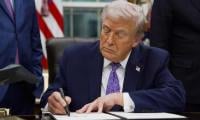
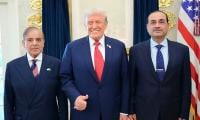
When unilateralism instead of multilateralism becomes the policy under the Trump administration, the fragility and crisis in world order deepen. As a result, the world is polarised and in a quandary with a high risk of crisis escalation. The prevailing situation negates the pledge made by US President Donald Trump at the time of his presidential inauguration in January 2025 that he would take only one day to end the war in Ukraine. Under his slogan, ‘Make America Great Again’, he ruled out wars and pledged to work for peace. But the recent conflict escalation in US-Venezuelan relations reflects that he has deviated from his pledge against war and armed conflicts.
Nevertheless, one can expect further crisis escalation in world order and continued fragility of global leadership in establishing peace and stability in the days to come. One can examine the entire gamut of world order and the threats to international peace from three angles. First, adherence to multilateralism and respecting the sovereignty of UN members must be a central component of world order. The previous 20-point US peace plan on Ukraine was not acceptable to Kyiv because it compromised its sovereignty. The idea that Ukraine should accept the occupation of Crimea and parts of eastern Ukraine by Russia for peace was unacceptable to Kyiv.
Asking Ukraine not to join Nato and reduce its military was tantamount to giving up its sovereignty and independence. Such a peace plan would only create a wrong precedent in international law by recognising occupation. From any standpoint, the foremost challenge to world order is the war in Ukraine which has destabilised peace in Europe and negatively impacted the global economy.
Second, the rift within the West following President Trump’s adherence to unilateralism reflects schism in the first world. Europe is certainly not supportive of President Trump’s effort to end the war in Ukraine by accepting Russian occupation of Crimea and parts of eastern Ukraine. The Gaza peace plan instead of focusing on Israeli military withdrawal is more interested in disarming Hamas. The International Stabilization Force has its own flaws because potential contributors to that force like Indonesia and Pakistan have expressed their inability to be part of a mission to disarm Hamas.
The two major powers, Russia and China, instead of supporting the US-led UN Security Council resolution decided to remain neutral. Resumption of war in Gaza is also possible if Israel continues its policy of genocide against Palestinians. The world order will certainly not be stable unless major stakeholders in the Gaza and Ukrainian conflicts are able to follow an even-handed approach.
Third, by targeting Venezuela and mobilising enormous military force in the Caribbean region, America will further destabilise the world order. Instead of following options of mediation and peace-making, the US is pursuing a strategy that will aggravate the fragility of world order.
There are other flashpoints that challenge the peace and stability of world order. Growing tension between Pakistan and Afghanistan, the war in Sudan, escalating tensions between China and Japan along with worsening climate change, global warming and growing food, water and energy shortages also augment challenges to world order. Unless the UN plays a pivotal role based on multilateralism in dealing with critical issues one cannot expect a peaceful and stable world order in the years to come.
The writer is a meritorious professor of International Relations and a former dean of the Faculty of Social Sciences, University of Karachi. He can be reached at: [email protected]