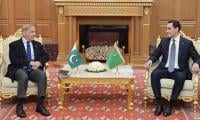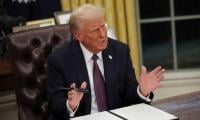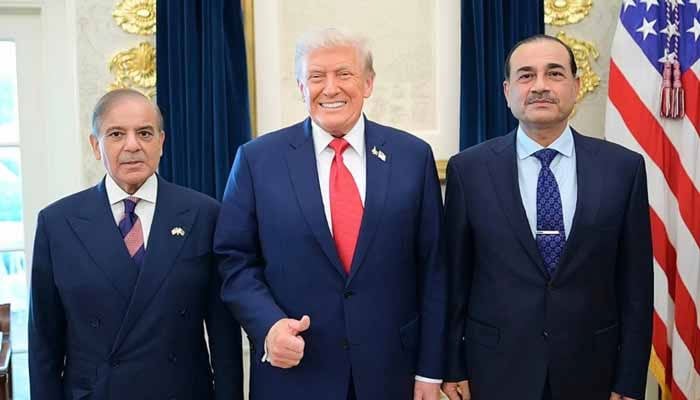
A recent report published by the renowned US magazine, ‘Foreign Policy’, acknowledges that Pakistan, through exceptional diplomacy, has secured one of the most prominent and influential positions in Washington. According to the magazine, President Trump has developed extraordinarily warm and historic relations with Prime Minister Shehbaz Sharif and COAS-CDF Field Marshal Asim Munir.
While the Trump administration has taken several unexpected global decisions, a clear tilt towards Pakistan stands out above all. The magazine maintains that Islamabad’s successful diplomatic outreach has elevated Pakistan–US relations to new heights. President Trump repeatedly praised Pakistan’s effective diplomacy during the Pakistan–India confrontation and publicly acknowledged Pakistan’s role for a cease-fire.
Similarly, another major American publication, the Wall Street Journal, released a report titled ‘Trump’s Strange Love Affair with Pakistan’, a headline that is interesting in itself. The report presented a comprehensive review of bilateral relations during the Trump era and expressed astonishment that a president who once held a strongly negative stance toward Pakistani leadership now speaks with surprising softness, affection and praise. It also warned that if Trump’s mood changes or US priorities shift once again, this warm yet unusual affection may diminish quickly.
These recent reports appearing in American media reminded me of my several columns published during the last eight years. In January 2018, I had expressed regret over Trump’s anti-Pakistan statements. At that time, Trump began the new year by making his very first tweet against Pakistan. I maintained then, and still believe, that a successful leadership protects its people from the devastation of war and struggles to create a pleasant environment favorable to development and prosperity.
I repeatedly stated that if the US president refrained from listening to the anti-Pakistan propaganda and viewed Pakistan without prejudice, he would find no country more principled and sincerely committed to fostering strong relations with the US. I am pleased that time has proven my stance correct. In my view, Trump’s public declaration – “I love Pakistan” – is in fact a major diplomatic achievement for Pakistan. The credit goes to the country’s top political and military leadership, particularly Prime Minister Shehbaz Sharif, PPP Chairman Bilawal Bhutto Zardari and COAS-CDF Field Marshal Asim Munir jointly.
The international media continues to analyse how such a dramatic change occurred in the US president’s attitude and what its future implications might be. The simplest answer, in my view, is that Trump does not believe in traditional diplomacy. As a businessman, he favours bilateral economic engagement and deal-making. He has demonstrated that he aims to prevent wars while staying in the White House. When Pakistan was recently pushed toward war, our responsible and peace-oriented conduct deeply impressed Trump.
On the other hand, Pakistan – having learned from Trump’s previous term – redefined its diplomatic strategy. With political and military leadership on the same page, Pakistan offered solutions that aligned with Trump’s agenda to make America great once again.
In my view, welcoming COAS-CDF Field Marshal Asim Munir to the White House, showcasing Pakistan’s flag prominently at the Gaza Conference and inviting Prime Minister Shehbaz Sharif to address global leaders in Sharm El-Sheikh are not ordinary events. Trump’s frequent references to Pakistan-India tensions reveal that he now genuinely admires the bravery and professionalism of Pakistani armed forces. He is now viewing Pakistan as a trust-worthy ally capable of maintaining regional balance of power and fostering world peace.
Although Trump’s tilt towards Pakistan is a golden opportunity, it is also a major trial for us. In the past, we have made the mistake of aligning too closely with one side and making its rivals as our national enemies. We must understand that in global diplomacy there are no permanent friends – only mutual, permanent interests.
Undoubtedly, a strong cordial partnership with the world’s superpower can indeed open new doors for Pakistan in many areas, including economic recovery, regional stability, global leadership and international recognition. But this will only be possible if Pakistan moves its foreign policy with wisdom, prudence and strategic foresight. We shouldn’t repeat those strategic mistakes that we did in the past.
The writer is a member of the
National Assembly and patron-in-chief of the Pakistan Hindu Council.
He tweets/posts @RVankwani