Sindh Chief Minister Syed Murad Ali Shah on Tuesday said the Safe City project is designed to transform Karachi into a secure, technology-driven metropolis through comprehensive video surveillance. He also noted that operations in the Kutcha area have resulted in the surrender of 71 dacoits.
Shah was addressing a delegation of the 52nd Specialised Training Programme (25th Initial Command Course) participants, headed by National Police Academy Deputy Commandant Sarfraz Ahmed Falki, who called on him at the CM House.
Shah said his government is committed to transforming the Sindh police into a modern force powered by technology. He highlighted the department’s vast scale, with 131,850 personnel serving across 31 districts, eight zones/ranges and 618 police stations, backed by an annual budget of Rs189.7 billion.
He noted that the Sindh police, established in 1843 by Sir Charles Napier on the model of the Royal Irish Constabulary, is the oldest police force in the subcontinent and the second largest in Pakistan.
He said that for administrative and operational purposes, police officials are organised under the inspector general of police, who oversees the Central Police Office (CPO) in Karachi. Operations are managed through multiple ranges and regions such as Karachi, Hyderabad and Sukkur, as well as specialised units like the Counter Terrorism Department and the Special Security Unit, he added. He stressed that modernisation focuses on advanced technology and infrastructure.
He also said the flagship Safe City project aims to make Karachi a secure, tech-driven metropolis through comprehensive video surveillance and data analysis. It uses a large network of high-resolution CCTV cameras with facial recognition and automatic number plate recognition, he added.
He explained that all footage is monitored in real time at the Command, Control & Communication Centre at the CPO. He said Phase-I covers the high-security red zone and the airport corridor, while Phase-II would soon be expanded to the South, East and Malir districts, with thousands of more cameras and intelligent traffic system cameras for e-challan enforcement.
He also said the Sindh Smart Surveillance System would be integrated with Safe City to further enhance police operations. The automation of police station systems will digitise processes such as FIRs and case files to boost transparency and public efficiency, he added.
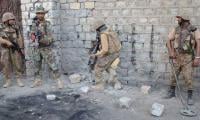
Shah said that the initial Kutcha area operation led to the surrender of 71 dacoits, marking significant progress against organised crime in remote regions, adding that police are actively fighting narcotics to reduce drug-related crime.
He said measures for personnel’s welfare include Shaheed packages for fallen officers, health cards, and scholarships for their families. “This comprehensive approach demonstrates Sindh’s dedication to strengthening public safety through infrastructural, technological and welfare reforms.”