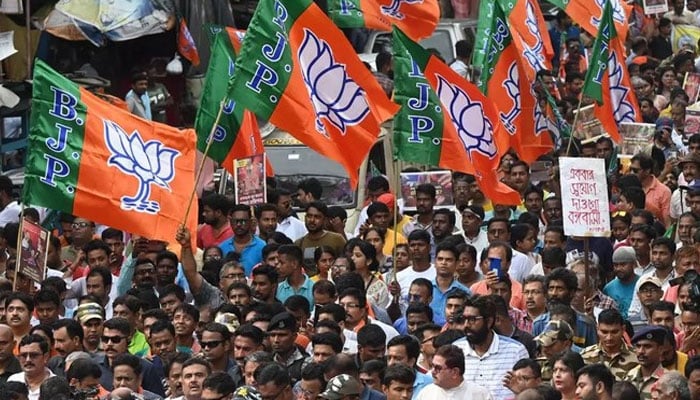
Events in India last week once again laid bare an uncomfortable but undeniable truth: whatever remained of the country’s once-celebrated secular ethos has now been subsumed entirely by a majoritarian, exclusionary politics. From Indian Illegally Occupied Jammu and Kashmir (IIOJK) to the heartland of Uttar Pradesh, the arc of policy and political symbolism under Narendra Modi’s India has swung so decisively to the right that it now poses an existential threat to minorities – especially Muslims – both in the occupied territory and within India itself. The latest findings by United Nations Special Procedures experts on IIOJK have reaffirmed what Pakistan, Kashmiri human rights defenders and independent observers have been warning for years: India is running the occupied territory like a settler-colonial police state. The UN experts have highlighted the arbitrary arrest and detention of nearly 2,800 individuals – including journalists, students and rights activists – and the continued use of draconian laws such as the Public Safety Act and the Unlawful Activities (Prevention) Act. These laws, much like Israel’s notorious legal arsenal in the occupied Palestinian territories, enable prolonged, unjustifiable detentions and function as instruments of collective punishment.
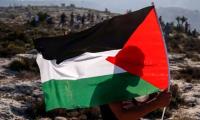
The pattern is chillingly familiar: communication blockades, punitive demolitions, custodial torture, denied legal access and an architecture of fear designed to keep an entire people subjugated. In IIOJK, as in Gaza or the West Bank, demographic engineering and the ruthless suppression of political expression have become central state strategies. India’s playbook in Kashmir borrows heavily from the Israeli model of occupation. But what should worry the international community just as much is how this machinery of repression has not remained confined to Occupied Kashmir. Over the past decade, Modi’s India has begun turning its tools of subjugation inward – targeting its own Muslim citizens.
Last week’s flag-hoisting ceremony at the so-called Ram Temple in Ayodhya – built on the ruins of the centuries-old Babri Masjid demolished by extremist mobs in 1992 – is a symbol of that very trajectory. Prime Minister Modi’s presence and the spectacle built around the ceremony were a political proclamation. The Indian state’s complicity in all this is indisputable. Those responsible for demolishing Babri Masjid were acquitted. Courts approved the construction of the temple. And today, the country’s top leadership has proudly sanctified the result. Given this deeply troubling picture, Pakistan has rightly called for the international community to take notice. The UN and relevant international bodies must take the evidence of systematic discrimination and the erosion of minority rights seriously. Pakistan has reiterated its commitment to a peaceful and just resolution of the Kashmir issue in line with UN Security Council resolutions and the aspirations of the Kashmiri people. That commitment must remain steadfast. The Kashmiri struggle for dignity and self-determination will continue, even as India tries to bury it under repression and demographic manipulation. But no amount of temple inaugurations or saffron pageantry can disguise the reality: the world’s largest democracy is fast becoming an illiberal state where minorities live under constant threat.