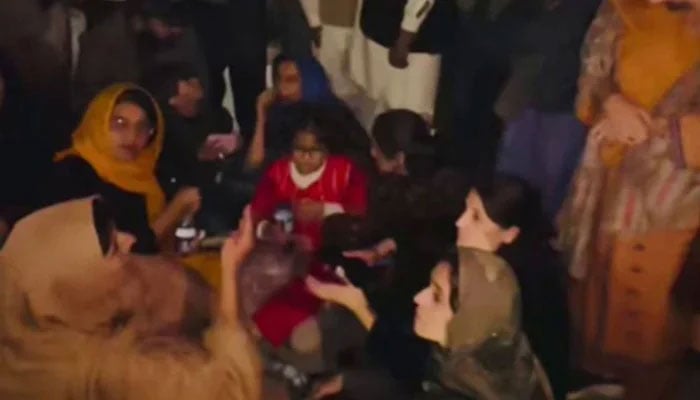
The spectacle unfolding around Adiala Jail has descended into a full-blown political circus that is diminishing institutions, fuelling unnecessary paranoia and, above all, mocking the very system the government claims to be safeguarding. When a senior PML-N leader can suggest, with a straight face, that Khyber Pakhtunkhwa Chief Minister Sohail Afridi go on a hunger strike “until death in Imran Khan’s love”, it reveals a level of unseriousness that would be comical if the stakes were not so grave. At a moment when the country badly needs sobriety and clarity, its politics is offering theatre. This entire circus around Adiala is an indictment of the system in place. When malicious rumours – first churned out by some Afghan media outlets and then enthusiastically amplified by India’s ‘Godi media’ – began swirling about the PTI founder’s health, the government had one straightforward responsibility: quash the speculation by allowing his family, party colleagues and lawyers to meet him. Instead, no one has been able to meet Imran Khan since November 4. Nearly a month without access to a former prime minister is bound to trigger alarm. In the current climate of mistrust, the jail administration’s insistence that Imran is ‘healthy’ will do little ease emotions, given the fragile credibility of the setup itself as well as the social media spin in place.
The official claim that meetings will take place only ‘according to the law’ also ring rather hollow when government representatives cannot quite articulate which law bars a prisoner from seeing his legal counsel or family for weeks on end. Meanwhile, warnings of potential PTI protests have also been held up as justification. That too is hardly a rationale one can support. There may in fact be a mix of reasons for the government’s position: fears that CM KP Sohail Afridi, if allowed inside, would emerge with ‘instructions’; worries that Imran Khan might issue directives on the 27th Amendment; and perhaps a desire to frustrate the PTI founder and signal to his supporters that optics no longer matter to a regime that prefers control over credibility. Whatever the motivations, the outcome is the same: a blatant violation of democratic norms and the basic rights owed to any prisoner. Thing is: rights are not conditional. They cannot be suspended simply because someone in power finds them inconvenient or because the detainee has a history of similar persecutorial steps. To deny a detainee access to his legal team and immediate family for no legally sound reason is indefensible and also sets a troubling precedent.
On the other side, the way the Indian media has exploited the opacity around Adiala is expected and needs to be carefully handled. New Delhi’s media ecosystem has long capitalised on Pakistan’s internal crises to push its own narratives and this time was no exception. As for the PTI, while desperation may have pushed the party and the former PM’s close ones to speak wherever they could, appearing on Indian platforms – given that ecosystem’s clear agenda – can at best be called unwise. India under Modi has descended to the worst forms of fascism. The irony of talking to their media is glaring. Why is everyone bent on turning all this into a national embarrassment? The solution remains simple: allow access. Transparency defuses hysteria. And to the PTI: there is nothing to be gained by turning to the worst in the region. Some transparency from the party would also be appreciated. Where are its political faces? Why are PTI officials – those elected in the past and now – somehow taking a backseat here? Social media provocations do not run parties. If anything, all this ends up ruining their case. Perhaps, a change in strategy is required there too – starting with taking to task whoever advised that India’s rabble-rousing media would be a good avenue to make one’s case.