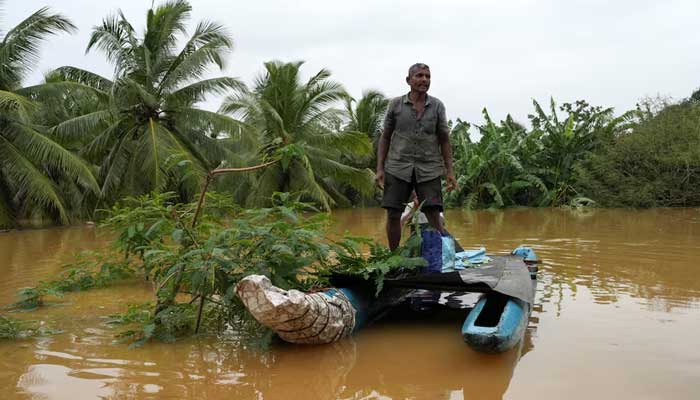
COLOMBO: The fatalities in the aftermath of a cyclone in Sri Lanka have reached 159 with the storm leaving hundreds of thousands displaced as authorities battle rising floodwaters in parts of the capital.
The northern part of Colombo was facing a major flood, as the water level in the Kelani River continued to rise, said the Disaster Management Centre (DMC).
The death toll had reached 159, with another 203 people missing, the DMC reported, following a week of heavy rains brought on by Cyclone Ditwah, which moved away from Sri Lanka on Saturday.
"Although the cyclone has left us, heavy rains upstream are now flooding low-lying areas along the banks of the Kelani River," a DMC official said.
President Anura Kumara Dissanayake declared a state of emergency on Saturday to deal with the aftermath of the cyclone and appealed for international aid.
India was the first to respond, sending relief supplies and two helicopters with crew to carry out rescue missions.
Japan said it will send a team to assess immediate needs and pledged further assistance.
While the rains have subsided across the island, several roads in the worst-affected central province remained inaccessible, the DMC said.
The extreme weather system has destroyed more than 20,000 homes and sent 122,000 people into state-run temporary shelters.
Another 833,000 people required assistance after being displaced by the floods.
Troops from the army, navy, and air force have been deployed alongside civilian workers and volunteers to assist with the relief effort.
Officials reported that about a third of the country remains without electricity or running water due to collapsed power lines and inundated water purification facilities. Internet connections have also been disrupted.
The cyclone has become Sri Lanka's deadliest natural disaster since 2017, when flooding and landslides claimed more than 200 lives and displaced hundreds of thousands.
The worst flooding since the turn of the century occurred in June 2003, when 254 people were killed.