ISLAMABAD: In a coordinated push to stabilise the economy, enhance export competitiveness and provide relief to citizens, the federal government, led by Prime Minister Shehbaz Sharif, has launched a series of major policy actions spanning energy pricing, export reforms, development spending and state-owned enterprise governance.
From withdrawing the longstanding Export Development Surcharge (EDS) to reducing prescribed gas prices, approving over Rs507 billion in development projects, and strengthening oversight of key state-owned enterprises (SOEs), the government is signalling a renewed focus on economic revival, institutional reform and public welfare.
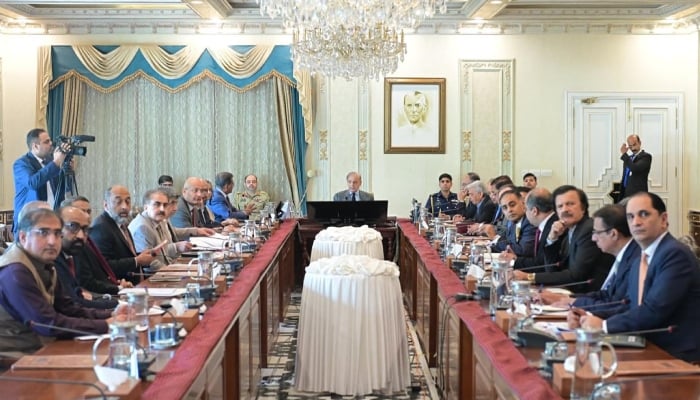
In a major policy development aimed at boosting Pakistan’s export competitiveness, the government decided to withdraw 0.25 per cent Export Development Surcharge (EDS) with an immediate effect. The decision was taken during a meeting held on Monday at the Prime Minister’s House, attended by senior federal ministers and members of the private sector.
The PM had earlier formed a dedicated Working Group on EDS, chaired by Musadaq Zulqarnain, to reassess the Export Development Fund (EDF) and suggest reforms to strengthen Pakistan’s export ecosystem. The group included private sector leaders Shahzad Saleem, Misbah Naqvi, Khurram Mukhtar, Arif Saeed, Ahmad Umair, and Sualeh Faruqi, alongside Secretary Commerce Bilal Azhar Kiyani and officials from EDF.
Speaking exclusively to The News Khurram Mukhtar said the recommendations were finalised after “a detailed evaluation of existing EDF-funded initiatives and their limited impact on export productivity.” He added, “The withdrawal of EDS is a critical step. Exporters have long argued that this surcharge had become a burden rather than a facilitator. The PM’s decision sends a strong signal that competitiveness is now the top priority.”
During the meeting, the PM also directed for formation of an interim steering committee to be led by private-sector representatives, which will oversee the utilisation of the Rs52 billion currently available in the EDF. The committee has been mandated to ensure that funds are spent strictly on R&D, skill development, and competitiveness-enhancing interventions rather than infrastructure-related projects.
Khurram Mukhtar noted that the new oversight mechanism would “ensure transparency, efficiency, and private-sector direction in how EDF resources are deployed.”
The meeting also touched on another longstanding concern of the export community: the disproportionately high tax burden on export-oriented industries compared to domestic businesses. A separate Working Group, led by Shahzad Saleem, has already submitted its recommendations on the taxation issue, and the prime minister is expected to call a dedicated meeting soon.
According to Mukhtar, “Taxation on export-oriented sectors has become distortionary and uncompetitive. The government’s willingness to examine this issue seriously is a positive sign for the industry.”
The policy shifts announced on Monday are expected to provide immediate relief to exporters while laying the groundwork for a more competitive and innovation-driven export sector.
However, gas consumers are set to bear a heavier burden as the Oil and Gas Regulatory Authority (Ogra) has recommended increasing prescribed gas prices for the Sui companies by up to 7.14 per cent for the fiscal year 2025-26.
Under Ogra’s determination, Sui Southern Gas Company Limited (SSGCL) may see prices rise by Rs118.47 per million British thermal units (mmbtu) to Rs1,777.02 from existing Rs1,658.55/mmbtu.
Sui Northern Gas Pipeline Limited (SNGPL) could charge Rs86.3 more per mmbtu, pushing its tariff to Rs1,852.80 from the current Rs1,766.50/mmbtu.
Notably, in their petitions filed with Ogra for the fiscal year 2025-26, SNGPL had requested an average gas price hike of 28.62pc, or Rs505.64 per mmbtu, while SNGPL sought a 21.82pc increase, or Rs361.87 per mmbtu. Both state-owned companies cited a combined shortfall of over Rs77 billion to cover rising costs and system inefficiencies. The SNGPL projected a revenue shortfall of Rs52.958 billion due to higher imported RLNG costs, operating expenses, and depreciation. It proposed a Rs189 per mmbtu increase for indigenous gas and Rs316.64 per mmbtu for RLNG services. SSGCL sought Rs125.41 per mmbtu for indigenous gas, Rs178.59 per mmbtu to recover past shortfalls, and Rs57.87 per mmbtu for RLNG costs.
Whereas, Ogra issued a press release that says, “Ogra has carefully reviewed the revenue requirement of SNGPL and SSGCL and rationalised the demand by optimising costs as well as revenues. Moreover, impact of deferred cargoes in case of Pakistan LNG Limited has been included to the benefit of gas consumers. Accordingly, average prescribed price for FY2025-26 of SNGPL & SSGCL has been provisionally determined at Rs1,804.08/mmbtu and Rs1,549.41/mmbtu for FY2025-26, thereby reducing the price by 3pc and 8pc respectively over current prescribed price in line with its mandate to protect consumers’ interest and promote fiscal discipline. Moreover, Ogra in pursuance of federal cabinet decision made on July 1, 2024 adjusted Rs13,565 million (Rs48.71 per mmbtu) in case of SNGPL and Rs47,315 million (or Rs227.62 per unit in case of SSGCL against previous shortfall /stock of gas circular debt.”
The regulator has asked the federal government for advice on category-wise sale prices. Any revision, as advised by federal government, shall be accordingly notified by Ogra. Till such time the existing category-wise natural gas sale prices shall continue to prevail.
Although in its determination on ERR, NEPRA has imposed a deduction on the prescribed prices of both the companies, the negative adjustments by the regulator was undone by allowing the collection of previous year shortfall.
However, the final tariffs, raising bills by Rs118.47 per mmbtu for SSGCL and Rs86.3 for SNGPL, contradict the press release, leaving consumers paying more than the “reduced” prices suggested. Questions sent to Ogra spokesperson about this discrepancy have not been answered, despite assurances that the queries had been forwarded to the relevant official.
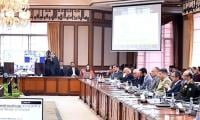
Meanwhile, the Executive Committee of National Economic Council (ECNEC) under the Chairmanship of Deputy Prime Minister Ishaq Dar approved development projects worth Rs507 billion, including the continuation of the Emergency Polio Eradication Programme (2026-2029).
The 4th Revised PC-I for the Emergency Plan for Polio Eradication (2026-2029) represents Pakistan’s commitment to achieving complete interruption of poliovirus transmission and securing global certification by 2029.
The extension and revised financial envelope of $639.54 million are designed to sustain essential eradication activities — vaccine procurement, campaign operations, surveillance, and community engagement — during the programme’s final phase.
While the project demonstrates strong strategic alignment with the Global Polio Eradication Initiative (GPEI) and the National Emergency Action Plan (NEAP), several critical considerations emerge. The programme remains entirely dependent on external financing, primarily through grants and loans from development partners and the Islamic Development Bank.
This dependence underscores the need for a clear transition and sustainability strategy, enabling gradual integration of polio assets — workforce, surveillance systems, and logistics — into the Expanded Programme on Immunisation (EPI) and the broader Primary Health Care framework. Operationally, Pakistan’s well-established Emergency Operations Centre (EOC) network and multi-tiered governance mechanism provide an effective platform for coordination and accountability.
However, performance audits, risk-mitigation measures, and stronger provincial disaggregation of financial and physical targets are required to ensure transparency and efficiency. Sustained political ownership at federal and provincial levels, continuous community engagement to address refusals, and security protection for frontline workers remain essential preconditions for success.
According to official communication, ECNEC approved development projects worth over Rs507 billion, covering key sectors including education, health, water supply, and major national infrastructure. ECNEC reviewed a presentation on the PIMA Action Plan: Specific Guidance for Appraisal under the IMF programme and while approving the appraisal guidelines, directed that an update on review of economic/social discount rate by PIDE be submitted within two months.
In the education sector, the Committee approved the revised project for reconstruction of flood-affected schools in Sindh, which will now cover 481 schools on a 50:50 cost-sharing basis between the federal government and the Sindh government. In the health sector, ECNEC cleared the restructured KP Human Capital Investment Project (Health Component), funded through a World Bank loan.
For water supply and municipal services, the revised Karachi Water & Sewerage Services Improvement Project (KWSSIP) Phase II was approved, incorporating new financing from the European Investment Bank and an expanded scope with additional filter plants.
Major infrastructure approvals included the Raising of Mangla Dam Project and key road projects such as the revised Ziarat Mor-Kech-Harnai and Harnai-Sanjavi roads, as well as a new 110km road from Iran border to Panjgur to open a new international border point. ECNEC also approved the revised land acquisition and compensation plan for the Karachi-Lahore Motorway.
In Balochistan, the Committee endorsed the revised Water Resources Development Sector Project valued at Rs49.9 billion. In Sindh, the Flood Response Emergency Housing Project (Phase III) of Rs42 billion was approved to support reconstruction in flood-affected communities.
In a related development, the Cabinet Committee on the State Owned Enterprises (CCoSOEs) has approved the appointment of independent directors to the Board of Zarai Taraqiati Bank Limited (ZTBL), Port Qasim Authority, and the nomination to fill the casual vacancy on the Board of Sui Northern Gas Pipelines Limited (SNGPL).
The CCoSOEs also approved the Board members of Sindh Engineering (Pvt) Limited (SEL), the Small and Medium Enterprises Development Authority (SMEDA), and the constitution of the Board of Directors of the State Engineering Corporation (SEC).
The CCoSOEs met in Islamabad under the chairmanship of the Federal Minister for Finance and Revenue, Senator Muhammad Aurangzeb on Monday.
The Committee considered summaries submitted by the Finance Division, Maritime Affairs Division, Petroleum Division, and the Industries and Production Division, and approved the agenda items presented. These included the appointment of an independent director to the Board of Zarai Taraqiati Bank Limited (ZTBL), put forward by the Finance Division; the appointment of independent directors to the Board of Port Qasim Authority, Karachi, as proposed by the Maritime Affairs Division; and the nomination to fill the casual vacancy on the Board of Sui Northern Gas Pipelines Limited (SNGPL), submitted by the Petroleum Division.
The Committee also approved three summaries of the Industries and Production Division, namely the constitution of the Board of Directors for Sindh Engineering (Pvt) Limited (SEL), the appointment of a private sector member from Punjab to the Board of the Small and Medium Enterprises Development Authority (SMEDA), and the constitution of the Board of Directors of the State Engineering Corporation (SEC).
Concluding the meeting, the Chair appreciated the diligence exercised in selecting suitable candidates from the private sector to serve as independent directors, underscoring the importance of continuing this rigorous approach to ensure that individuals with the requisite experience, expertise, knowledge, and professional acumen are appointed to the governing boards of these and other state-owned enterprises.
The Committee also asked the Finance Division and the Privatization Division to undertake a comprehensive examination, evaluation, and stock-taking of outstanding litigation across SOEs earmarked for privatization, and, in coordination with the relevant Ministries and Law Division, to work on identifying mechanisms to smoothen these issues in order to ensure their readiness for a seamless privatization process.