Pakistan has produced several notable young achievers, among them Arfa Karim Randhawa (1995–2012), who became the world’s youngest Microsoft Certified Professional at the age of nine.
Less frequently discussed is the role her early learning environment played: access to technology at home, encouragement from her parents and primary school teachers who enabled her to move beyond the standard curriculum and engage in additional ICT learning.
Arfa’s trajectory illustrates a broader point. The foundations for later achievement are often established in the early and primary years, yet these stages of education tend to receive comparatively little attention in Pakistan. Public discourse frequently focuses on secondary and higher education, while the formative years remain under-prioritised.
Primary education serves as the bedrock upon which all future learning is built. Strengthening learning at this stage is essential not only for smoother progression into secondary education but also for cultivating a generation that is intellectually inquisitive and productively equipped to contribute to society and the economy.
A recent trend in Pakistan and globally is the shift towards conceptual learning (sometimes referred to as outcome-based education or student learning outcomes – SLOs). This involves understanding and internalising concepts, recognising relationships between ideas and applying this knowledge to real-world problems. It is about grasping the ‘why’ and ‘how’ behind knowledge, enabling students to apply what they learn to new and unfamiliar situations. However, the true test is in the implementation of such an approach without due attention to stages that are crucial to early years development.
At the secondary level, where subjects become more complex and interconnected, such conceptual learning enables deeper engagement and is essential for mastering disciplines that build upon cumulative bodies of knowledge, such as mathematics, science, literature and social studies. Although thinking of education as strictly linear is limiting, subjects that develop structurally over time rely heavily on the foundational understanding established during the primary years of schooling.
The distinctive feature of the primary years is that children’s minds are highly malleable and receptive to new ideas. This is the stage at which a Socratic mindset can be effectively nurtured. The key is to preserve their natural curiosity and begin developing critical thinking skills. Under such conducive conditions, it is unsurprising that Arfa Karim’s inherent superior abilities grew so rapidly at an early age. As Flouria and Hurjui (2015) note, “critical thinking is an active process… which involves thought processes that start with the active accumulation of information and end in well-reasoned decisions.”
Primary education is where the seeds of curiosity are sown through the introduction of foundational concepts. For example, understanding numbers and their relationships in primary mathematics lays the groundwork for algebra and calculus in secondary school. Similarly, early literacy skills such as decoding words and understanding narrative structures enable students to tackle complex texts and analytical writing later on.
Primary schooling begins with literacy and numeracy, both of which are particularly critical for conceptual learning at the secondary level. Literacy, encompassing reading, writing, speaking and listening, is the gateway to all subjects. A student who struggles with reading fluency or comprehension in primary school will face barriers in secondary subjects such as history, literature or science, where reading complex texts is essential. Primary education builds literacy through phonics, vocabulary and comprehension strategies, gradually enabling students to engage with abstract ideas.
Similarly, numeracy underpins later mathematical reasoning. Primary mathematics introduces students to addition, subtraction, multiplication, division, fractions and basic geometry. These are not isolated facts but interconnected concepts forming the foundation for advanced mathematics. A student who understands fractions in primary school is better prepared for ratios, proportions and algebraic fractions in secondary school. Without a solid numeracy base, the increasingly abstract nature of secondary mathematics becomes difficult to manage.
Primary education is also about preparing the mind to connect conceptual knowledge with its real-world application. A primary science lesson on the water cycle, for instance, may involve observation, discussion and drawing conclusions from simple experiments. This not only teaches a scientific concept but also fosters curiosity, teamwork and the ability to link observation with theory skills needed in secondary science classes.
Primary school is therefore a place for developing both scholastic abilities and intellectual dispositions, including a growth mindset, which supports learner agency. As seen in Arfa’s case, this mindset reflects the ability to imagine and aspire beyond the curricular confines of knowledge. By fostering an environment where mistakes serve as opportunities for learning, primary teachers help students take intellectual risks. This becomes crucial in secondary school, where students encounter more challenging material and must persevere to achieve mastery.
The transition from primary to secondary education is a critical juncture. Secondary schooling introduces greater subject specialisation, instruction from different teachers, and a greater emphasis on independent learning. Students who lack a strong primary foundation may struggle to adapt, leading to gaps in understanding that persist.
Primary education helps bridge this transition by equipping students with tools to navigate secondary complexity. Primary teachers often emphasise interdisciplinary connections; a lesson on ecosystems, for example, may integrate science, geography and mathematics. This interdisciplinary grounding prepares students for the interconnected nature of secondary learning.
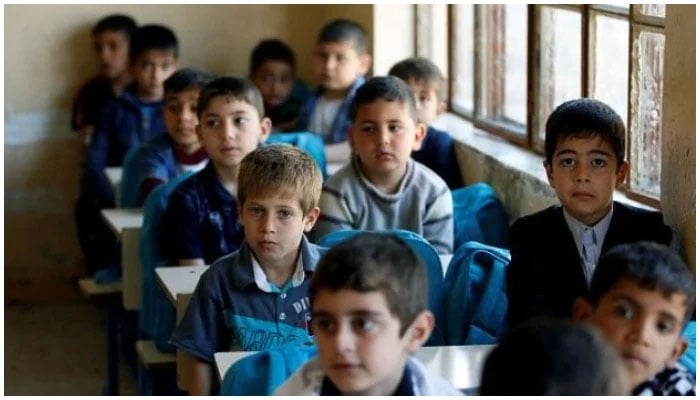
The challenge is to realise the true potential of education from the primary stage in a context with multidimensional challenges. Khyber Pakhtunkhwa for example, faces major barriers to realising effective primary education, including teacher shortages with very high student–teacher ratios, overcrowded classrooms, heavy textbook requirements, unclear enrollment policies, automatic grade promotion without required competencies, financial limitations and limited governmental attention. These conditions hinder implementation of outcome-based education.
Dr Ahsan Rehman is from the Sarhad University of Science and Information Technology, Peshawar. Dr Aliya Khalid is from the University of Oxford, UK. This article is from consortium research, part of the DARE-RC project funded by UK International Development from the UK government. Its implementation is led by Oxford Policy Management in partnership with its consortium partners.