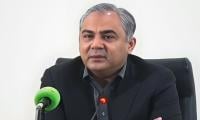
Islamabad:Pakistan has called for urgent, predictable and equitable climate finance, enhanced technology transfer and stronger global cooperation to support climate-vulnerable countries at a series of high-level side events organised by the climate change ministry on the sidelines of the UN Climate Summit (COP30).
The speakers included climate change minister Senator Dr Musadik Masood Malik, state minister Shezra Mansab Kharal and secretary Aisha Humera Moriani who highlighted Pakistan’s climate challenges, adaptation priorities and ongoing initiatives as well as the country’s growing diplomatic role in advancing climate justice, resilience-building and system-wide reform in global climate governance.
Secretary Moriani, who led the planning and coordination of Pakistan’s engagements at COP30, said the ministry was focused on ensuring that Pakistan’s climate narrative was backed by solid evidence, technical insights and clear policy direction.
She noted that Pakistan’s pavilion had become a hub for discussion on climate adaptation needs of developing countries and the importance of international support systems that were designed “for the realities of those most at risk.”
The secretary added that the side events reflected Pakistan’s commitment to showcasing practical solutions, from disaster early warning systems and watershed rehabilitation to vocational upskilling and climate-smart economic transition.
“Pakistan’s experience has demonstrated that resilience is achievable when science, institutions and financing move in the same direction,” she noted.
Minister Malik said that Pakistan and other mountain states continued to face the consequences of global emissions they did not cause.
He said despite contributing less than one percent to global greenhouse gases, Pakistan suffered disproportionately from climate impacts, including glacial lake outburst floods, destabilised snowmelt patterns and climate-driven hydrological disruptions.
“There’s a need for creating dedicated disaster-risk financing windows, particularly anticipatory financing, to enable communities to act before crises escalate,” he said.
The minister noted that the global economy was undergoing a structural transformation and that countries investing early in human capital would have a competitive advantage.
He said Pakistan required major investment in skill development, digital training platforms, industrial partnerships and vocational programmes aligned with emerging green sectors.
Minister Kharal urged regional governments to establish a joint scientific cooperation platform for high-mountain risk assessment, including shared satellite monitoring, climate modelling and early warning data.
“Adaptation must be resourced at the same scale as climate losses,” she said.
International experts echoed the call, noting that cryosphere research and monitoring remained severely underfunded globally, and that frontline states required predictable long-term investment to strengthen disaster-proof infrastructure, revive watersheds and scale up nature-based solutions.