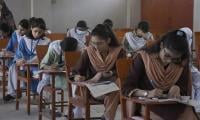
The Public Accounts Committee (PAC) of the Sindh Assembly on Tuesday directed the Karachi University (KU) administration to immediately review and replace its decades-old Karachi–Sindh–Pakistan (KSP) admission policy and ensure that all admissions are granted strictly on open merit based on Sindh’s domicile.
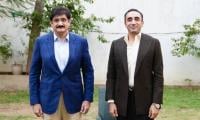
The directives were issued during a PAC meeting held at the committee room under the chairmanship of Nisar Ahmed Khuhro. The committee examined audit paras of Karachi University for fiscal years 2021 to 2023.
The meeting was attended by Secretary Sindh Higher Education Commission Moin Siddiqui, KU Acting Vice-Chancellor Prof Dr Haris Shoaib, Registrar Dr Imran Siddiqui, and other senior officials.
During the session, the PAC chairman asked the KU administration whether admissions were being offered on open merit or still under the KSP quota system.
Registrar Dr Imran Ahmed informed the committee that since 1990, under decisions of the Syndicate and Academic Council, admissions have continued under the KSP (Karachi, Sindh and Pakistan) policy, and the policy “remains in force.” Only a couple of faculties, he said, had adopted open merit.
Khuhro expressed displeasure, asking: “Is the university treating Karachi as separate from Sindh? When NED and other universities conduct merit-based admissions through entry tests, why is the KU still following KSP?”
He asserted that students from across Sindh holding Sindh’s domicile must have equal access to admissions at KU on merit. He ordered the university to reconsider the KSP policy and switch entirely to Sindh domicile–based open merit admissions after test-based evaluation. The PAC also sought a progress report in the next meeting.
Besides, the PAC expressed strong displeasure over Karachi University’s failure to operationalise the Shaheed Benazir Bhutto Chair, despite spending Rs422 million on the project more than 13 years ago. Khuhro questioned why the chair was still dormant. “The project was handed over to the university years ago. Why has it not been made functional?” added Khuhro.
KU officials responded that additional funds were required, and a revised PC-I had been submitted for approval. The PAC directed the university to take immediate steps to operationalise the chair.
On the other hand, proceeding with another issue related to the Sindh Government Printing Press, the PAC was informed that the Sindh Government Printing Press, located at the Governor House, suffered a loss of Rs281 million during 2022–2023. According to audit officials, the press spent Rs395 million against an allocation of Rs114 million, has not maintained annual accounts since 1970, and has failed to increase revenue due to government departments printing their material from private vendors.
Printing Press officials informed the PAC that government budget books, gazette notifications, and other official documents are printed through the Sindh Government Press; however, most departments get their printing done privately without obtaining the mandatory NOC; only Sindh Rangers and the Ombudsman’s Office have been issued printing NOCs.
Officials said that if departments deposited fees through challans and utilised the government press, “revenue would increase significantly.”
Khuhro asked whether the existing printing presses had the capacity to handle province-wide printing needs. Officials confirmed they had a centralized publication system and adequate manpower.
The PAC was also informed that the Khairpur Government Printing Press suffered losses of Rs40 million. Established in 1847, the Karachi and Khairpur printing presses remain the oldest public sector printing facilities in Sindh.
The PAC directed the chief secretary to issue instructions to all departments to ensure that all government printing is done exclusively through the Sindh Government Printing Press.