The world’s two largest economies are once again locked in a familiar dance of brinkmanship. On October 9, China expanded its export controls on rare earth minerals, which are crucial for everything from electric vehicles to fighter jets, adding five more elements to a list that had already been tightened in April.
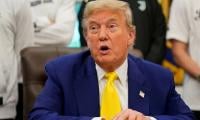
This move, effective December 1, targets foreign products containing even trace amounts of these Chinese-sourced materials, a clear signal of Beijing's intent to wield its near-monopoly – over 90 per cent of global processing – as leverage. In response, President Donald Trump announced an additional 100 per cent tariff on Chinese imports starting November 1, potentially pushing rates on some goods to 130 per cent, while threatening curbs on US exports of critical software. Markets shuddered, with the S&P 500 dropping over 2.0 per cent in a single day, evoking memories of the 2018-2019 trade war that disrupted global supply chains and slowed growth worldwide.
This latest flare-up fits into a broader pattern that has defined Sino-American relations for over a decade: a shift from interdependence to managed rivalry. The underlying trajectory remains unchanged – a dual path of competitive confrontation and deliberate decoupling in sensitive sectors like technology and critical resources. Minor frictions, such as these, are inevitable, and the chances of a sweeping, enduing agreement are slim.
History shows that past deals, like the Phase One accord under Trump’s first term, offered temporary relief but failed to resolve core issues: intellectual property theft, state subsidies, and market access. Today, with both nations entrenched in their positions, the relationship resembles a cold war more than a trade spat, where economic tools serve strategic ends.
Yet, amid the saber-rattling, glimmers of dialogue persist. The Asia-Pacific Economic Cooperation (APEC) summit in South Korea, set for late October, could provide a venue for Presidents Trump and Xi Jinping to meet – their first face-to-face since 2019. China's rare earth restrictions appear timed as a tactical escalation, building leverage before these talks. Beijing has clarified that the controls are not outright bans; export applications meeting regulations will proceed, and has urged the US to return to negotiations. On the American side, Vice President J D Vance emphasised Trump's role as a "reasonable negotiator" who values his rapport with Xi. Neither the US tariff hike nor China's licensing system has shifted timelines, leaving a window for intensive bargaining in the coming weeks to avert further pain.
This ‘escalate then negotiate’ dynamic is classic gamesmanship. In the short term, it heightens uncertainty – markets price in volatility, headlines swing wildly and businesses brace for disruptions. Key milestones loom: details on US software restrictions, the November 1 tariff deadline, and December 1 for rare earth enforcement. If Washington releases stringent implementation rules, escalation could solidify; ambiguity, however, preserves room for compromise. The pattern echoes earlier rounds, where threats preceded concessions, but it risks spiraling into a prolonged cycle if miscalculated.
Why is China acting now? Two factors stand out. First, Beijing has advanced its domestic chip and computing ecosystem significantly. A self-reliant AI supply chain is emerging, albeit less efficient and costlier than US alternatives. This reduces vulnerability to American export bans on high-end semiconductors, allowing China to accelerate substitutions if pressures mount.
Second, the rare earth curbs send a broader message: efforts to contain China's rise in AI, robotics, and autonomous vehicles will carry costs for the US and its allies. By controlling these strategic inputs – essential for semiconductors and defence – Beijing aims to deter full participation in Washington's tech blockade, fracturing potential coalitions.
Both sides hold strong cards. The US leverages its dominance in software, finance and alliances; discussions among G7 nations about price floors or taxes on Chinese rare earths signal attempts to counter Beijing's grip. China, meanwhile, exploits its resource advantages and vast market. Short-term intensification seems probable, but a return to localised de-escalation – perhaps limited tariff pauses or rare earth access assurances – could follow after negotiations. Tail risks, like a canceled APEC meeting or broader sanctions, warrant caution; they could exacerbate global inflation, already strained by prior tariffs averaging 58 per cent on Chinese goods.
The costs are mounting for everyone. American consumers face higher prices on imports, from electronics to furniture, while US exporters suffer retaliation – evident in new port fees and shipping sanctions. China grapples with slowing growth and unemployment, making prolonged conflict unsustainable. Globally, supply chains fragment, innovation stalls, and allies like Europe and Japan hesitate to fully align with either power. The trade war's revival threatens the fragile post-pandemic recovery, with the WTO noting resilient but vulnerable growth in 2025.
Practical solutions exist beyond endless tit-for-tat. At APEC, leaders should prioritise confidence-building: a moratorium on new tariffs in exchange for transparent rare earth export processes. Longer term, the US must invest in diversifying supplies – bolstering domestic mining, like California's sole rare earth operation and partnering with Australia or Canada. China could ease subsidies in state firms to level the playing field. Multilateral forums, such as the WTO, offer avenues for rules on critical minerals, preventing weaponisation. Both nations should carve out cooperation in non-sensitive areas, like climate tech, where mutual dependence persists.
Ultimately, complete decoupling is illusory in our interconnected world. Managed competition, with clear red lines and open channels, serves both powers better than mutual destruction. As tensions simmer, leaders must recall that true strength lies not in isolation, but in strategic restraint. The coming weeks will test whether they choose escalation or equilibrium.
The writer is a freelance contributor.