Pakistan is facing a dangerous convergence of crises. The country’s already fragile social fabric is under severe strain as the Afghan Taliban regime’s escalating cross-border assaults coincide with soaring inflation, political uncertainty and economic distress.
For millions of Pakistanis, fear of violence now blends with financial insecurity, creating a pervasive sense of vulnerability that transcends regional boundaries and threatens national resilience.
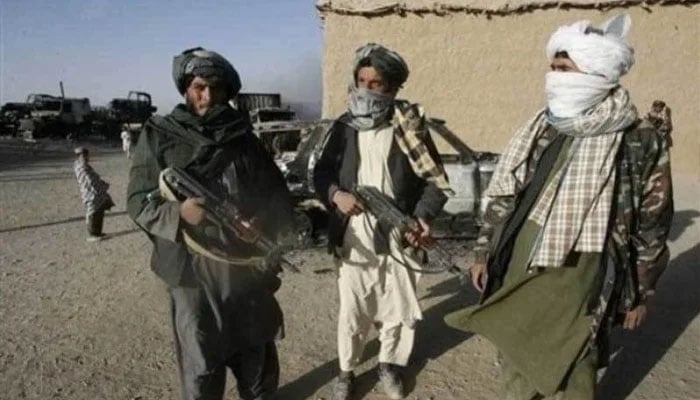
Conflicts between Pakistan and Afghanistan broke out in mid-October 2025. Following ‘unprovoked’ attacks by Afghan Taliban troops on border stations in Khyber Pakhtunkhwa and Balochistan, 23 Pakistani soldiers were killed. In response, the Pakistani military used precise attacks to neutralise more than 200 insurgents and demolish several Taliban bases.
The government denounced the attacks as a ‘blatant violation’ of Pakistan’s sovereignty and charged that the Afghan government was giving the TTP and other extremist groups sanctuary. These strikes, according to analysts, seem to be planned to destabilise Pakistan and instil insecurity in border areas rather than being random or isolated.
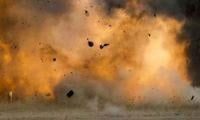
The threat is no longer confined to remote areas. On November 11, 2025, Islamabad witnessed its deadliest attack in years when a suicide bomber detonated outside the District Judicial Complex in G–11, killing 12 people and injuring 36 others, including police offi1cers and civilians. The TTP group, Jamaat-ul-Ahrar, took credit. According to investigations, the operation was organised from the other side of the Afghan border, with operators offering tactical and logistical assistance.
On November 10, 2025, just one day prior, insurgents attacked Cadet College Wana in South Waziristan. Attackers tried to enter the school after a car loaded with explosives crashed into the front entrance. Security personnel moved quickly to neutralise the attackers and safely evacuate every student.
The cross-border nature of these attacks is highlighted by ISPR’s confirmation that the assailants were connected to handlers headquartered in Afghanistan. The public’s dread has increased as a result of these consecutive incidents: terrorism is attacking both the capital and educational institutions, undermining people’s sense of security in daily life.
The Jamaat-ul-Ahrar faction of the TTP claimed responsibility. Investigations revealed the attack was planned from across the Afghan border, with operatives providing logistical and tactical support. Just a day earlier, on 10 November 2025, militants targeted Cadet College Wana in South Waziristan. And intruders tried to enter the school. Security personnel moved quickly to neutralise the attackers and safely evacuate every student.
The cross-border nature of these attacks is highlighted by ISPR’s confirmation that the assailants were connected to handlers headquartered in Afghanistan. The public’s dread has increased as a result of these consecutive incidents: terrorism is attacking both the capital and educational institutions, undermining people’s sense of security in daily life.
The issue is not limited to terrorism. Pakistan is also experiencing unprecedented inflation. Wheat, veggies, milk and fuel, everyday necessities, have grown more and more expensive. Household expenditures are already tight due to electricity expenses. Many families have to make difficult decisions, prioritising survival over long-term goals. Frustrated by unstable employment and rising expenses, young professionals are considering moving abroad. These pressures exacerbate public anxiety when coupled with political unpredictability and poor governance.
Pakistan’s response, according to experts, needs to be multifaceted. To stop further incursions and destroy extremist infrastructure across the border, border security, monitoring and intelligence sharing must be strengthened. Addressing social and economic weaknesses is equally vital.
Public worry can be reduced by policies that lower inflationary pressures, support displaced or vulnerable people and create employment opportunities. Community-based programmes for resilience and mental health are also essential. Communities can recover from trauma and regain a sense of normalcy by offering psychosocial support to women, children and frontline employees in high-risk locations. Rebuilding trust and confidence requires transparent government, unambiguous state communication and evident citizen protection.
Uncertainty, inflation and terrorism come together to put Pakistan’s fortitude to the test. In the absence of swift action, dread can become a constant aspect of daily life, eroding the social ties that have traditionally enabled the country to weather crises. Pakistan can only withstand this rising wave of dread by combining robust security measures with significant economic assistance, social support, and an inclusive government. The nation’s resiliency hinges not just on its ability to combat militants but also on its capacity to instil hope, confidence and a sense of security in its people.
Pakistan is in a difficult situation. Whether courage, leadership and social cohesiveness can restore stability for the nation and its people, or if fear and fragility define the country’s future, will depend on the decisions taken today.
The recent resurgence of terrorism after years of relative calm is not just reopening old wounds but creating new ones. These strikes are tearing apart Pakistan’s social fabric in addition to causing physical harm.
Fear is taking over daily life, destroying trust, alienating communities and becoming a permanent companion. The psychological toll is severe: children, families and entire neighbourhoods are being impacted by the stealthy spread of anxiety, trauma, and mental exhaustion. If these problems are not resolved, they will linger longer than the actual violence, severely impairing resilience and national cohesion.
Pakistan’s struggle now takes place not just on the battlefield but also in the hearts and minds of its citizens. Rebuilding trust, investing in social cohesion and mental health and restoring optimism are just as important as military actions. In the absence of this, the nation runs the risk of a future in which fragility becomes irreversible and fear defines identity.
The writer has a doctorate in clinical psychology and serves as a consultant at the SDPI. She can be reached at: [email protected]