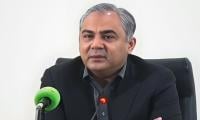
ISLAMABAD/LONDON: Pakistan made it clear on Friday that the recently signed Strategic Mutual Defence Agreement with Saudi Arabia was purely defensive in nature and not aimed at any third country.
During the weekly media briefing, the Foreign Office (FO) spokesperson faced a volley of questions about the pact, but responded by referring to a written statement. “Pakistan and Saudi Arabia enjoy a long and distinguished history of brotherhood and cooperation. Their bilateral relations are unique, enduring, and multifaceted. The leadership of both nations shares a common vision to take this relationship to new heights. The bond lives in the hearts of the people of the two countries. Pakistanis have special sentiments for Saudi Arabia, the land of Makkah and Medina, and hold the royal family in high esteem as custodians of the holy sites,” he said.
He underlined that since the 1960s, defence cooperation has remained a principal pillar of Pakistan-Saudi Arabia’s all-encompassing ties.
“The strategic mutual defence agreement formalises this decades-old and robust defence partnership. It is defensive in nature and not directed against any third country. It will contribute to regional peace, security, and stability. The statement issued by both countries is self-explanatory. Any misplaced attribution or speculation on hypothetical scenarios is unwarranted,” he added.
When asked specifically if Pakistan’s nuclear policy or nuclear doctrine still remains India specific, and whether it is regularly reviewed and coordinated, and whether this position is shared with relevant stakeholders like the US, the spokesperson shrugged off the query by responding that this doctrine was “an internal thing”, appeared annoyed, saying he was not in the Foreign Office to comment on the specificity of Pakistan’s doctrine.
“In that sense, we don’t coordinate with anyone. We have strategic stability dialogue with a number of countries where we exchange our views and brief each other on our assessments. This is an ongoing process, but the doctrine which we have evolved and continue to do so, is something internal to us. It is not linked to what other countries tell us or say to us. I am not here to comment on the specificity of the doctrine, but our position is well known,” he clarified.
To another query on the agreement, he pointed out that Pakistan-Saudi Arabia relationship is a multifaceted relationship. “Defence has been a very critical and important component of it. Just as defence is important, economic cooperation is also an important component. But, at the same time, within the overall ambit, these are different tracks,” he replied without going into details as to what these “different tracks” were.
He explained that Pakistan-Saudi Arabia relationship in terms of overall domain is guided by Pakistan-Saudi Supreme Coordination Council, an overarching framework of cooperation. “It has three pillars, and one of them is economic. While the pillars of cooperation are interlinked, they are designed to improve cooperation independently of the other areas. So economic cooperation remains robust, and we look forward to further deepening economic cooperation between the two countries. About details of the defence cooperation or the defence production sector, I am not in a position to comment on that, but overall defence relations remain robust and solid,” he added.
On fresh threats from the Indian Prime Minister against Pakistan that Operation Sindoor had not been wrapped up, the spokesperson said that these remarks reflect a dangerous tendency to distort facts, justify aggression and glorify the conflict for domestic consumption.
“Pakistan’s resounding success in neutralising the Indian fighter jets and military targets is an indisputable fact. Instead of misleading their compatriots, the Indian leaders would be well advised to acknowledge the losses incurred by their armed forces. India should reflect on its own campaign of orchestrating targeted assassinations, subversion and terrorism in foreign territories, rather than maligning others for terrorism,” he responded.
The FO rejected what it called India’s misleading and self-serving narrative of an alleged nuclear threat by Pakistan, terming it an attempt to mask its own escalatory impulses while shifting blame onto Islamabad.
“It is well known that Pakistan deterred India through its conventional capabilities, with discipline and restraint as its guiding principles. India’s continued reliance on disinformation, jingoism, and chest-thumping risks destabilising South Asia. However, as a responsible country, Pakistan remains committed to peace, regional stability, and a meaningful dialogue for resolving all outstanding issues, including the core dispute of Jammu and Kashmir,” the spokesperson said.
He also clarified that Pakistan had not received any official intimation about India barring Sikh pilgrims from visiting Pakistan.
“Pakistan is a proud custodian of many sacred Sikh sites. Each year, it welcomes thousands of pilgrims from across the world, and continues to facilitate visits under the 1974 bilateral protocol on religious sites. Though Kartarpur Sahib was affected by flooding during the recent monsoon, it has now been fully restored,” he noted.
He underlined that Pakistan has never closed the Kartarpur Corridor, even during recent hostilities. “It is the Indian side that has not been allowing pilgrims to avail the corridor since May 2025. As always, we are ready to welcome Sikh pilgrims from India,” he added.
The spokesperson clarified that Pakistan has no plans to send its Special Representative for Afghanistan, Ambassador Sadiq Khan, to Kabul with any message.
“The prime minister’s statement — that Kabul has to choose between the TTP and Pakistan — is very clear and already in the public domain. It authoritatively outlines Pakistan’s position. Afghanistan is a close neighbour, and we desire a brotherly relationship as good neighbours should. But the prime minister’s policy statement is clear: Kabul must choose either Pakistan or the TTP. This message has also been communicated to the Afghan side through diplomatic channels,” the spokesperson said.
He added that in view of the clarity of the PM’s message, there was no need for further reinforcement. “If another visit by Ambassador Sadiq is planned in the future, the media will be duly briefed,” he assured.
Separately, Deputy Prime Minister and Foreign Minister Ishaq Dar said on Friday that several countries had expressed interest in pursuing strategic defence agreements with Pakistan, following its landmark pact with Saudi Arabia.
“It is premature to say something, but after this development, other countries have also expressed a desire for similar arrangements,” the deputy premier said while speaking to journalists in London. “But such things follow a due process. Even with Saudi Arabia, it took several months to finalise.”
His statement came two days after Pakistan and Saudi Arabia signed the Strategic Mutual Defence Agreement, pledging to treat any aggression against one country as aggression against both.
The Pakistan-Saudi Arabia pact was signed during Prime Minister Shehbaz Sharif’s state visit to Riyadh on Sept 17, where he was received by Crown Prince and PM Mohammed bin Salman at Al-Yamamah Palace.
“This agreement, which reflects the shared commitment of both nations to enhance their security and to achieve security and peace in the region and the world, aims to develop aspects of defence cooperation between the two countries and strengthen joint deterrence against any aggression. The agreement states that any aggression against either country shall be considered an aggression against both,” a statement from the prime minister’s office said.
Dar termed the defence agreement a historic milestone, saying that there had always been informal beliefs among the government and the people of Pakistan regarding the security of Saudi Arabia, especially the protection of Haramain Sharifain, but this has become formal now after the signing of the pact.
He noted that both Pakistan and Saudi Arabia were satisfied and happy with the agreement, adding that the Kingdom had consistently stood by Pakistan during difficult times. “Saudi Arabia played a key role in supporting Pakistan following the international crisis and during the recent economic crisis,” he added.
Meanwhile, Pakistan Peoples Party (PPP) Chairman Bilawal Bhutto-Zardari Friday described the recently concluded defence agreement between Pakistan and Saudi Arabia as a positive step for both nations, adding that every Pakistani cherishes the duty of safeguarding the holy cities of Makkah and Madinah.
Speaking to the media after inspecting the Greater Karachi Sewerage Project (S-III), he said the provincial and federal governments were in constant coordination, and reminded that the prime minister had promised new projects for Karachi during his visit, which he expected would be fulfilled.
On foreign policy, Bilawal hailed President Asif Ali Zardari’s recent visit to China as “highly successful”, saying it would boost trade and strengthen bilateral ties.
Reaffirming his stance, Bilawal called the defence agreement with Saudi Arabia in Pakistan’s national interest and reiterated that every Pakistani wished to defend the sanctity of Makkah and Madinah. In a strongly worded remark, he said Pakistan had recently defeated India in war and criticised New Delhi for dragging cricket into politics.