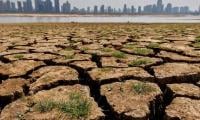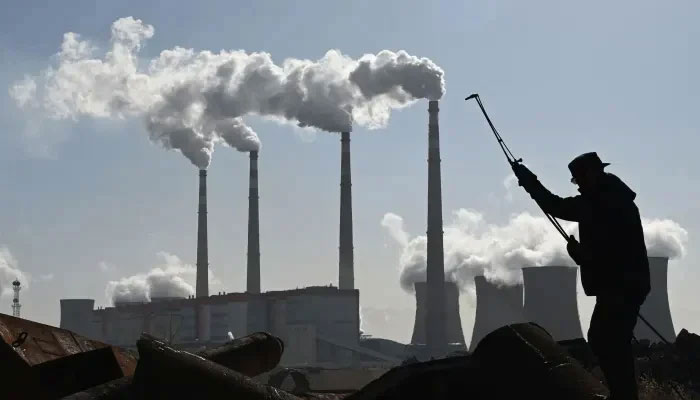
The term ‘climate accountability’ refers to holding accountable all entities causing climate change. This also includes developed nations accelerating the climate change phenomenon due to their unsustainable development practices and individuals running carbon-emitting vehicles on roads. There are three levels of climate accountability: international, national, and individual.
At the international level, climate accountability can be ensured through international law, mainly through the United Nations Framework Convention on Climate Change (UNFCCC). The historical background of the UNFCCC can be traced back to 1992 when, for the first time, states gathered during the ‘Earth Summit’ to discuss the environmental impacts on our planet in relation to economic advancement. This first step led to subsequent developments in the UNFCCC, Kyoto Protocol and the Convention on Biological Diversity.
The UNFCCC's regular annual negotiations resulted in the signing of the Paris Agreement in 2015, which is considered a remarkable victory because 196 nations adopted it and committed to reducing their carbon emissions to keep the global temperature below 2 C above pre-industrial levels and pursue efforts to limit it to 1.5 C above pre-industrial levels. It is also the main source of international law that governs the climate change problem.
Under the Paris Agreement, many steps have been taken to design governing mechanisms like climate finance, global stocktakes, carbon credits, National Determined Contributions (NDCs) and the role of gender to make progress toward achieving the target. However, many targets fell short of expected results due to a lack of solid mechanisms to make nations accountable.
No diplomatic or economic sanctions are attached to the nonfulfillment of commitments under the Paris Agreement to deter the nations. As a result, many rich countries do not compromise on their economic interests to implement pledges made in their NDCs or financially contribute to the Green Climate Fund and Loss & Damage Fund (L&D) to support developing countries. This shows the weakness of international law in implementing the decisions to ensure climate accountability at the global level. International law is also jeopardised by the principle of ‘might is right’ and violated by rich and strong nations in their interests, undermining the global efforts to mitigate and adapt to climate change.
Similarly, the second level of climate accountability is the national level. Nations have realised the dark reality of climate change impacts. Many countries have already amended or passed new laws to fight climate change. The Philippines became the first country to pass the Climate Accountability Bill in 2023.
Pakistan is also taking several initiatives to strengthen climate accountability mechanisms to mitigate and adapt to climate change. The National Assembly Standing Committee on Climate Change passed the Climate Accountability Bill 2024. The bill aims to establish the ‘Climate Change Fund’ and impose fines on companies violating environmental laws. It also talks about imposing fines on companies involved in ‘greenwashing’ or ‘climate denial’ practices.
Four critical factors need to be clearly defined in the bill. First, businesses must include housing societies, transport, factories, etc, which are important sources of carbon emissions. Second, how to ensure the law’s implementation in its true spirit. Many excellent laws become only written documents without a strong enforcement mechanism. Third, transparency and accountability of income distribution from the fund to avoid corruption and embezzlement. Fourth, the government must provide alternatives to these businesses to facilitate boosting economic activity.
Similarly, in Punjab, initiatives like electric buses, demarcation of green and brown areas to protect green spaces, ban on plastic bags, Green Pakistan and reducing crop residue by burning are essential steps to fight climate change. But historically, many challenges, such as a lack of financial resources necessary to implement policy decisions, security challenges, and political instabilities in the tenure of different governments, remained key factors to divert political leadership's attention from climate change threats. These are the challenges faced by developing and underdeveloped countries worldwide, weakening their governance system and national laws to warrant climate accountability.
The third level of climate accountability is the individual level. As part of society, we must be careful in our lifestyle and keep an eye on other individuals who are careless in their everyday lives and waste natural resources. In our society, water is wasted while washing and bathing. We must play our part to develop climate consciousness in our families. Small children must be taught to adopt sustainable habits to become climate-aware individuals. They must be engaged in activities like planting, and taught techniques of recycling, reducing and reusing so sustainable practices can be enshrined into their mind in early childhood.
Climate accountability is a mechanism that can support nations at the international, national, and individual levels in identifying climate criminals and making arrangements through carrots and sticks to deter actions that can accelerate climate change.
The writer is a graduate of the University of Oxford in Public Policy. She tweets/posts @zilehumma_1 and can be reached at: [email protected]