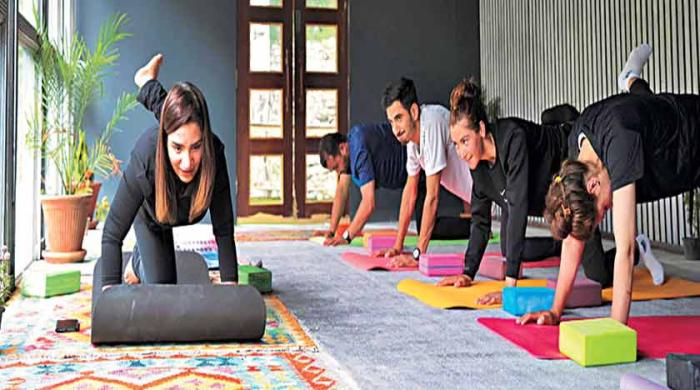
This week, Yoga expert, Zainab Sarwar breaks down the myths, misconceptions and surprising truths behind yoga many people dismiss before they’ve even tried it…
iyd

Every year, as International Yoga Day approaches on 21st June, I hear the same comments. Some people insist they’re not flexible enough for yoga. Others say they can’t sit cross-legged and meditate. There are those who prefer what they call ‘real exercise’ and then there’s my personal favourite, “Yoga just isn’t my thing.”
After teaching yoga for more than two decades, I’ve learned that many people have strong opinions about yoga despite never having tried it. Some imagine a room full of impossibly flexible people balancing on their hands. Others picture hours of chanting, incense and spiritual rituals that feel completely disconnected from everyday life.
To be fair, I understand where these perceptions come from. The modern image of yoga often focuses on advanced poses, expensive activewear and social media-worthy lifestyles. If that were my only introduction to yoga, I might think it wasn’t for me either.
The reluctant converts
The funny thing is that many of the people who claim to dislike yoga are often the people who need it most. Over the years, some of my most dedicated students have been people who arrived reluctantly. There was the businessman who insisted he was too busy for yoga, the runner who believed stretching was unnecessary, the weightlifter who thought yoga was too easy and the mother who couldn’t imagine sitting still for five minutes. Many came determined to prove yoga wasn’t for them. Most stayed much longer than they expected. Not because they suddenly became interested in mastering advanced postures, but because they discovered something surprising: they simply felt better. Their backs hurt less. They slept more deeply. They felt calmer under pressure. Their bodies moved more efficiently. And perhaps most importantly, they started paying attention to themselves again.
No, you don’t need to touch your toes
Let’s address the biggest misconception first: being flexible is not a prerequisite for yoga. Saying you’re too inflexible for yoga is a bit like saying you’re too dirty to take a shower. Flexibility is not where you begin; it’s one possible outcome of practice. In fact, some of the strongest and most athletic people I have worked with struggled tremendously in their first yoga class. Not because they lacked fitness, but because they lacked mobility, breath awareness or the ability to slow down. Yoga meets you where you are, not where Instagram thinks you should be.

The workout myth
Another statement I hear regularly comes from people who assume yoga involves lying on a mat and occasionally taking a deep breath. I often smile when I hear it because many of these same individuals leave their first yoga class surprised by muscles they didn’t know existed. The truth is that yoga can be physically demanding. It develops strength, balance, coordination, mobility and endurance. But unlike many forms of exercise, yoga asks you to pay attention while you’re moving. You don’t simply perform the movement; you experience it. That difference may sound subtle, but it changes everything.
Why science is taking yoga seriously
One reason yoga continues to gain credibility globally is that modern science is catching up with what practitioners have observed for centuries. Researchers are studying yoga’s effects on stress, sleep quality, chronic pain, cardiovascular health, mental wellbeing and recovery from injury. Healthcare professionals increasingly recommend yoga as part of a broader approach to health management. Athletes use yoga to improve mobility and reduce injury risk, while corporate leaders use breathing practices to improve focus and manage stress. Military personnel, surgeons and elite performers also rely on mindfulness techniques derived from yogic traditions to stay calm under pressure. Interestingly, many of these people would never describe themselves as ‘yoga people’ yet they use yoga tools every day.

Learning to pause
In my experience, resistance to yoga rarely has anything to do with yoga itself. What people often resist is stillness. Modern life rewards constant activity. We are encouraged to stay busy, productive, connected and available at all times. Yoga invites us to do something quite different. It asks us to notice our breathing, our posture, our thoughts and even how tired we actually are. For some people, that awareness can feel uncomfortable at first. It’s much easier to stay distracted than to sit quietly with ourselves. Yet this ability to pause and observe may be one of the most valuable skills we can develop in today’s world.
What happens after you leave the mat
One of the reasons I continue to teach yoga after all these years is because the benefits extend far beyond the classroom. The real practice begins when you leave the mat. It’s the deep breath you take before responding to a stressful email. It’s recognising when your body needs rest instead of another cup of coffee. It’s staying calm during a difficult conversation. It’s learning that strength and softness can coexist. These moments don’t look particularly impressive. They won’t attract thousands of likes online. But they are often where the most meaningful transformations occur.

More than a day
on the calendar
International Yoga Day is often celebrated with large public classes and community events. While these gatherings are wonderful, I think the day offers something even more important: an opportunity to reconsider what yoga actually is. You don’t have to become a yogi. You don’t have to wear special clothing. You don’t have to change your personality. And you certainly don’t have to post a photograph of yourself in a complicated pose. You simply need a willingness to be curious. To explore how you breathe, how you move, how you respond to stress and how you care for your body and mind. If you’ve spent years insisting that yoga isn’t for you, that’s perfectly fine. You may never love yoga classes. You may never learn the Sanskrit names of poses. You may never be able to touch your toes.
None of that really matters
Because yoga was never about touching your toes. It was about what you learn on the way down.
And if International Yoga Day encourages even a few sceptics to look beyond the stereotypes, perhaps they’ll discover what so many others have before them: yoga isn’t about becoming someone different. It’s about becoming a little more comfortable being yourself.
Zainab can be reached at [email protected], www.yogadubai.ae or @lifestylebyzainabsarwar on Instagram