As conversations around gender equality continue to evolve, one father reflects on the role men must play in challenging patriarchy and why the lessons taught to boys today will shape the society of tomorrow....
father’s day special
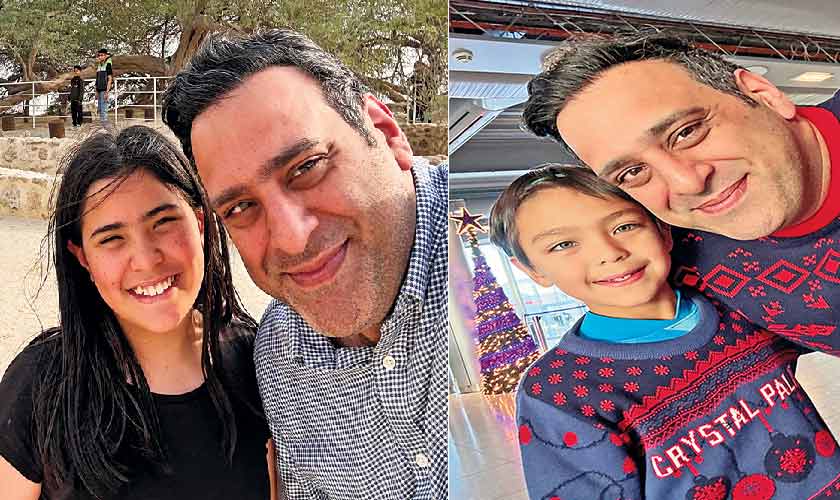
When I look at my son, I often wonder what kind of man he will grow up to be. Will he inherit the same ideas about masculinity that many of us were raised with - the belief that strength means control, that authority belongs to men and that emotions should remain hidden? Or will he grow up in a world where respect, empathy and equity define what it truly means to be a man?
These are personal, not abstract, questions.
Growing up in Pakistani culture, like many boys, I was taught certain things without them ever being explicitly stated. I saw the way decisions were made in some households. I noticed who spoke the loudest at family gatherings and whose opinions carried the most weight. I saw how daughters were reminded to be careful, to be polite and to be accommodating - while sons were encouraged to be assertive and ambitious.
Sons’ freedom was seen as natural, while daughter’s independence was often questioned. Girl’s choices were discussed, analysed and sometimes restricted, while boys’ choices were celebrated. Why did responsibility look so different depending on whether you were born a boy or a girl?
These are all symptoms of patriarchy. Thinking about these leads to the realisation that patriarchy is not sustained by women alone bending to its demands. It survives because men, knowingly or unknowingly, continue to uphold it. Women did not create this system. It naturally follows that men must play a central role in dismantling it.
For too long, conversations about patriarchy have been framed as women’s struggles. Women have marched, spoken up and demanded fairness, often facing criticism and resistance along the way.
This responsibility is especially significant in societies like Pakistan, where family structures remain deeply influential and male authority is often seen as unquestionable.
From a young age, boys are often treated differently from girls. We are given more freedom to explore, more tolerance for mistakes and more encouragement to dream big. Girls, on the other hand, are often reminded of their limits.
These differences may appear small in isolation, but together they create a pattern that shapes entire lifetimes.
Many men, myself included, grow up benefiting from these advantages without fully recognising them. This kind of male privilege often feels invisible to those who hold it.
But privilege also carries responsibility. Being a man in a patriarchal society means holding influence. Our words carry weight within families. Our decisions shape opportunities for others. Critically, our silence can allow injustice to continue unchallenged.
I have witnessed moments where silence spoke louder than words - when a relative made a dismissive remark about a woman’s ambitions and no one objected; when a girl’s education was questioned while a boy’s was taken for granted; when household responsibilities fell entirely on women while men watched from the sidelines, eating their dinner first, of course.
Looking back, I realise that silence from men was not neutrality. It was participation. True change begins when men recognise that neutrality is not enough. Agreement in private (or writing pieces like this one) does little to shift public attitudes. Allyship requires action - not grand gestures, but consistent, meaningful choices made every day, beginning in our homes.
A father who teaches his son to respect women does more than shape one child’s character; it lays the foundation for social change. A brother who supports his sister’s ambitions challenges generations of limiting beliefs. A husband who shares responsibilities at home redefines what partnership truly means. These are ordinary, yet impactful actions.
Patriarchy is not solely beneficial to men; while it grants authority and privilege, it also imposes expectations. It teaches boys that vulnerability is weakness and that emotional expression is shameful. Worth is measured through control rather than compassion.
Breaking free from expectations requires courage: the courage to redefine social structure, the courage to open paths for others and the courage to avoid worrying about constraining one’s own opportunities.
It requires men to question traditions that feel familiar, to challenge behaviours that feel normal and to listen to women’s experiences without defensiveness.
When a father encourages his daughter’s education, he sends a message that echoes far beyond his household. When a teacher treats boys and girls with equal expectations, they reshape how students view fairness. When community leaders speak openly about respect and equality, they influence attitudes across generations.
It is also important to recognise that supporting equality does not mean abandoning culture, tradition or religion. Our culture is built on values of dignity, compassion and justice. What must change are the interpretations that justify inequality.
A household where responsibilities are shared becomes stronger. An equitable workplace becomes more productive. A community that values equality becomes more just.
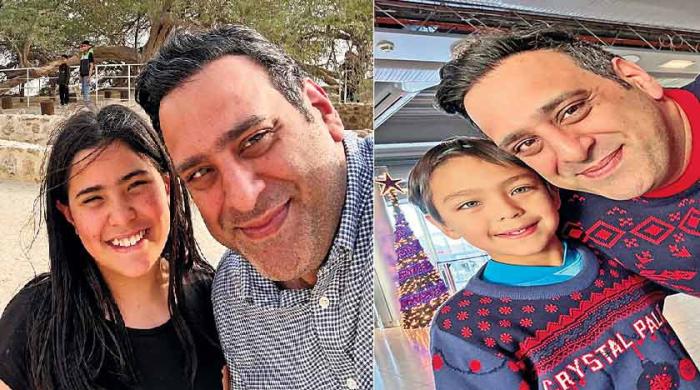
I want Raffi to be part of a generation of boys raised with empathy at the centre of their identity - boys who grow up seeing their fathers treat their mothers as equals, boys who learn that leadership is not defined by control but by fairness.
I want Lu’Lu to grow up believing that her dreams carry equal weight - that her ambitions are supported rather than questioned.
This vision is neither unrealistic nor something that can be dismissed. However, progress requires persistence.
Men must become active participants in this transformation. We must speak when something feels wrong, even if it disrupts comfort. We must challenge harmful jokes, outdated expectations and silent assumptions that perpetuate inequality. Crucially, we must listen.
Listening to women’s experiences is not about accepting blame; it is about understanding reality. It is about recognising that equality is not a favour to women but a fundamental right.
The elevated position men hold within patriarchal societies means our voices are often heard more easily, our authority more readily accepted. This influence carries immense potential. Men must use it to dismantle inequality. Change will not happen overnight. It happens when boys grow into men who value empathy as much as strength and when men recognise that respect is the foundation of true leadership.
Allyship is the future of equality. It depends not only on the courage of women, but also on the willingness of men to stand beside them.
As I think about Raffi’s future, I realise that the lessons I teach him and Lu’Lu today will shape the world they inherit tomorrow. If he learns that respect is strength and equality is responsibility, then perhaps he will grow into a man who does not simply accept change - but leads it.
Because in societies like ours, meaningful change does not begin in courts or policies alone. It begins with us.
Naveed Khan is a legal professional based in London. He writes regularly on social and gender issues