This week, Shaha Tariq is in conversation with Yasmeen Lari, who has launched the ‘Hamara Karachi’ initiative in a bid to uplift the city. Read on…
metropolis
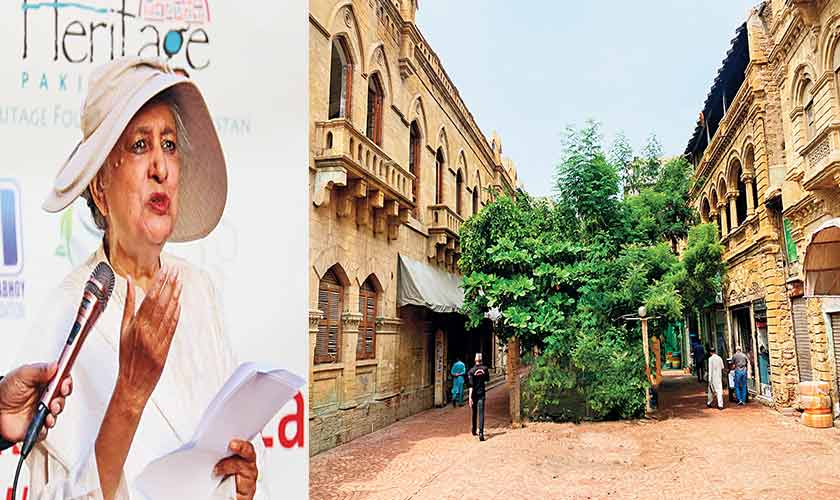
Asprawling, chaotic, colourful, warm, beautiful and much neglected megapolis, Karachi remains both Pakistan’s economic heartbeat and its most daunting urban challenge. Chronic infrastructure breakdowns, unmanaged growth and often unsafe living conditions have turned routine or natural events into citywide emergencies. Yet even in what often feels like a permanent combat zone, Karachiites gather in open-air cafés on breezy evenings, watch the golden disc dissolve into the Arabian Sea and enjoy this historic coastal town they call home. With each sunrise, however, the dodging games begin again - of broken roads, open manholes, flooded streets and soaring temperatures - and so does the debate about how this city can be fixed.
For architect and humanitarian Yasmeen Lari, Karachi’s crises are not merely failures of administration or finance; they are failures of design. Through her initiative ‘Hamaara Karachi’, she seeks to shift the city’s narrative from helplessness to collective action, turning frustration into ownership. “Urban problems are not merely administrative or financial; they are design problems,” she says firmly. What exists today, in her view, is an ecosystem that was never thoughtfully shaped for resilience, efficiency or human dignity.
For Lari, design is not about beautification but about rethinking systems. Drainage, housing and mobility must each be approached as parts of an interconnected whole. If the city is treated as a living organism, she argues, then design becomes the medicine that restores balance, improving sanitation, safety, community well-being and environmental health simultaneously. It is a philosophy that reframes urban chaos not as inevitable dysfunction but as the predictable outcome of neglected planning.
Karachi’s history reveals how dramatically design - and the lack of it - has shaped its destiny. Once a modest fishing settlement, Kolachi, along the Arabian Sea, it grew in strategic importance after the British East India Company seized it in 1839. Recognising the value of its natural harbour, the British built railways, warehouses and cantonments, transforming it into a major colonial port. By the early twentieth century, it had become one of the largest grain-exporting ports in the empire.
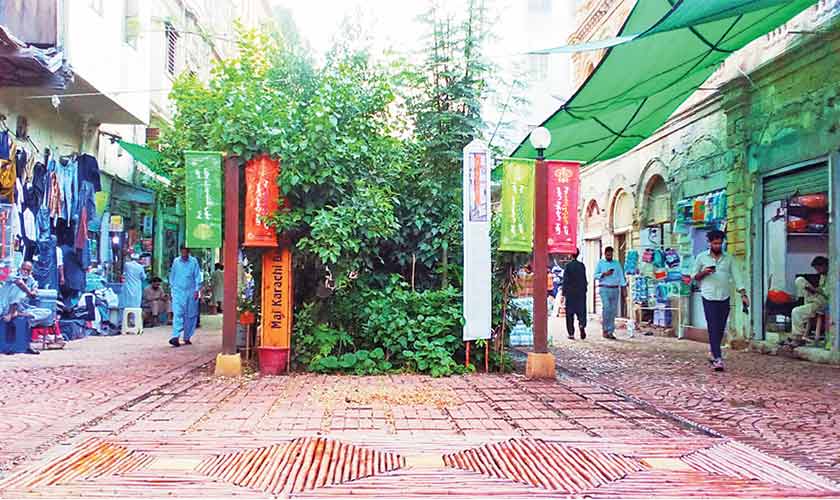
The sheer commercial value and available space to accommodate incoming migrants compelled the authorities to choose Karachi as nation’s first capital. Thousands of migrants arrived, doubling and redoubling the population. Over the decades, Pashtuns, Punjabis, Sindhis, Baloch, Hazaras, Bengalis and countless others layered new identities onto the city’s colonial skeleton. Karachi absorbed them all - warmly, imperfectly and sometimes violently, but always hungrily. Today, it stands among the world’s largest cities, with population estimates far exceeding the last official census count. It generates roughly half of Pakistan’s tax revenue and oversees the overwhelming majority of maritime trade. As the country’s financial, cultural and media capital, it is indispensable to the nation’s economy and identity.
Lari notes the visible stress of the city - roads crack and buckle, sewers overflow, utility providers struggle to reach everyone, traffic roars and new construction, devoid of any SOPs or even sense, rambles on. During the monsoon season, neighbourhoods that have stood for generations find themselves submerged because decades of unchecked development have sealed the soil beneath concrete, leaving rainwater nowhere to go. The nullahs, natural stormwater channels that once carried rain safely to the sea, have been encroached upon, choked with waste and stripped of their ecological logic. Whether it is monsoon flooding or soaring temperatures, Lari insists it is the consequence of design neglect repeated year after year.
The same neglect is visible in smaller yet deadlier details, she says. Open manholes claim lives with tragic regularity during heavy rains, swallowing pedestrians and motorcyclists into flooded streets. For Lari, a single uncovered drain tells the story of systemic breakdown. She calls for mapping systems, rapid repair protocols, public accountability and durable, locally manufacturable designs that prevent such hazards in the first place. Solutions, she stresses, must emerge from Karachi’s own climate, materials and social patterns - not be imported wholesale from distant cities with vastly different contexts.
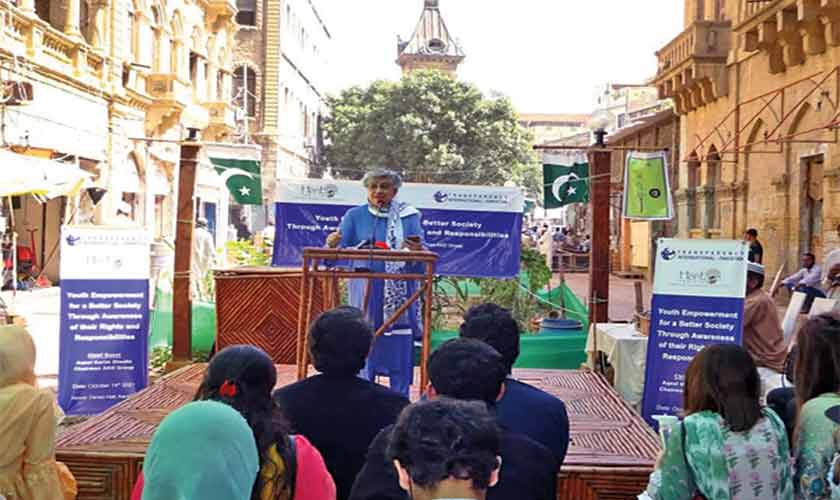
Lari’s authority rests not only on theory but on a lifetime of practice. The first woman architect in Pakistan, she built a distinguished career designing landmark structures before pivoting to zero-carbon humanitarian architecture. Through the Heritage Foundation of Pakistan, which she co-founded, she developed flood-resilient housing using bamboo, lime and mud for displaced communities across Sindh. Her work has earned international recognition, including the prestigious Royal Gold Medal from the Royal Institute of British Architects. In her later years, rather than retreating into memoir or retirement, she has redirected her energies toward ecological reconstruction and grassroots resilience.
‘Hamaara Karachi’ - Our Karachi - is part manifesto, part movement and part design intervention. Its premise is quietly radical: that decarbonisation and climate adaptation need not be grand, technologically complex undertakings dependent on enormous capital. Instead, they can begin with practical, locally grounded design choices - walkable neighbourhoods, cycle lanes, nature-based infrastructure, regenerative materials and improved water management. In this formulation, decarbonisation is not an abstract global agenda but a design decision - one that reduces dependency, restores nature and fosters shared responsibility.
Among her most striking proposals is the reimagining of the city’s nullahs. Where many see only foul, dangerous drains, she envisions green arteries. Cleared and restored through nature-driven landscape design, these channels could absorb floodwaters, support mini street forests and community food forests and cool dense neighbourhoods. Fruit trees and kitchen gardens might line their banks; biodiversity could return to concrete corridors; children could play where fear once prevailed. It may sound utopian, but Lari frames it as pragmatic - a smarter version of what already exists, rooted in Karachi’s own resilience.
Central to this vision is the conviction that infrastructure reform cannot succeed without civic ownership. ‘Hamaara Karachi’ is as much about people as it is about pipes and pavements. Through street assemblies ala Karavan Karachi, town halls, university collaborations and digital outreach, the initiative seeks to cultivate neighbourhood-level stewardship. Parks thrive when communities protect them; drains function when residents resist turning them into dumping grounds. Education and activation, from schools to local councils, are essential for building environmental responsibility and civic pride.
Karachi will not transform overnight. Its scale is immense, its political entanglements are deep and its habits are entrenched. Yet, Lari rejects the fatalism that often surrounds discussion of the city. Design, she argues, is not a luxury reserved for the affluent; it is a survival strategy. One street at a time, one rehabilitated nullah, one safer manhole cover, one kitchen garden - incremental interventions can accumulate into systemic change.
With her exceptional academic background (Oxford Brookes, Cambridge University) global recognition and countless international awards, Lari cannot be misled by fictional hyperbole. She sees and articulates what can be done and what should be done. Having launched flood-proof housing, sustainable permaculture and self-driven communities across Sindh, her focus is now on Karachi. She is looking at you, me and all those who call this city home, urging us to give it the respect that it deserves.
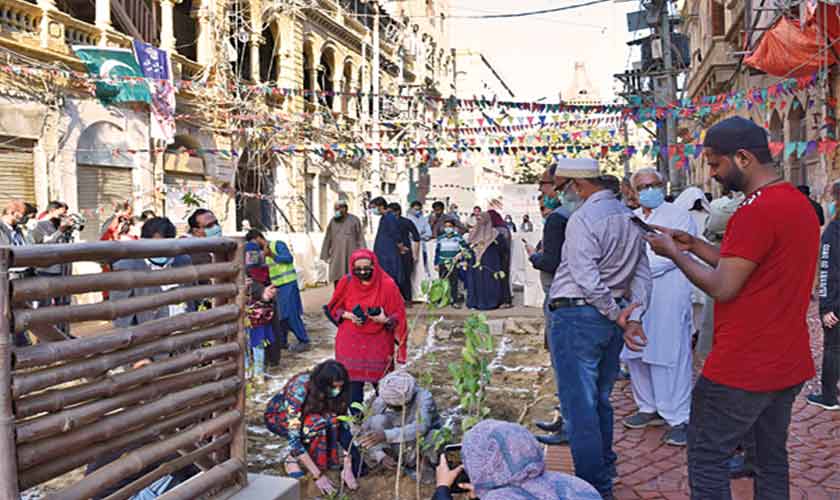
The sun will continue to set over the Arabian Sea, casting gold over a city both magnificent and malfunctioning. What ‘Hamaara Karachi’ proposes is not perfection but participation: a reclamation of agency in a place too often described as ungovernable. It asks Karachiites to see themselves not as victims of urban decay but as co-designers of their shared environment. In that reframing lies a quiet defiance - the refusal to accept disorder as destiny and the insistence that thoughtful design can still script a different future for Pakistan’s most vital city.
The author is a content strategist, educationist and researcher. She can be reached at [email protected]