This week, You! shares six contemporary artists whose work is shaping today’s visual discourse…
world art day
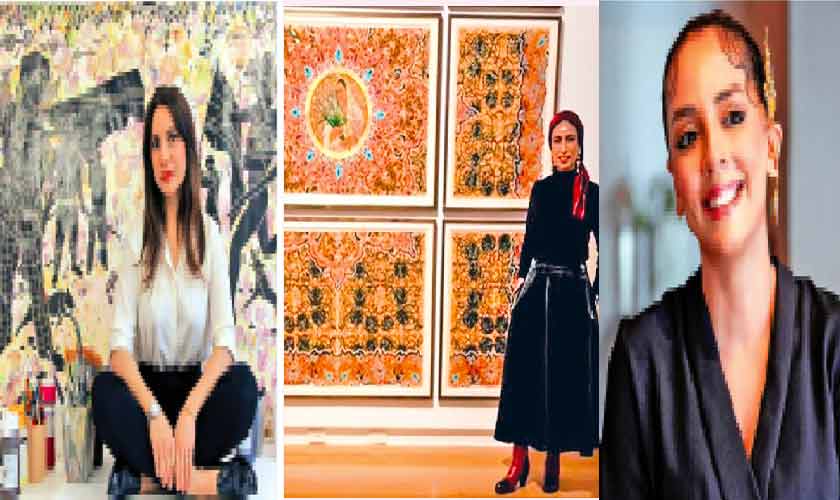
Every year on World Art Day, celebrated on April 15, we pause to recognise the force of creativity as a lens through which the
world is interrogated and reimagined. Art becomes a conduit for critical reflection, memory and cultural dialogue,
shaped by artists who dedicate their practice to expanding the boundaries of visual language. In this feature, we take a look at
different contemporary artists whose work traverses drawing, painting, miniature traditions and conceptual experimentation,
revealing how artistic practice operates as a site of identity, politics and cultural negotiation…
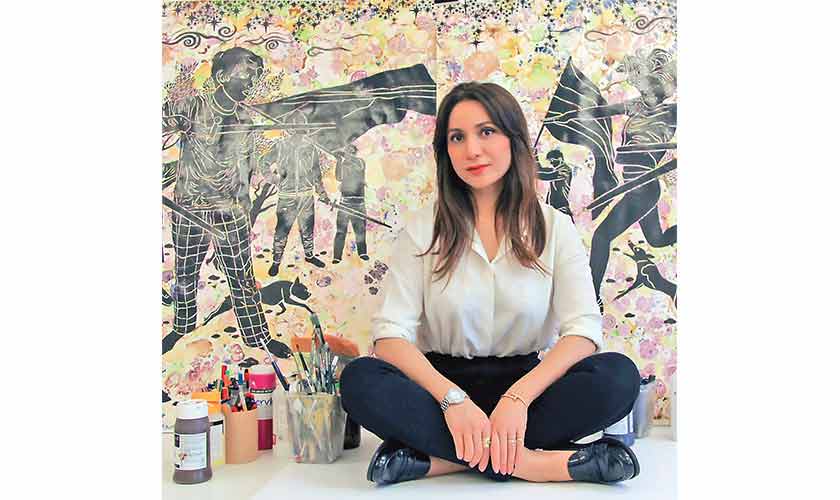
Faiza Butt
– Negotiating form and narrative
Faiza Butt’s art pivots on nuance, labour and contradiction. Born in Lahore, Faiza trained at the National College of Arts and later at the Slade School of Fine Art in London, where she graduated with distinction. Her work, drawing, painting, sculpture, unpacks the tension between personal histories and wider cultural narratives. Faiza is known for her obsessively detailed drawings and paintings that hover visually between photograph and embroidery, surfaces created with painstaking attention that itself becomes a commentary on representation and time. She draws inspiration from the miniature tradition while confronting contemporary themes, gender, politics, socio cultural stereotypes, making her work both formally seductive and conceptually incisive.
Her art has been shown across major international venues, from Art Basel to galleries in London, New York, Dubai and beyond and she has presented solo exhibitions and group shows that expand her reach across continents. At the 60th Venice Biennale, Faiza was invited to exhibit in Personal Structures at Palazzo Bembo, placing her practice in dialogue with a broader global art community. What stands out in Faiza’s work is its refusal to separate craft from critique. She makes visible the invisible labour embedded in both traditional and modern forms and she plays with surface and perception to challenge assumptions about identity and historical imagery. This is art that thinks as much as it looks.
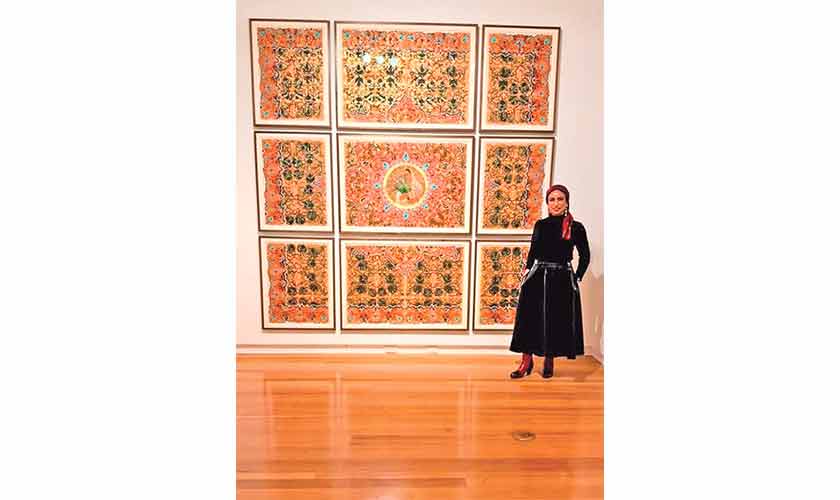
Ambreen Butt
– Feminist reconfigurations of miniature iconography
Ambreen Butt’s practice stands at the convergence of miniature painting, feminist inquiry and post colonial commentary. Born in Lahore, she trained first at the National College of Arts and then completed her Masters in Fine Arts in Boston. Rooted in traditional Persian and Indian miniature practice, her work retains the delicate patterning of that lineage while deploying it to examine gender roles, cultural difference and human rights. Her technique is labour-intensive, combining collage, print and painted hands and features, yet it always serves the concept.
Notable projects include I Am My Lost Diamond and site specific installations such as a large exterior work at the Isabella Stewart Gardner Museum celebrating the heroism of Mukhtar Mai. Her work is also installed in embassies and public museums and she has received awards such as the Maud Morgan Prize and the James and Audrey Foster Prize. Ambreen’s work melds craft with critique, offering a powerful demonstration of how traditional methods can be reinvented to address contemporary social issues with force and sensitivity.
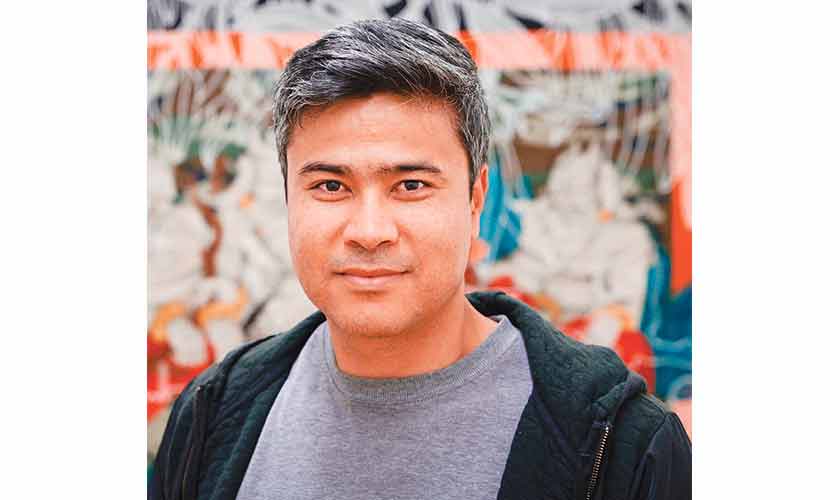
Khadim Ali
– Mythic cartographies and cultural memory
Khadim Ali occupies a unique position at the intersection of history, myth and present day trauma. Born in Quetta to Hazara refugee parents, Khadim trained in Mughal miniature painting at the National College of Arts before expanding his practice through studies in Tehran and Sydney. His work, often grounded in the epic narratives of the Shahnameh and infused with references to Persian history, mythology and contemporary political realms, confronts the long shadow of loss, displacement and cultural erasure. Khadim’s reworkings of miniature form become vehicles for collective memory and r esistance, particularly in response to the destruction of heritage, such as the Buddhas of Bamiyan.
International recognition has followed: he has participated in the Venice Biennale, Documenta in Kassel and his work is held by major institutions including the Guggenheim Museum and the Art Gallery of New South Wales. Khadim’s art is not just technically accomplished; it serves as a bridge between past and present, revisiting how historical narrative can be mobilised to speak about contemporary suffering and resilience. In a global context, this makes his voice indispensable.
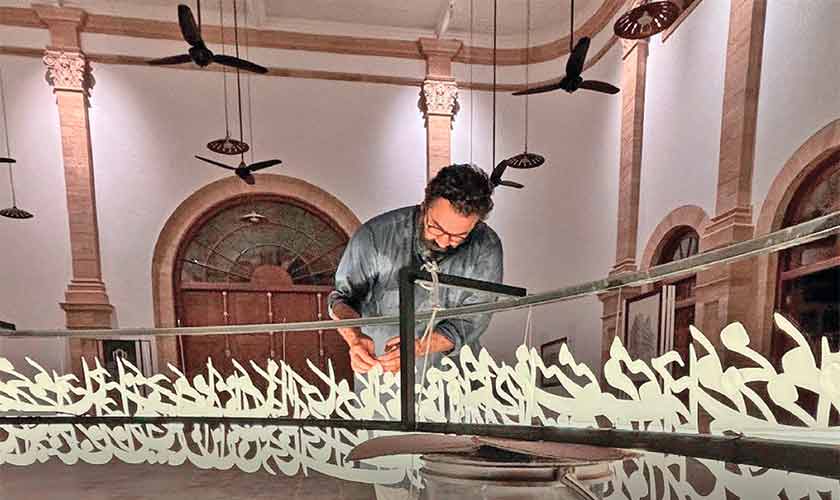
Muzzumil Ruheel
– Semiotic play in contemporary media
Muzzumil Ruheel’s art centres on language, media and layered textual imagery. Born and based in Karachi, he studied at Beaconhouse National University and has exhibited widely both nationally and internationally. His practice involves appropriating calligraphic scripts, often derived from media sources and reconfiguring them into visual compositions that blur word and image. Exhibitions such as Point of No Return and In Between the Lines reflect his engagement with how language functions as image and as container of cultural meaning. He has exhibited at galleries like Canvas and Grosvenor and in major international art contexts. Muzzumil’s work is significant because it understands text not simply as content but as material, a tool for shaping visual and conceptual inference. In a world inundated with media and messaging, his practice offers a potent reflection on semiotics, identity and representation.
Wardha Shabbir
– Miniature vocabulary in contemporary discourse
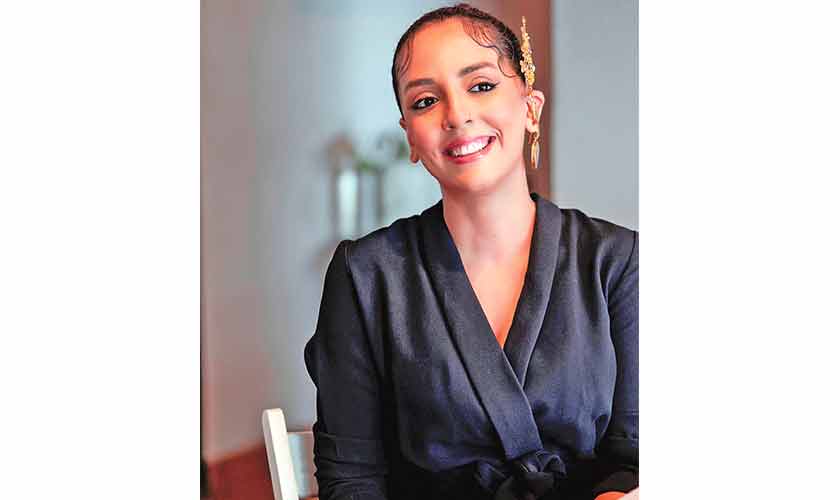
Wardha Shabbir’s artistic voice is rooted in a deep understanding of miniature painting, but it transcends this lineage to explore space, psychology and ecology. Born in Lahore and trained at the National College of Arts, she has built a practice that references classical discipline yet ventures into new territories of abstraction and conceptual investigation. Wardha’s work often reimagines the picture plane as a terrain of symbolic pathways and inner states. Her imagery engages with cycles of nature and embodied experiences, rendering motifs that blend abstraction, observation and affect. In doing so, she reflects on identity, memory and what it means to situate oneself within interlocking personal and cultural histories.
Her exhibition record is impressive: solo shows like The Water is Never Still in Madrid and Green Matter in Karachi, participation in international platforms such as Abu Dhabi Art Fair, Indian Art Fair and Artissima in Italy have brought her work to diverse audiences. Wardha has also been shortlisted for prizes such as the Jameel Art Prize and nominated for the Sovereign Asian Art Prize, signalling recognition on an international scale. Her ongoing inquiry, into spatial metaphors, psychological terrain and the materiality of perception, makes her an essential figure in contemporary painting and miniature reinterpretation.
Emaan Pirzada
– Spatial memory and the poetics of place
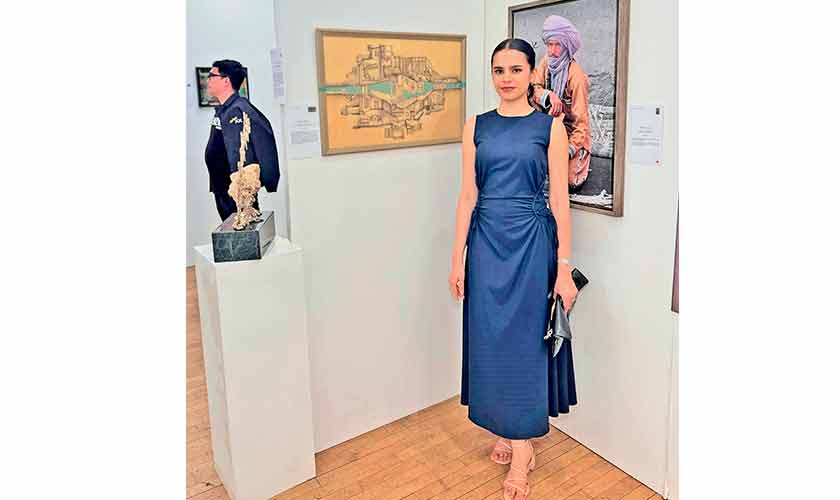
Avisual artist and miniature painter, Emaan Pirzada has steadily positioned her practice within a contemporary framework that reinterprets the rigour of Indo-Persian miniature traditions. Born in in Rawalpindi and a graduate of the National College of Arts, Rawalpindi, her work draws from classical techniques while engaging with deeply personal and spatial narratives.
Her practice is anchored in the concept of topophilia, an affective bond between individuals and their environments, which she translates into layered, mixed-media compositions. Working primarily with graphite, gouache, watercolour and ink on wasli, she constructs imagined ‘mind palaces’ that collapse memory, displacement and perception into a single pictorial plane.
Emaan’s exhibition history reflects a growing international presence, with shows across South Asia, the UAE, South Korea and the UK, alongside participation in residencies such as DRAW International in France and Jelly Studios in Reading. Her selection for the London Art Biennale 2025 further situates her within a global contemporary discourse.
At the core of her practice lies a persistent inquiry: how spaces are remembered, internalised and reconstructed through visual language. By merging miniature discipline with conceptual spatial exploration, Emaan extends the tradition into a contemporary terrain where memory, movement and material converge.