Pakistan has taken a landmark step in 2026 by criminalising domestic abuse through the comprehensive Domestic Violence Act. Read on…
Being able to make a cup of coffee, in my own kitchen, without fear is the best thing imaginable.” - Anonymous survivor.
In January 2026, four young children in Faisalabad were busy with the festivities of a family wedding. Things were routine, as family members went about doing chores and visiting one another. Little did these children know that this would be the last time they would celebrate an event with their parents.
Their lives changed forever on one cold winter day when their father fatally shot their mother and maternal aunt. The sister-in-law had come to visit her sister and was killed as well. The man, later identified as Usman Saleem, who lived in California, US, fled the crime scene following the double murder. Reportedly, the women’s father and brother tried to mislead police, cover up the murder and protect the perpetrator.
Usman was later arrested. According to the police, the murders were honour killings – though this does not justify the heinous crime. Usman committed the worst possible act of domestic violence: murder.
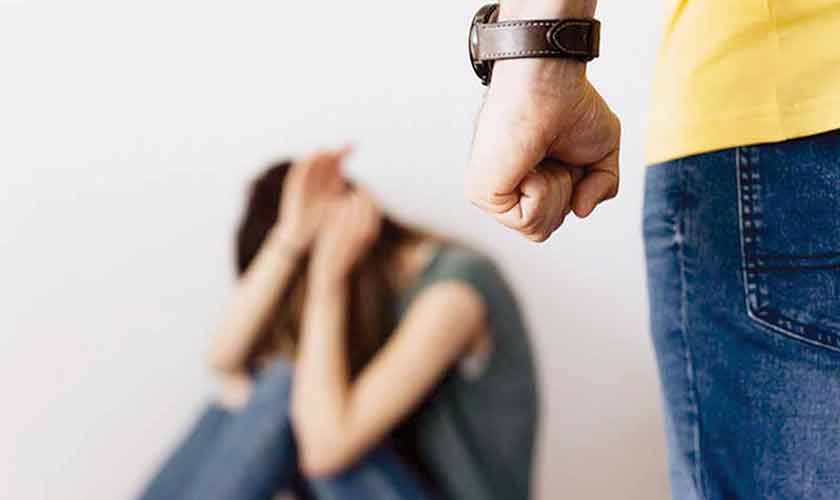
Thousands of women fall victim to domestic abuse, a crime that is committed in the open with impunity. The perpetrator is allowed to continue abusing the victim, who is sometimes blamed for the abuse and expected to bear it quietly for the sake of the marriage.
Domestic abuse is very common around the world. According to a report by the World Health Organisation (WHO), an estimated 840 million women globally have experienced partner or sexual violence during their lifetime, a figure that has barely changed in 25 years.
The situation is so dire that UN Women issued a global alert on March 8, 2026, stating, “Justice Systems meant to uphold rights and the rule of law are failing women and girls everywhere. Women globally hold just 64 per cent of the legal rights of men, exposing them to discrimination, violence and exclusion at every stage of their lives.”

Commenting on the situation, Sima Bahous, UN Women Executive Director, said, “When women and girls are denied justice, the damage goes far beyond any single case. Public trust erodes, institutions lose legitimacy and the rule of law itself is weakened. A justice system that fails half the population cannot claim to uphold justice at all.”
Unfortunately, Pakistan has its fair share of domestic abuse cases and the sad thing is that it has been normalised. The majority of people do not interfere and treat domestic abuse as a family matter that has to be dealt with by the couple and sometimes the entire family.
According to a report release by the Sustainable Social Development Organisation (SSDO) in 2025, domestic abuse cases have low conviction rates and this is probably why the number of cases keep increasing. The impunity enjoyed by perpetrators may be one reason why the abuse continues unabated right in front of society’s eyes. Victims and their families are often afraid to take steps to protect themselves such as speaking up, publicly shaming the perpetrators, seeking legal protection or reporting the abuse to the police.
Although it is not necessary that legal proceedings lead to punishments, they may act as a deterrent for some. However, society’s nonchalance when it comes to women and the violence and abuse that they face, even in public spaces, reveals how vulnerable the victims are and how powerful the abusers are.
People seldom speak up when a woman is verbally abused and sometimes even slapped in front of family members, including their children. The response is saddening as people look away and keep going as if nothing happened.
Social indifference to women-related abuse and crimes has had fatal consequences, with women being beaten to death and such crimes being covered up despite clear evidence revealing that the victims died due to abuse. It is pathetic to see how emboldened criminals have become, remaining safe even after committing abuse. Life within domestic settings has desensitised those who witness these incidents happening repeatedly. The worst part is that the cycle of abuse does not stop; sometimes it continues through the younger generation of males.
Syed Muhammad Ali Raza killed Sania Zehra, his 20-year-old wife and the mother of two children, who was expecting her third child, in 2024. Sania was constantly abused and threatened during her marriage. She was later found dead, hanging from a ceiling fan in her room. The husband, in-laws and Raza’s first wife and kids, who lived in the same house, claimed they had no idea what had happened. The way Sania’s death was staged so haphazardly made it obvious that she had been killed, which only shows how safe the murderer felt - he did not even try to make it appear as though she had taken her own life.
Sania had been facing abuse for years. She even went back to her parents, only to be lured back with threats of losing her children. Her family tried to convince her to stay but as we often see, women sometimes take decisions that end their lives for what they believe is the benefit of their children.
Fortunately, in this case Raza was sentenced to death but this punishment is nothing compared to what he had done. His literal partners in crime - his family - should also have been arrested and made to serve a life sentence which would have given some closure to her young children and parents.
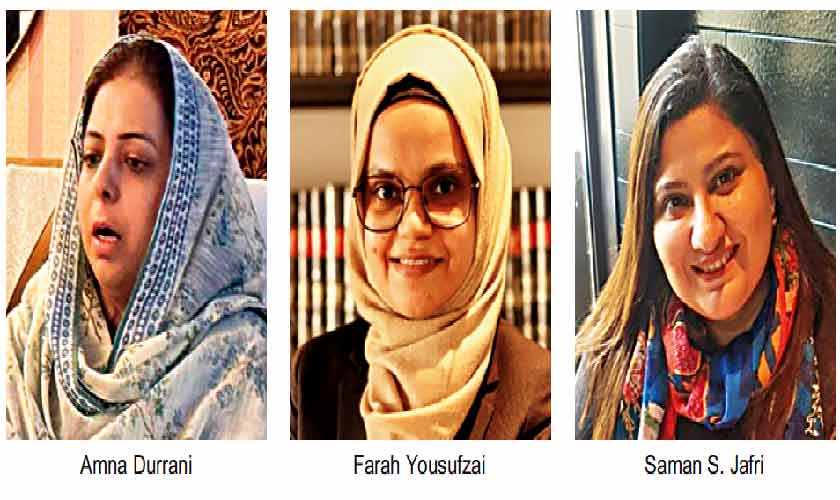
Saman S. Jafri, a former member of the National Assembly, elucidated, “People are desensitised about domestic violence and have normalised violent acts like slapping, pushing, shoving and even strangling. Even visible marks are ignored. Often the victim does not report it and carries on as if nothing happened. It also does not help that families encourage this behaviour. Families encourage women to conceal and endure severe violence and torture so their marriage remains intact.”
Jafri said many women are forbidden from going to their parents’ homes, which is one form of abusive control. Others suffer marital rape, as they are told it is part of married life.
“Islam does not force women to do anything they do not want to do in a marriage. The religion does not require women to live with in-laws and a woman can ask her husband to provide a separate home. Despite this, it is normal for couples to live with in-laws and there is nothing wrong with this if the woman has no issues with it. However, while religion allows woman this freedom, society often does not provide it,” she added.
The Domestic Violence Protection Act
Fortunately, Pakistan’s parliament finally took steps to criminalise domestic abuse and approved a comprehensive domestic law in 2026, titled ‘The Domestic Violence (Prevention and Protection) Act 2026’. The law criminalises acts such as threatening a wife with divorce or a second marriage, forcing her to live with family members against her will, staring at one’s wife and engaging in verbal abuse against a wife, children or other household members, as well as causing emotional or psychological distress. It prescribes a minimum sentence of six months and a maximum penalty of three years’ imprisonment along with a fine of PKR 100, 000.
The law allows victims to retain the right to remain in their shared residence until alternative accommodation is arranged or authorities provide placement in a shelter home. It also grants courts the authority to order GPS trackers for individuals who commit domestic violence.
“Criminalising acts such as threatening a wife with divorce or a second marriage or forcing her to live with other family members against her will, recognises that domestic violence is not limited to physical harm; it also includes psychological coercion and control,” observed Amna Durrani, Director of Programmes, at the Khyber Pakhtunkhwa Commission on the Status of Women (KPCSW).
“Such provisions aim to discourage the use of intimidation, emotional pressure and forced living arrangements as tools to subordinate or punish women within the household. By recognising these behaviours as forms of abuse, the law provides women with legal protection against sustained mental harassment and coercive control, while reinforcing the principle that marriage should be based on dignity, consent and mutual respect,” Durrani added.
Commenting on the Law, Jafri said, “This Law is a good legislation and is designed quite well but from experience, I know that it needs to go through a trial period during which legislators and other law-enforcing agencies can identify what needs to be changed or improved and this cannot be done until it is implemented.”
“Like every bill, people have many reservations with the Domestic Violence Act. Initially all laws - even when they become an act - face a trial run. Until a law is implemented, it is difficult to see its shortcomings or issues. Designing a law is different from implementing it. Only when a law is implemented can legislators and other agencies see what can be done practically and what cannot and what aspects can be improved.”
“To ensure that a law is implemented properly, it is important to first spread awareness about it. This allows legislators to see what can be revised and changed in the real world,” Jafri continued.
She added that sometimes bills are initially imperfect but improve over time into better-shaped laws. However, she noted that the spirit of the Domestic Violence Act is good because domestic violence is often not considered a crime and is generally not criminalised. In fact, domestic violence is frequently seen as a domestic issue that should be resolved by the couple or the family. This is the main reason people tend to ignore violence and abuse within a marriage.
Other important points included in the Domestic Violence Law are the courts can now impose an additional six months’ imprisonment if offenders fail to pay fines and that judicial action has been expedited. Courts must hold hearings within seven days of receiving a complaint and deliver verdicts within 90 days.
“The Domestic Violence Act that we have in Sindh was legislated in 2013 and conditions were different back then. It’s time to amend the law and incorporate modern trends. Sindh was progressive enough to even legislate DV Law when none of the provinces even considered domestic abuse as a separate issue. In 2013, we realised that domestic violence has completely different dynamics and require a different approach by the courts. But in 2026, some of the provisions need amendments. The inclusion of digital violence is one such phenomenon,” informed Advocate Yousufzai, a partner at the law firm Akbar Sarki Khan & Co and consultant and project manager for Legal Aid Society (LAS).
In today’s world, domestic abuse has taken on a new dimension in the digital era. It is important that laws address its digital aspect. The Domestic Violence Law should include critical digital threats such as cyber stalking, cyber abuse, revenge porn and control of digital usage and control over digital usage and devices as forms of domestic violence.
Advocate Yousufzai mentioned, “Digital threats and revenge porn should be included in the Domestic Violence Act. While PECA does provide provisions for these offences, pursuing cases under PECA can be more complicated for survivors. In my opinion the Domestic Violence Act should involve multiple law enforcement agencies (LEAs) to ensure protection.
“Digital threats can be very coercive for wives seeking protection and can be used as a means of control. The law is currently silent on this; however, it does not prevent a woman from pursuing her case. But the Act’s silence makes it difficult for the survivor, as it opens up two different judicial forums,” she summed up.
The writer is a senior journalist with focus on gender justice. She can be reached at [email protected]