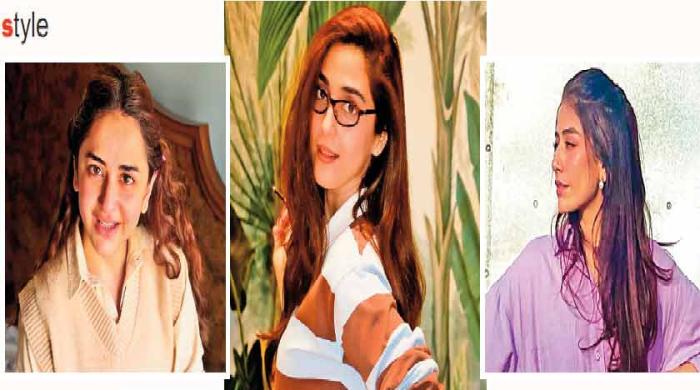
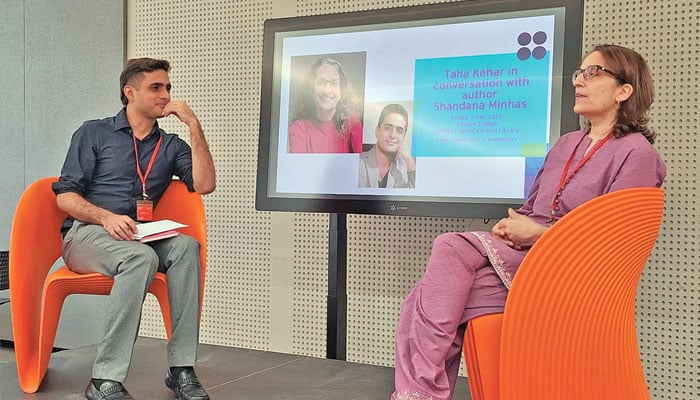
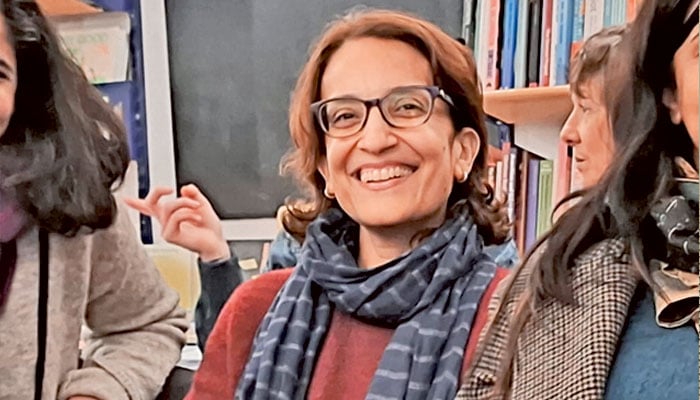
This week, You! is in conversation with Shandana Minhas, a celebrated writer…
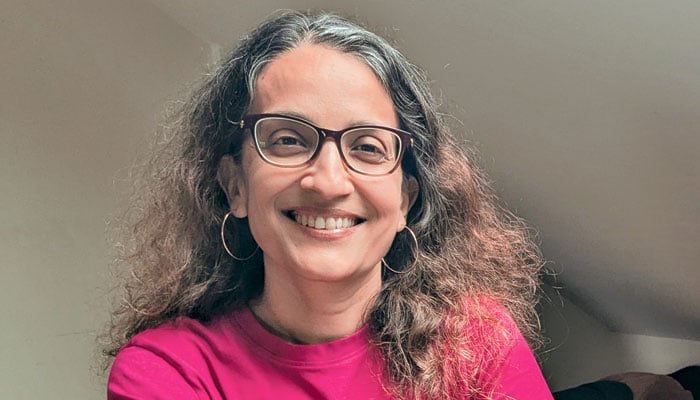
Shandana Minhas does not lend herself to straightforward categorisation. Her oeuvre comprises a diverse range of novels, each distinct in style and theme. Minhas’ first novel, ‘Tunnel Vision’, was shortlisted for the Commonwealth Writers’ Prize in 2008. ‘Survival Tips for Lunatics’, her second work of fiction bagged the Karachi Literature Festival (KLF) fiction prize in 2015, becoming the first children’s book in South Asia to win a general fiction award. Her third novel, ‘Daddy’s Boy’, was long-listed for the KLF fiction prize. ‘Rafina’, a novella she penned in the early 2000s and published in 2018, inspired the film ‘Good Morning Karachi’. ‘Ferdowsnama’, her fifth novel, clinched the KLF Getz Pharma Prize for English Fiction in 2026. In this interview with You! she reflects on the inspirations and impulses that shape her work. Read on…
You! What drew you to the written word? Did you find it more liberating than the world of film - a space you had previously explored as a screenwriter and producer?
Shandana Minhas: I would say I was drawn to storytelling rather than to words and the written word was the most accessible medium for a child of the analogue world.
You! You describe writers as “magpies” who steal details to create something new. Can you share an example of a real-life detail that inspired a major plot point or character in your books?
SM: My friend Maheen Zia told me she had seen a woman crying while driving. That became the opening of my first novel ‘Tunnel Vision’.
You! ‘Rafina’ was written in 2004 but published in 2018. How did revisiting your earlier work change your understanding of the story or its characters?
SM: It enabled a greater understanding of my own thematic preoccupations and my relationship to my craft. I used to feel embarrassed by ‘Rafina’, but when I revisited the novella, I found it to be a perfectly respectable effort by a young, self-taught writer. The embarrassment I had felt was simply the internalisation of other people’s attempts to shame me for expressing myself without their permission.
You! You mentioned deciding whether to revise ‘Rafina’ as the writer you were in 2018 or stay true to the 2004 version. What guided your choice to remain faithful to the original?
SM: My desire to fully own my journey.
You! ‘Rafina’ is described as a realistic Cinderella story. How did the pre-social media context of 2004 shape the challenges and opportunities Rafina faced compared to today?
SM: Rafina couldn’t avoid the gatekeepers.
You! Rafina’s character faces opposition not just from men, but also from other women. Why was it important for you to explore this dimension of female relationships?
SM: Patriarchy is an ideology in which anyone can be a victim or perpetrator.
You! How do you think Pakistani literature has evolved in its treatment of women’s struggles since you first wrote ‘Rafina’?
SM: I am not qualified to answer this question. But I do have one in return: How do you think Pakistani literature has evolved in its treatment of women writers’ struggles since I first wrote ‘Rafina’?
You! Many of your protagonists, like Ayesha in ‘Tunnel Vision’ and Rafina, are strong, independent women. How much of their personalities is drawn from your personal experiences versus imagination?
SM: We are all inspired by our experiences, big or small. The trick is to transmute rather than replicate them.
You! In an interview, you mentioned, “Tunnel Vision was meant as a love letter to the women of Karachi, who...are exceptionally strong, very funny and can really only be undone by love.” How did women react to your novel? How different were their reactions compared to male readers?
SM: I don’t know that I noticed any difference at the time ‘Tunnel Vision’ was published in 2007. A reader is a reader. That being said, the readers who’ve told me since how much ‘Tunnel Vision’ means to them have tended to be women. And the most interesting take on ‘Tunnel Vision’ I’ve heard recently has come from a man, “Tunnel Vision is a road book. It’s about driving in Karachi.”
You! ‘Tunnel Vision’ also offers a commentary on the deplorable state of health care in Pakistan. Did you consciously seek to explore this theme?
SM: My father spent a lot of time in Karachi hospitals and my mother was always with him and the rest of the family would come and go. That magpie thing again…
You! Some critics view ‘Tunnel Vision’ as a contemporary reworking of ‘Sleeping Beauty’. Ayesha’s body lies inert on her hospital bed but her spirit floats overhead, eavesdropping on the conversations among her loved ones. Why did you choose to write a character who operates in a dissociative state?
SM: I don’t know if I chose. I started with that image and let it lead. That’s how I usually work. An image, a line, a detail and the starter pistol. Writing itself for me is an act of disassociation.
You! Karachi is portrayed as a living, breathing character in your novel. How important is local context to your storytelling and what role does it play in shaping your characters?
SM: Karachi is a living, breathing character. It currently ranks fifth on the list of least liveable cities in the world, but to me, it’s among the top three most vibrant cities in the world. Local context is important when you are writing about characters who are shaped by their environment and constantly interact with it.
You! Of all your works, ‘Survival Tips for Lunatics’ is closest to your heart. How does writing for your children differ from writing for a broader audience?
SM: I know exactly who my audience is, so that makes it easier. But my audience still sees things clearly, which makes it harder.
You! Coming from an interfaith background, you mention growing up with tolerance as a “default setting.” How does that perspective shape the way you portray societal divisions in your fiction?
SM: I used to say that literature is the only form of visa-free travel allowed to us. Now, as a hyphenated Pakistani, I feel hypocritical making that complaint. I’ll say instead that literature is the only safe space allowed us to express our unhappiness with societal divisions. Our malik makans don’t read books - only tweets.
You! ‘Daddy’s Boy’ features three vividly contrasting ‘uncles’ whose personalities dominate much of the narrative. How did you develop their unique voices and were they inspired by real people in your life?
SM: Show me a Pakistani who doesn’t have a deranged uncle in their life. The ‘Daddy’s Boy’ trio were a joy to hear and capture.
You! ‘Ferdowsnama’ marks a radical departure from your previous novels, as it is a historical novel set in 16th Century Mughal India. What first sparked the idea for the novel?
SM: A question that seems simple but is profound: Where are you from?
You! The book explores how manufactured stories reinforce imperial authority. Was this commentary shaped by contemporary parallels you see today?
SM: I wanted the book to reflect contemporary reality in a subtle way.
You! Animals in ‘Ferdowsnama’ are not just plot devices but emotional centres. What made you place them at the heart of the narrative? Were any of the animal episodes - such as Maya, the bereaved elephant or the cobra encounter - inspired by historical accounts or folklore?
SM: I do love a good animal attack story and consume them as a way to relax. There’s some fantastic writing out there about tiger attacks in particular. I have also read widely across folklore and, yes, historical accounts of human-animal interaction, so all of that went into the pot.
You! Why did you choose four interconnected vignettes rather than a single linear plot?
SM: I possess a healthy respect for the intelligence of readers. Do we really need to give them a hundred pages when they can connect the dots with just a few?
You! What led you to explore different genres in ‘Ferdowsnama’?
SM: I don’t love the word ‘genre’, but I love what is called ‘genre fiction’. I must be deeply religious.
You! The novel ends with unanswered questions. Was the ambiguity deliberate or did you consider a more resolved conclusion?
SM: The end of Ferdows’ account is meant to evoke a sense of loss – a sense that the world, our world, would be richer with voices like hers in it. And the question remains: why isn’t it?
You! Readers are already hoping for a sequel or even a prequel. Do you envision returning to Ferdows or this world in future works?
SM: I would like to.
The interviewer is the author of the critically acclaimed novels ‘No Funeral for Nazia’ and ‘Typically Tanya’. His first collection of stories, titled ‘Matchmaker’, will be released this year. He can be reached at [email protected]