This week, You! spotlights five outstanding women who were recently honoured for their unique ideas, sharp vision and the courage to build something of their own…
women
There was a time when women were asked what they planned to ‘do’ with their degrees.
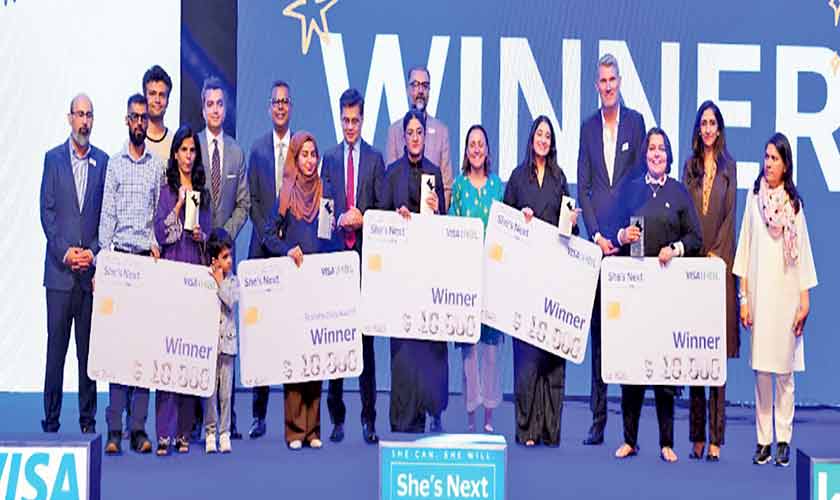
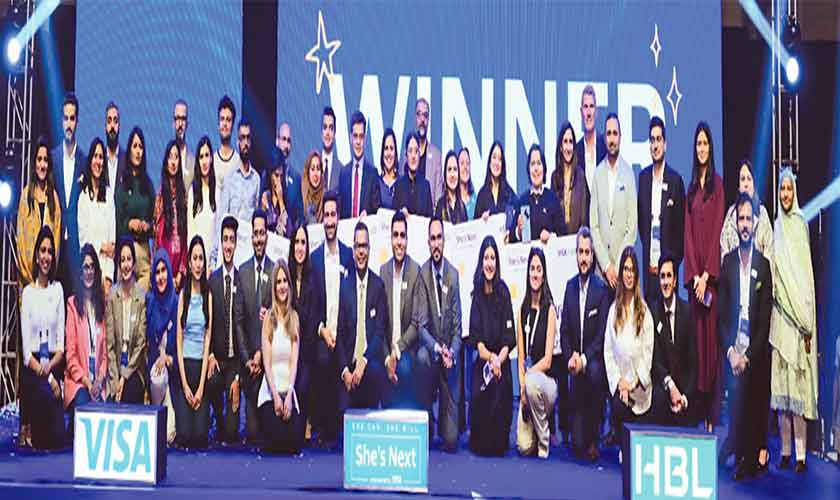
Now it was standing on a stage, attached to business models, revenue plans and sharp five-minute pitches. At the finals of the ‘She’s Next’ programme held recently, five women were not celebrated for trying. They were recognised for building.
Out of nearly 3,500 applicants across the country, five entrepreneurs were selected after a three-month journey that began last year. The initiative, supported by Visa and HBL, culminated in a finals pitch event where the focus was clear: viable businesses, measurable growth and strong digital presence.
Aiman Shafique – EV Square
In a country where conversations around sustainability often remain surface-level, Aiman Shafique chose to work in the electric mobility space. EV Square focused on electric vehicle infrastructure and solutions, tapping into a market that is only beginning to find its footing locally.
Her win signalled more than personal success. It pointed to a future-facing sector that demands technical knowledge, regulatory understanding and long-term planning. Electric vehicles are not an overnight trend; they require ecosystem thinking, charging infrastructure, partnerships, consumer education.
By building in this space, Aiman positioned herself at the intersection of climate responsibility and commercial opportunity. It was a reminder that women were not limiting themselves to traditionally ‘safe’ sectors. They were stepping into industries that require capital, credibility and conviction.
Anusha Fatima – TrashIt (Sustainability Award Winner)
If one business captured urgency, it was TrashIt. Anusha Fatima won the newly introduced Sustainability Award for her work in waste management, an area most people complain about but few choose to build within.
Waste management is complex. It involves logistics, behaviour change and often collaboration with local authorities. For a woman-led enterprise to navigate this terrain and emerge as a winner spoke to clarity of purpose and operational strength.
The introduction of a dedicated Sustainability Award this year mattered. It recognised that environmental solutions are not side projects. They are central to urban survival. Anusha’s work through TrashIt reframed waste not as an inconvenience but as an opportunity for structured intervention and impact.
Her win also challenged a stereotype: that women-led ventures are confined to lifestyle or home-based sectors. TrashIt operated in a gritty, infrastructure-heavy space. It required resilience and negotiation, not just branding.
Fizza Hussain – Khaas Foodz Kitchen
Food businesses are often dismissed as common or oversaturated. Yet surviving and thriving, in this sector demands precision. Khaas Foodz Kitchen, led by Fizza Hussain, stood out among thousands of applicants.
The food industry is unforgiving. Margins are tight, customer loyalty is fragile and operational consistency is everything. Winning in this category suggested that Fizza had done more than cook well. She had built systems, created repeat value and developed a brand that resonated.
Food ventures led by women often begin from home kitchens. Turning that into a scalable enterprise requires financial planning, digital marketing and supply chain management. Khaas Foodz Kitchen represented that leap, from skill to structure.
Maira Siddiqui – Chiragh Education Technologies
Education technology has grown rapidly in recent years, but growth alone does not guarantee quality. Maira Siddiqui’s Chiragh Education Technologies competed in a crowded space where credibility and outcomes matter deeply.
Education businesses carry weight. They shape access, confidence and opportunity for students. Winning in this sector meant demonstrating not only innovation but measurable results and sustainable expansion.
Chiragh Education Technologies reflected a broader shift: women building in technology-driven education rather than remaining confined to traditional teaching roles. It positioned a woman at the helm of a platform designed to solve systemic learning gaps.
Meesha Baig – Goud
In a space where many startups rely on aesthetics to stand out, Meesha Baig’s Goud takes a more meaningful route. Positioned as Pakistan’s first personalised pregnancy and baby milestone tracker app, the platform addresses a clear gap in how expecting and new parents track early parenthood.
Goud focuses on utility and relevance. It offers tailored, week-by-week tracking, allowing mothers to follow their pregnancy journey, monitor their baby’s development and transition into postpartum support through a system designed around individual timelines and needs through medically accurate information approved by local experts.
The evaluation process places weight on digital presence, business performance and problem-solving. Goud’s recognition reflects more than surface-level branding; it points to a product built on insight, function and a clear understanding of its audience.
Women have traditionally been the primary consumers in maternal and childcare spaces. Increasingly, they shape the market itself, building products, identifying gaps and designing solutions that respond to lived experiences.
Beyond the stage
Each of the five winners received a USD 10,000 grant along with tailored training, mentorship and access to a broader entrepreneurial community. But the real takeaway was not the cheque. It was the validation.
The jury, which included senior banking, finance and corporate professionals, assessed applicants based on progression of their entrepreneurial journeys, business robustness and digital readiness. These were hard metrics. The selection was not symbolic.
“It is with immense pride that we celebrate the winners of this year’s ‘She’s Next’ programme, an initiative crucial to fostering a future where every woman entrepreneur can achieve her fullest potential and build a legacy of success. The pitches we witnessed today showcase the highest ambition among women entrepreneurs in Pakistan,” said Leila Serhan, Vice President and Group Country Manager, North Africa, Levant and Pakistan.
Aamir Kureshi, Head Products & Payments at HBL, added, “HBL congratulates the winners of this year for the clarity, ambition and resilience reflected in their entrepreneurial journeys. In collaboration with Visa, the Bank continues to support initiatives that expand women’s participation in Pakistan’s economy and strengthen a vital driver of sustainable growth. This year’s programme saw broader participation and deeper engagement than the previous edition, reflecting growing momentum among women entrepreneurs nationwide. As businesses scale, access to the right financial tools, payment solutions and advisory support becomes essential to managing growth sustainably.”
The numbers surrounding the programme were significant, thousands of applicants, months of preparation, but the deeper story lay in what these five women represented. Electric mobility. Waste management. Food systems. Education technology. Beauty entrepreneurship.
They were not building identical businesses. They were not following a single template. What united them was structure, digital awareness and measurable ambition.
If there was a pattern worth noting, it was this: women were choosing sectors that solved real problems while remaining commercially sharp. They were not asking for symbolic applause. They were asking and competing, for capital, scale and credibility.
On that stage, five winners were announced. Beyond it, thousands more were building.