In an exclusive interview, Mohsin Babar, a renowned Kathak dancer, talks about his passion for preserving this art form. Read on…
performing arts
Mohsin Babar is an internationally acclaimed choreographer and performing artist. He specialises in Kathak, Pakistani folk dance, Sufi and contemporary/modern dance. With over 27 years of experience, he has performed all over the world, including the US, UK, Sweden, China, Japan, India, Brunei, Malaysia, Singapore and several other countries.
Having trained under maestros Ustad Hamid Hussain, Ustaad Shado Maharaj, he later underwent advanced training at the National School of Drama in India under Ustaad Rajendra Ganganni, one of the world’s foremost Kathak masters today. Mr Babar has also received training in contemporary dance in Germany and in Pakistani folk dances.
Mr Babar is the founder and director of the Kathak School of Performing Arts, Karachi’s first dedicated Kathak school, where students from underprivileged backgrounds are trained on full scholarships. He works closely with the Ali Hasan Mangi Memorial Trust, an NGO specialising in integrated rural development, to present his troupe’s performances in smaller cities across Sindh. His feature-length dance-theatre production, ‘Khwaab’, was shown to 50,000 people in six cities across Sindh last year.
Mr Babar has also taught Kathak at the National Academy of Performing Arts in Karachi. His mission is to preserve Kathak and promote it through teaching and the production of dance theatre. In an exclusive interview, Mohsin Babar talks about his passion for preserving Kathak. Read on…
You! You have trained under three remarkable maestros - Ustad Hamid Hussain Shaad and Ustad Shado Maharaj in Pakistan, and Ustad Rajendra Gangani in India. How did each of these gurus shape your artistic identity?
Mohsin Babar: I consider myself deeply fortunate to have learned from extraordinary gurus who shaped not only my technique but my entire understanding of Kathak as a living tradition. Ustad Hamid Hussain in Pakistan gave me my foundation - discipline, respect for riyaaz and the understanding that Kathak is not merely movement but a language of rhythm and storytelling. Ustaad Shado Maharaj deepened that understanding and refined my artistic sensitivity.
Training under Ustad Rajendra Gangani in India expanded my artistic universe. From him I absorbed a vast experiential knowledge of Kathak, which further enriched my understanding of this art form.
Over all, I learned balance: grace and power, devotion and discipline, structure and spontaneity.
My training taught me that speed must remain musical, precision must remain expressive and virtuosity must serve storytelling rather than ego.
You! With over 27 years of experience in performance and teaching, how has your understanding of Kathak evolved over time?
MB: In my early years, Kathak was about mastery - learning compositions, perfecting technique and proving physical ability. Over time, I began to understand that Kathak is a philosophy. It teaches patience, surrender, listening and humility.
Kathak is Katha - storytelling. It is a vessel carrying centuries of memory, poetry, devotion, courtly elegance and spiritual expression. As a teacher, I now value transmission over performance: passing on the lineage, the discipline and the emotional depth of the form. With maturity, the dance becomes quieter, deeper and more truthful.
You! Having worked as a lead dancer for the Pakistan National Council of the Arts, how did that experience influence your journey as a choreographer and producer?
MB: Working with PNCA exposed me to national and international audiences and to professional production standards. It taught me about scale, structure and the responsibility of representing dance in a contemporary cultural landscape. I learned how choreography can communicate across linguistic and cultural boundaries.
You! When did you establish your production company?
MB: I established Mohsin Babar Productions as a natural evolution of my artistic journey - a platform to explore dance beyond traditional recital formats and to bring Kathak into dialogue with theatre, narrative and contemporary themes. Established in 2024, the company has since produced full-length dance theatre works, touring productions and community performances that aim to make classical dance accessible and socially relevant.
You! You recently performed at Arts Council. How was your experience?
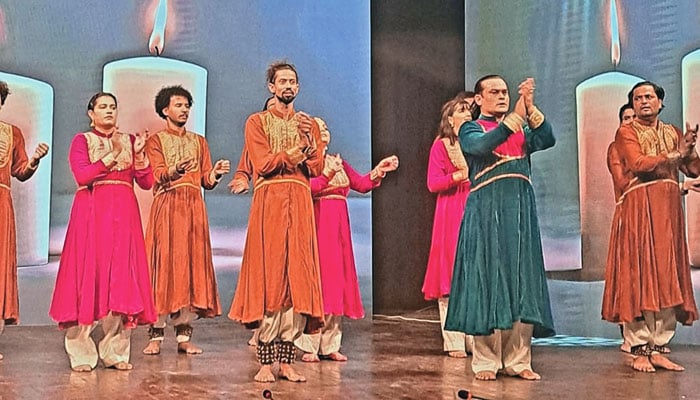
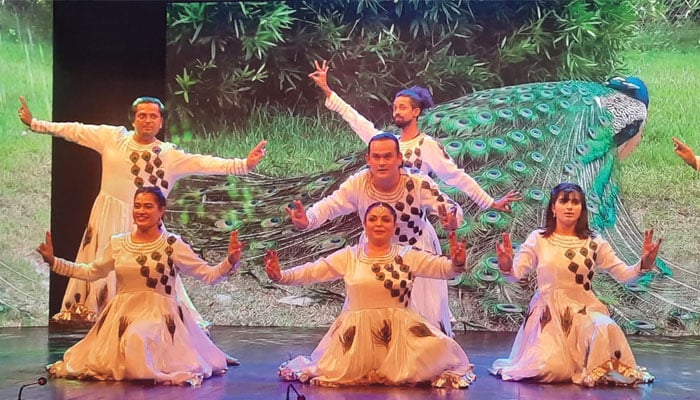
MB: My group and I performed Aqsaam-e-Nach, Andaaz-e-Kathak at the Karachi Arts Council. The audience represented a cross-section of Karachi - students, families, art lovers and first-time viewers of classical dance. My primary purpose of this show was to demystify and destigmatise the ghungroo and present it for what it really is – an instrument of the dancer. I feel like we demonstrated that very successfully. It was a high-energy performance.
You! You performed in smaller cities and villages of Sindh to reach low-income communities. What inspired you to make accessibility such a central part of your artistic mission?
MB: Art should not be confined to elite spaces. Our classical traditions belong to everyone. I have seen how access to the arts has been limited by geography, income and social barriers and I want to change that.
Performing in smaller towns and rural communities is an act of cultural return - taking heritage back to the people. When children in villages see classical dance live for the first time, they recognise it not as something foreign but as part of their own cultural inheritance. That recognition is powerful.
You! How do audiences in smaller towns or villages respond differently to Kathak compared to urban audiences?
MB: Urban audiences often view Kathak through an aesthetic lens - appreciating technique, repertoire and presentation. Rural audiences respond with emotional immediacy. They connect instinctively to rhythm, storytelling and gesture.
There is no distance between performer and viewer in these spaces. When we perform, the audience becomes part of the rhythm - clapping, smiling and reacting. Their engagement is raw and honest. It reminds us that classical art, at its core, is a shared human experience.
You! In a country where classical dance often struggles for institutional support, what challenges do you face in promoting this art form in Pakistan?
MB: The challenges are numerous: limited funding, lack of institutional infrastructure, social misconceptions about dance and shrinking platforms for classical arts. Many still associate dance with stigma rather than viewing it as a part of cultural heritage. Moreover, when trying to assemble a group, it’s difficult to find dancers trained in Kathak or musicians trained to accompany dance.
Yet, these challenges are also a source of motivation. Each performance, every student trained and each audience reached helps shift perceptions. When people understand that Kathak is a refined classical tradition rooted in history, poetry and rhythm, the barriers begin to dissolve.
You! You believe that art is not the privilege of a few. How does this philosophy influence the structure and vision of the Kathak School of Performing Arts?
MB: This belief forms the foundation of the school. Most of our students train on full scholarships, ensuring that talent – rather than financial capacity - determines access. We aim to create an inclusive environment where young dancers from diverse backgrounds can learn within the traditional guru–shishya ethos.
Beyond technique, the school instills discipline, confidence, cultural awareness and self-worth. We are not only training dancers; we are nurturing artists and future custodians of the tradition.
You! What role does art, especially dance, play in social development and community engagement in your view?
MB: Art humanises society. Dance builds discipline, emotional intelligence and self-expression. In communities facing social or economic challenges, artistic engagement restores dignity and gives voice. Through community performances and theatre-based outreach, we have seen how dance can spark dialogue, build confidence in youth and strengthen collective identity. Art does not merely entertain - it transforms.
You! How do you blend classical Kathak techniques with theatrical storytelling in your performances?
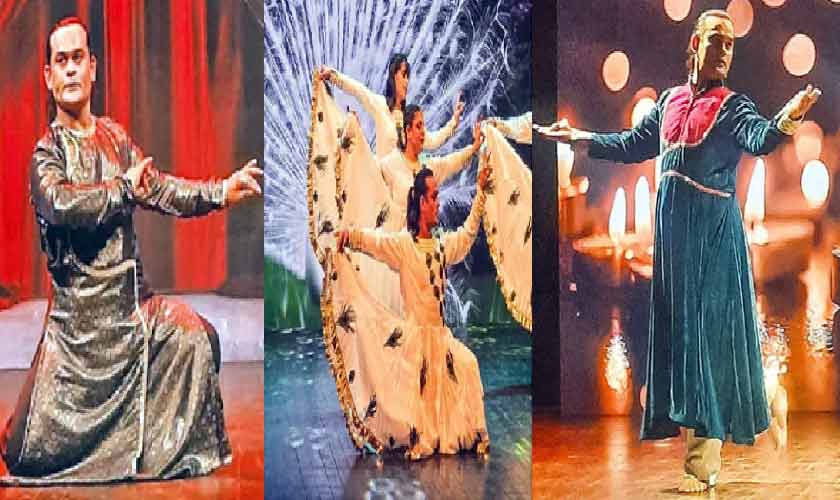
MB: Kathak itself originates from storytelling traditions. In dance-theatre, I expand that narrative potential by structuring choreography around thematic arcs, character development and emotional progression. Classical compositions remain intact but are woven into narrative frameworks that allow contemporary audiences to engage more deeply. Gesture, rhythm, expression and spatial design work together to tell stories that resonate beyond language.
You! What advice would you give to young dancers in Pakistan who wish to pursue classical dance professionally despite societal or financial constraints?
MB: I often say: Kathak will belong to you to the extent that you belong to it. Commit to discipline and patience. Classical dance is not a quick path to recognition; it is a lifelong journey of devotion. Seek authentic training, honour the lineage and remain grounded in riyaaz.
Do not be discouraged by social perceptions. Every generation reshapes cultural understanding. If you remain sincere in your pursuit, your work will speak for itself.
You! Looking ahead, what is your long-term vision - for yourself, for your productions and for the future of Kathak in Pakistan?
MB: My vision is to see Kathak flourish as a respected and accessible art form across Pakistan. I hope to expand performance platforms, nurture new generations of dancers and create productions that speak to contemporary audiences while honouring tradition.
For our productions, the goal is to continue bridging classical dance with storytelling and social themes, bringing the art to both major cultural venues and underserved communities.
Ultimately, I dream of a future where Kathak is not viewed as rare or distant but as a vibrant part of our shared cultural identity - alive, evolving and belonging to all.