Intercropping has proven to be a climate-smart approach in Pakistan,promoting sustainable agricultural development. Read on…
sustainability
In Pakistan, where water scarcity and climate change continue to threaten agricultural sustainability, intercropping has emerged as a practical and efficient solution to enhance productivity and strengthen food security. Intercropping refers to the cultivation of two or more crop species simultaneously on the same field during a single growing season. This system ensures the efficient use of vital resources such as soil nutrients, water and sunlight, leading to higher overall yields per unit of land. It is a time-tested yet modern approach that boosts total productivity and farm income, particularly in densely populated regions where per capita land availability is limited.
Sindh province, despite its agricultural potential, faces increasing challenges due to limited water resources and erratic rainfall patterns linked to climate change. This calls for a transition from conventional monocropping to more adaptive and resource-efficient systems, such as intercropping. Properly implemented, intercropping can be a game-changing practice for farmers, allowing them to achieve higher economic returns, better resource conservation and greater resilience to climatic stress. Although this system demands careful planning, timely management and strong commitment, the resulting gains in productivity and income make it an attractive option for sustainable agricultural development in Pakistan.
Intercropping offers several notable benefits, including water conservation, yield stability, resource efficiency and enhanced profitability. When combined with ridge planting, it conserves substantial amounts of irrigation water compared to traditional flood irrigation. It also stabilises crop yields ensuring that intercrops such as onion and wheat maintain productivity levels comparable to their sole crops. Moreover, intercropping improves resource efficiency, doubling nutrient and water use effectiveness compared to conventional systems. The economic benefits are equally impressive, as intercropping reduces input costs associated with fertilisers, land preparation and labour.
However, the adoption of intercropping in Sindh remains limited due to low farmer awareness, the need for precise management and higher seed costs. Farmers must adhere closely to schedules for sowing, irrigation and fertiliser application, as delays in one crop can negatively affect the others. Despite these challenges, intercropping remains a practical and rewarding method for smallholders seeking to boost income and improve food security. Currently, there is insufficient research on the input requirements, seasonal production patterns and management practices associated with intercropping. Although some provincial institutes and universities have investigated sugarcane-based systems, comprehensive data on production costs, profitability and yield determinants remain scarce. Nonetheless, farmers who have adopted sugarcane intercropping systems report significantly higher earnings. A range of short-duration crops, such as potato, tomato, onion, garlic, lentil, wheat, peas, mustard and sunflower can be effectively integrated with sugarcane, depending on seasonal conditions.
Intercropping economics and productivity
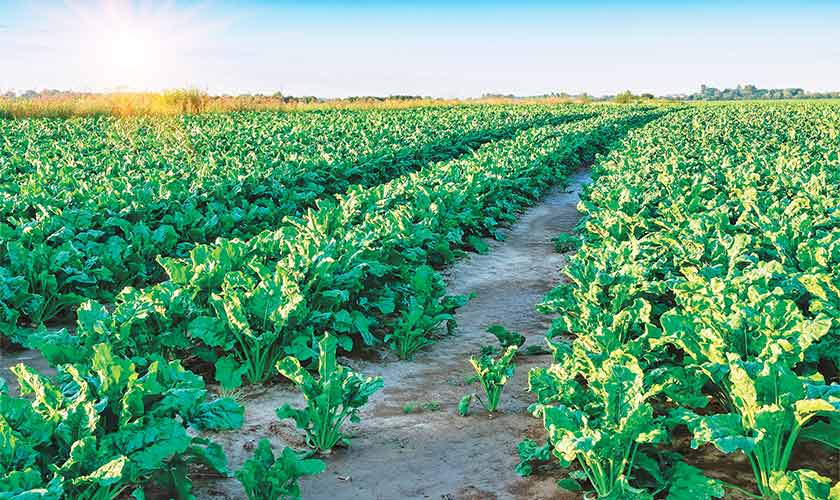
Field experiments at the Agriculture Research Institute, Tandojam, have shown that although pure sugar beet cultivation produces the highest yield (76.5 t/ha), intercropping systems offer greater profitability. For instance, sugar beet intercropped with wheat generated the highest net return, followed by lentil and barley. These findings highlight that while yields may decline slightly under intercropping, improved resource utilisation and diversification significantly enhance overall income.
Similarly, a study conducted in the Muzaffargarh district revealed that onion–tomato intercropping achieved a benefit-cost ratio of 1.59, surpassing that of sole onion (1.37) and tomato (1.48) cultivation. The land equivalent ratio of 1.31 indicated higher land-use efficiency, demonstrating that intercropping not only maximises income but also promotes ecological sustainability through complementary crop interactions. For long-duration crops like sugarcane, intercropping provides an excellent opportunity to utilise the open space between rows for short-duration crops such as lentils, grams, peas, mustard, garlic and sunflower.
Research from the University of Agriculture, Faisalabad, confirmed that these combinations substantially increased net incomes compared to sole sugarcane cultivation. The highest benefit-cost ratio (2.78) was recorded for sugarcane intercropped with lentil, followed by garlic (2.72) and peas (2.63). These results confirm that integrated cropping systems can simultaneously enhance productivity, profitability and resource efficiency. In essence, intercropping maximises the use of sunlight, water and nutrients while reducing the risks associated with monocropping. For Pakistan’s small and resource-constrained farmers, it presents a sustainable pathway toward economic resilience, food security and climate adaptation.
Precautions for successful intercropping
To ensure successful outcomes, several key precautions must be followed. The intercrop should always be treated as a supplementary, rather than a dominant, crop aimed at generating additional income. Planting should occur in inter-row spaces, maintaining appropriate spacing to prevent excessive competition. Wider row spacing helps minimise competition between crops, especially in sugarcane systems, where ridge planting benefits vegetable growth. Farmers should prefer short-statured, short-duration varieties to avoid yield suppression of the main crop. For instance, late-planted sunflower or long-duration mustard may hinder sugarcane growth, whereas early planting (September–November) ensures compatibility. In some cases, relay cropping - where vegetables like chilies or onions are planted first, followed by sugarcane - can yield better results. The use of organic manure (FYM) is strongly recommended, as it enhances soil fertility and supports high intercrop productivity. Exhaustive crops such as maize or sunflower perform well when grown on organically enriched soil. Adequate fertiliser application, proper irrigation (avoiding over-flooding) and timely weed management are also crucial. After harvesting the intercrop, farmers must immediately focus on inter-row cultivation and nutrient management for the main crop to sustain overall yield potential.
Intercropping has proven to be a powerful tool for achieving sustainable agricultural development in Pakistan, particularly in sugarcane-based systems. Its multiple advantages - including enhanced productivity, improved income stability and reduced environmental impact - make it a win-win approach for farmers. Despite its potential, adoption remains limited due to low awareness and management constraints. To unlock its full benefits, coordinated efforts among policymakers, researchers and farmers are essential. Expanding intercropping practices, particularly through the identification of suitable short-duration crops for integration, can transform the economic outlook of rural farming communities. Additionally, intercropping aids in weed control, reducing the need for chemical herbicides and lowering production costs.
Moreover, the simultaneous planting of crops such as sugarcane and wheat during November–December can increase sugarcane productivity without compromising wheat yield. In Pakistan’s irrigated agro-ecosystems, crop diversification through intercropping pulse crops with sugarcane can significantly improve resource-use efficiency, including nitrogen, water and weed management. Incorporating crop residues further enriches soil organic carbon, mitigating the effects of dependence on chemical fertilisers. By strategically growing short-duration cereals, pulses, vegetables and spices as intercrops, sugarcane growers can ensure steady interim returns and long-term sustainability. Intercropping thus stands as a cornerstone of climate-smart agriculture, providing smallholders with a reliable path toward increased income, efficient resource use and enhanced food security in an era of environmental uncertainty.
Dr Nazar Gul serves as Deputy Director,
and
Hafiz Abdul Salam as Director, at the Pakistan Council of Research in Water Resources (PCRWR), Islamabad.