International Women’s Day stands as a global call to action for systemic legal reform and the transformative impact of purposeful, collective generosity. Read on…

As we approach the middle of this decade, the conversation surrounding gender parity has shifted from awareness to accountability. No longer satisfied with mere representation, women globally are demanding a fundamental restructuring of the social and economic systems that have historically limited their potential. The landscape of 2026 is defined by a push for tangible equity, where the ‘gender gap’ is treated not as a statistical inevitability but as a policy failure. In this high-stakes environment, the focus has narrowed toward actionable justice and the specific mechanisms that allow women to lead, innovate and thrive without institutional barriers.
The time for symbolic gestures has passed; International Women’s Day 2026 arrives as a global clarion call for systemic legal reform and the transformative power of intentional, collective generosity.
This movement, anchored in the philosophy of #GiveToGain, recognises that true progress is born from a reciprocal ecosystem of support. It moves the needle from performative allyship to a model of ‘intentional multiplication’, where every hour of mentorship and every dollar of venture capital invested in women yields a compounded return for society at large. By prioritising rights and justice over slogans, we are transitioning into an era of sustainable empowerment. This is the moment when we stop asking for a seat at the table and begin redesigning the room entirely, ensuring that the legacy of 2026 is one of measurable, irreversible advancement for every woman and girl.

Imagine a world that functions not like a ledger of debts but like a garden in perennial bloom. In this space, the act of giving is never a loss; it is the seed from which a collective harvest grows. This is the heart of the #GiveToGain movement for International Women’s Day 2026 (IWD) - a shift from the scarcity of ‘transaction’ to the abundance of ‘transformation’.
As we approach March 8, 2026, the global community stands at a critical juncture. The official UN Women theme ‘Rights. Justice. Action. For ALL Women and Girls,’ serves as a stark reminder that progress remains unfinished. While awareness has grown, significant legal, social and economic gaps continue to hinder the potential of half the world’s population. This year, the focus shifts from the abstract to the actionable, demanding concrete steps to ensure safety, leadership parity and economic security for every woman, everywhere.
Complementing this call for justice is the IWD campaign theme, #GiveToGain. This initiative challenges the traditional notion of charity, reframing giving as a powerful act of intentional multiplication. When a mentor clears an hour in their day to guide an aspiring leader, they aren’t losing time; they are gaining a future colleague. When a corporation invests in infrastructure for women-led startups, it isn’t spending capital; it is multiplying the market’s potential. This is intentional multiplication. We are learning that support for women is the tide that lifts every boat in the harbour.
The philosophy is simple yet profound: when we give, we gain. By fostering a mindset of abundance and collaboration, we create a reciprocal ecosystem in which the advancement of women serves as a catalyst for broader societal prosperity. When women thrive, the ripple effects touch every corner of our communities - because when women rise, we all rise.
Reinvestment of
social capital
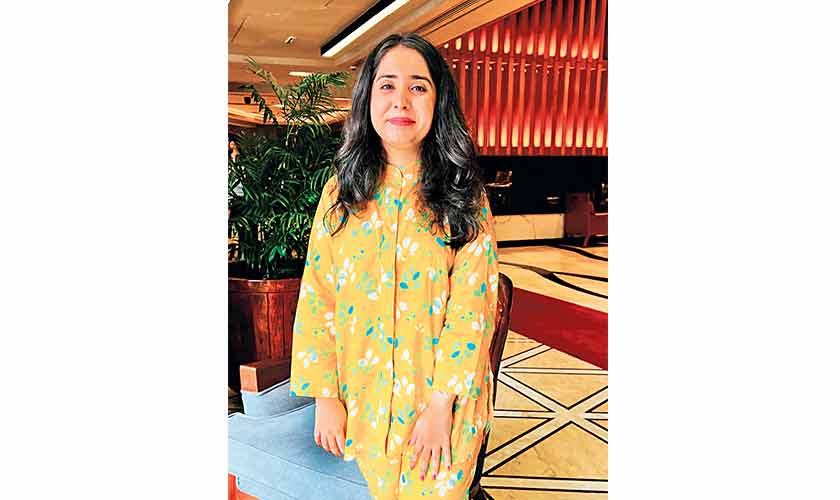
As Head of People, Foodpanda, and a certified DE&I (Diversity, Equity and Inclusion) champion, Hira Osman views #GiveToGain as the conscious use of influence to create access where it does not naturally exist. She observes that HR leaders sit at the intersection of talent and decision-making; therefore, when they intentionally provide visibility, sponsorship and development to women, they strengthen the entire organisation rather than simply uplifting individuals.
She maintains that giving women leadership exposure and safe platforms for expression leads to stronger decision-making and greater resilience. She characterises this as a strategic investment in sustainable performance rather than merely a social gesture.
Regarding her active support for interview preparation and resume building, she identifies the most impactful gift as confidence through clarity. She has worked with capable women who were hesitant to pursue larger roles, helping them articulate their impact and own their achievements through reframing. She recalls a specific instance in which she supported a woman who struggled to translate high-impact work into leadership language. Once that professional learned to present her value confidently, she secured a major role and began mentoring others, proving that helping someone see their own worth can transform self-doubt into powerful self-advocacy.
In fast-growing organisations, she asserts that mentorship and psychological safety must be embedded into daily operations. She encourages women leaders to pay it forward by building teams where diverse perspectives are welcomed and failure is treated as a learning opportunity. Furthermore, she believes leaders have a responsibility to demystify ‘unwritten rules’ and share how influence works, removing ambiguity for emerging talent. She measures leadership legacy not just by targets, but by the leaders developed along the way, concluding that creating space for others to succeed ultimately builds more resilient organisations for everyone.
The frontlines of
public health
To understand the tangible impact of ‘Rights, Justice and Action’, one ought to look at the work of Devyani Tehlwani, a public health specialist, whose career embodies the spirit of giving back to create a healthier society. With over two years of rigorous professional experience, Tehlwani has dedicated herself to the intricate workings of primary healthcare delivery and community-based interventions. Her approach is rooted in the belief that health is a fundamental right, not a privilege and her work focuses on bridging the gap between clinical services and the underserved populations who need them most.
Currently serving with SHINE Humanity Pakistan, Tehlwani manages two of SHINE’s essential healthcare packages: Family Planning and Community Outreach. Her role is far from sedentary; she is often in the field, supervising outreach efforts and collaborating closely with community health workers to ensure that no one is left behind.
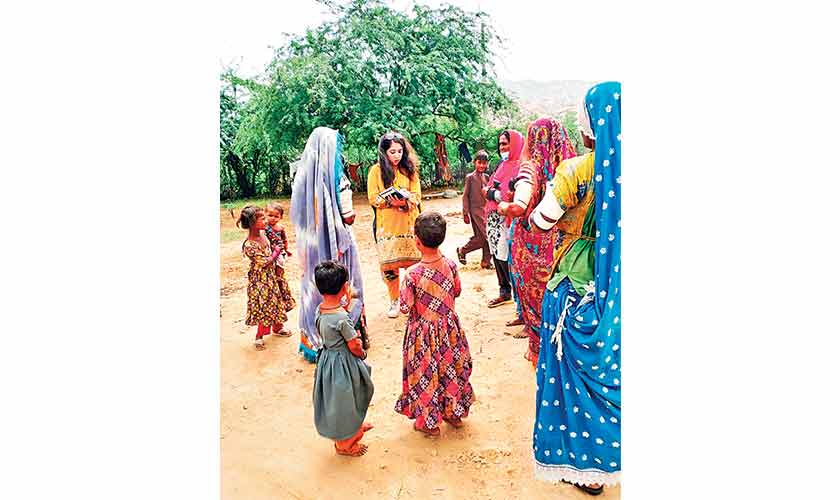
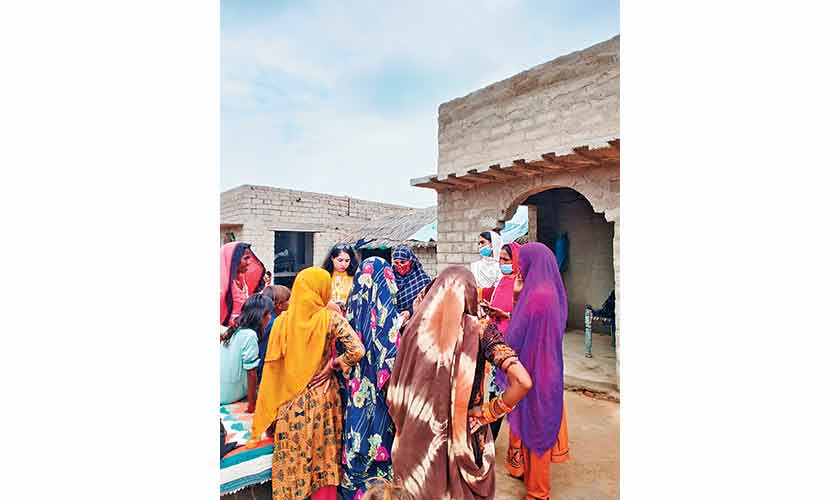
A cornerstone of their Community Outreach Programme is the ‘Sehat Ki Sangat’ initiative, a woman-centred outreach platform designed to provide more than just medical advice. This platform creates safe, communal spaces where women can discuss sensitive topics, such as family planning and menstrual hygiene, without fear or stigma.
This impact is measured not just in data points - though her background in research and her numerous publications on ResearchGate prove her commitment to evidence-based practice – but also in the trust she builds. By facilitating group sessions and gathering direct community feedback, she ensures that health systems are responsive rather than rigid. Her work in strengthening referral linkages means that when a woman in a marginalised community seeks help, the system is prepared to catch her.
SHINE Humanity has been at the forefront of a transformative movement to enhance maternal, new-born and child health across Pakistan’s most underserved regions by bridging the gap between clinical research and community-based delivery. A cornerstone of this mission is a strategic partnership with the Aga Khan University’s Department of Paediatrics and Child Health, which seeks to formalise a data-driven approach to health outcomes. By merging the university’s technical and academic expertise with its extensive field experience, the collaboration introduces critical life-saving interventions, such as intravenous (IV) iron therapy for women suffering from moderate to severe anaemia during pregnancy.
This initiative goes beyond traditional care by integrating artificial intelligence (AI) and predictive modelling to analyse Electronic Medical Record (EMR) data, creating smarter, evidence-based solutions for the complex health challenges faced by mothers in rural and marginalised communities.
In addition to acute medical interventions, the organisation has pioneered a robust expansion of family planning and reproductive health services tailored specifically to the unique socio-economic landscape of rural Sindh. Currently operating across seven specialised clinics -including locations in Gharo, Sujawal and Nagarparkar - the programme extends its reach through a dedicated network of trained Community Health Workers (CHWs). These frontline workers conduct intensive door-to-door engagement and community counselling sessions, ensuring that essential family planning services and medications are accessible far beyond the walls of traditional clinics. By bringing awareness and reproductive tools directly to the doorsteps of those in need, the programme empowers women to make informed decisions about their health and future, fostering a culture of wellness and autonomy that resonates throughout their families and wider communities.
The broader vision of these efforts is to create a sustainable and scalable model for healthcare that addresses both immediate nutritional needs and long-term systemic improvements. Under a collaborative framework with academic leaders, SHINE Humanity is actively involved in adapting malnutrition treatment guidelines and enhancing nutrition counselling for women and children. This holistic approach ensures that maternal health is not viewed in isolation but as a vital component of a resilient healthcare ecosystem. By combining rigorous research with proven community delivery systems, the organisation is not only improving the quality of care today but also contributing to a legacy of innovation that promises measurable health improvements for the next generation of Pakistani women. Through these strategic partnerships and grassroots outreach, the story of women’s health in Pakistan is being rewritten as one of empowerment, resilience and technological advancement.
Through her commitment to education, training and the development of IEC (Information, Education and Communication) materials, Tehlwani is a living example of the #GiveToGain philosophy. She shares her expertise and in return, the community gains the agency to manage its own health outcomes. Her efforts demonstrate that when we invest in the health and education of women, we are not merely performing an act of service - we are strengthening the very foundation of the global health system.
The journey toward gender equality in 2026 transcends the traditional boundaries of advocacy, evolving into a reciprocal ecosystem where generosity fuels systemic change. Through the lens of #GiveToGain, we see that the advancement of women is not a zero-sum game but a collective expansion of possibilities. Whether it is through HR leaders like Hira Osman, who reframe professional narratives to instill confidence, or public health specialists like
Devyani Tehlwani, who bring life-saving agency to the doorsteps of rural Sindh, the message is clear:
when we give access, we gain resilience.
All of this proves that investing in a woman is an investment in the foundational strength of the entire community. Ultimately, #GiveToGain reminds us that every act of mentorship, every policy for psychological safety and every digital health innovation is a seed planted for a more equitable harvest. As we move beyond March 8, the challenge remains to continue multiplying these efforts. By choosing to give our influence, expertise and resources, we don’t just support women - we gain a world that is more innovative, stable and just for everyone.
The writer is a freelance journalist based in Karachi. She can be reached at [email protected]