The Prophet (S.A.W) said, “No fatigue, nor disease, nor sorrow, nor sadness, nor hurt, nor distress befalls a Muslim...
BITS ‘N’ PIECES

Narrated Abu Sa'id Al-Khudri and Abu Huraira (R.A):
The Prophet (S.A.W) said, “No fatigue, nor disease, nor sorrow, nor sadness, nor hurt, nor distress befalls a Muslim, even if it were the prick he receives from a thorn, but that Allah expiates some of his sins for that.”
Sahih Bukhari, Volume 7, Book 70, Number 545
Tokyo’s famous towers became symbols of Japan’s identity and resilience.
After the end of Allied occupation in 1953, Japan began rebuilding itself as an economically strong nation. One of the most important tools in this transformation was television broadcasting. As more television companies emerged in the Kanto region, the government realised the need for a single broadcasting tower capable of serving the entire area. In 1957, businessman Hisakichi Maeda founded the Nippon Television City Corporation to construct this tower with private funding. However, Maeda and architect Tachu Naito wanted more than just a functional broadcasting structure. They hoped to create a national symbol that would represent Japan’s recovery, ambition and growing confidence after the devastation of war.
Completed in 1958, the Tokyo Tower became the world’s tallest freestanding tower at the time, standing at 333 metres and inspired by the Eiffel Tower. Its design reflected Japan’s desire to modernise and compete with leading Western nations while also creating a unique landmark for Tokyo. Located in the wealthy and cosmopolitan Minato ward, the tower symbolised prosperity, industrial progress and technological advancement. Over time, its illuminated night-time appearance transformed it into a cultural icon. Films, manga, anime and television dramas frequently portrayed it as a place of love, aspiration and fantasy. Earlier, however, it often appeared in giant monster films where creatures such as Godzilla destroyed the tower, symbolising fears linked to war and nuclear destruction.
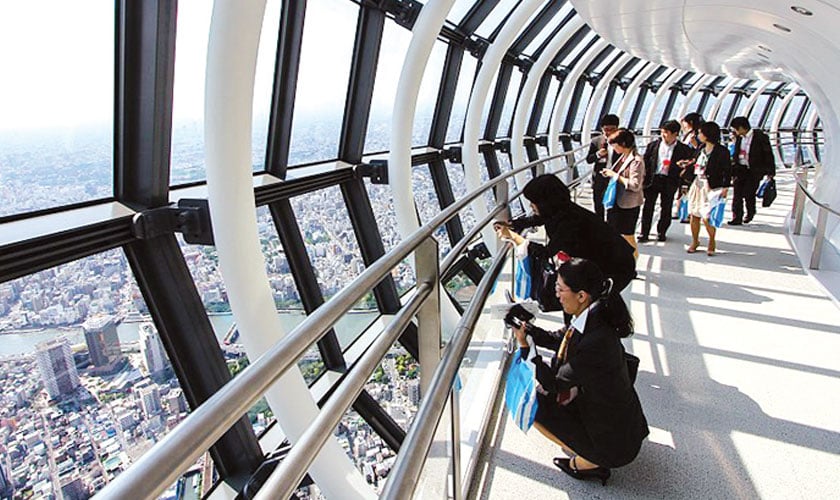
By the early 21st century, economic stagnation, demographic decline and advances in digital broadcasting made the Tokyo Tower inadequate because surrounding skyscrapers interfered with its signal. As a result, construction of the Tokyo Skytree began in 2008. Unlike the Tokyo Tower, which looked outward to Western inspiration, the Skytree focused on Japanese tradition and identity. Built in the historic Sumida and Taito districts, its design drew inspiration from traditional Buddhist pagodas and the aesthetics of old Edo culture. Standing at 634 metres, the tower’s height was chosen partly because the number can be read as “Musashi”, the historical name of the region around Tokyo. A large shopping complex with an aquarium is located at its base. The highlight of the Tokyo Skytree is its two observation decks which offer spectacular views out over Tokyo. The two enclosed decks are located at heights of 350 and 450 meters respectively, making them the highest observation decks in Japan.
When the Skytree survived the devastating 2011 Tohoku Earthquake without damage, it quickly became a national symbol of strength and endurance. Today, both towers represent different stages of Japan’s history. The Tokyo Tower reflects post-war modernisation, prosperity and dreams, while the Tokyo Skytree symbolises resilience, cultural identity and hope for the future.