Muawiya (R.A) wrote to Mughira (R.A): "Write to me what you heard the Prophet (S.A.W) saying after his prayer.”

BITS ‘N’ PIECES
Narrated Warrad, the freed slave of Al-Mughira bin Shu’ba (R.A):
Muawiya (R.A) wrote to Mughira (R.A): "Write to me what you heard the Prophet (S.A.W) saying after his prayer.” So Al-Mughira dictated to me and said, “I heard the Prophet (S.A.W) saying after the prayer, 'None has the right to be worshipped but Allah alone, Who has no partner. O Allah! No one can withhold what You give and none can give what You withhold, and the fortune of a man of means is useless before You (i.e. only good deeds are of value).’”
Sahih Bukhari, Volume 8, Book 77, Number 612
Life expectancy has changed through different ages.
For most of human history, living beyond 50 was considered fortunate. Today, many people expect to live into their 70s or 80s, but this was not always the case. Life expectancy has changed dramatically over the centuries, reflecting improvements in medicine, sanitation, nutrition and living conditions.
In prehistoric times, life expectancy at birth was only around 20 to 30 years. This low average was mainly caused by extremely high infant and child mortality. Many children died before the age of five because there was no modern medicine to treat infections, injuries or disease. However, adults who survived childhood often lived into their 40s or 50s.
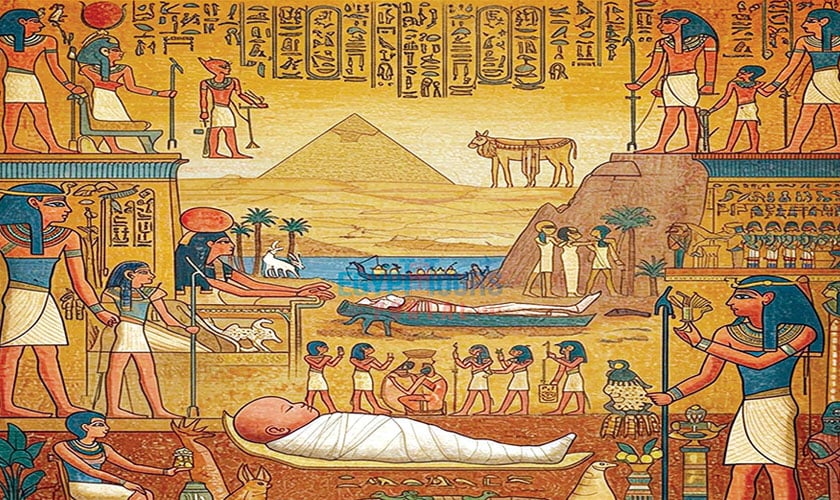
During ancient civilisations such as Egypt, Greece, Rome, China and India, life expectancy rose slightly to around 30 to 35 years. Cities were crowded and unsanitary, allowing diseases such as malaria, tuberculosis and smallpox to spread easily. Still, people who survived childhood had a fair chance of reaching middle age and some even lived into their 60s or 70s.
In the Middle Ages, life expectancy remained around 30 to 35 years. Wars, famines and deadly epidemics repeatedly devastated populations. The Black Death alone killed millions and temporarily caused life expectancy to collapse in Europe. Yet, those who survived the dangerous early years could still live into their 50s.
By the 1600s and 1700s, life expectancy slowly began to improve, especially in parts of Europe. Better farming methods increased food supplies and smallpox inoculation reduced deaths from one of the era’s deadliest diseases. Even so, infant mortality remained extremely high.

The 1800s marked a major turning point. Industrialisation initially created unhealthy cities, but governments eventually introduced sewage systems, clean drinking water and better sanitation. These public health improvements reduced deaths from diseases such as cholera and typhoid, helping life expectancy rise to around 45 to 50 years in some countries.
The greatest progress came during the 20th century. Vaccines, antibiotics, safer childbirth and advances in surgery transformed survival rates across all age groups. Global life expectancy increased from about 32 years in 1900 to roughly 65 years by the late 1900s.
Today, global life expectancy averages around 71 to 73 years, while countries such as Japan and Switzerland exceed 83 years. However, the COVID-19 pandemic reminded the world that progress is never guaranteed.