A typical morning in any Pakistani household doesn’t commence until the aroma of chai or coffee fills the air...
HEALTHWISE
A typical morning in any Pakistani household doesn’t commence until the aroma of chai or coffee fills the air. These drinks often serve as the catalyst to unleashing our energy for the day – waking us up, fuelling our conversations, study sessions and late-night thoughts – but they also leave behind something we don’t always notice until it is too late: STAINS!
And suddenly, the pressure to stay white kicks in – but is it really a problem?
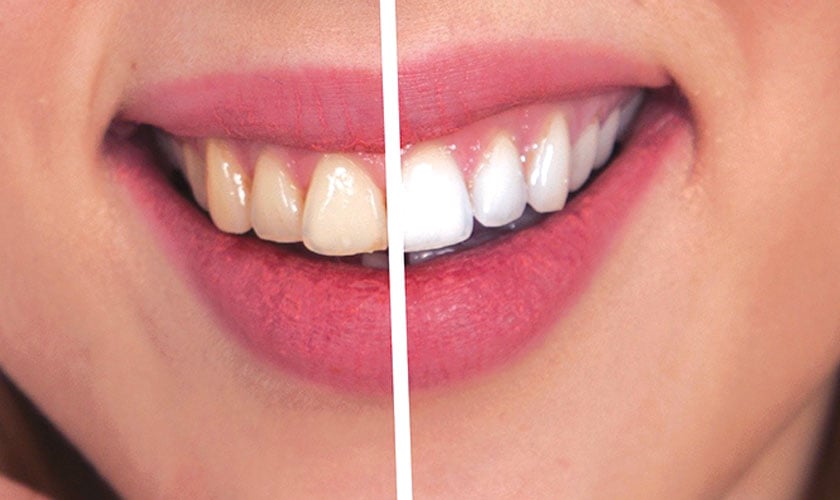
To begin with, let’s explain the science. There are broadly two categories: intrinsic staining, which refers to internal discoloration of a tooth associated with congenital defects and premature antibiotic use, such as tetracyclines; and extrinsic staining, where tannins and pigments in substances such as chai and coffee adhere to the outer surface of our teeth. These are neither damage, nor decay. It is simply a gradual discoloration that builds up with every sip we take and in simplified words, it is absolutely normal. What isn’t normal is the pressure to have pristinely white teeth all the time.
Scrolling through social media, we see it everywhere – glistening, pearly white, impeccably aligned smiles that look almost too perfect to be real. But behind this perceived perfection lies a cloak of filters, editing tools and cosmetic procedures that we often overlook. This has quietly set a standard we compare ourselves to, not realising that it is often “artificially curated.”
Yet, we still internalise it, which makes sipping an ordinary cup of chai feel like a crime or ordering a cup of a hot latte something to feel guilty about.
We begin to associate staining with neglect or poor oral hygiene, but, in reality, it’s simply just a reflection of lifestyle. And here’s a thought to ponder: we don’t question why coffee stains a mug, but we expect our teeth to remain untouched. This disconnect is where the real issue lies.
Of course, this doesn’t mean oral care doesn’t matter. It absolutely does, but the goal is not to panic over every shade change in our teeth or chase unrealistic whiteness. It is to understand what can actually be done.
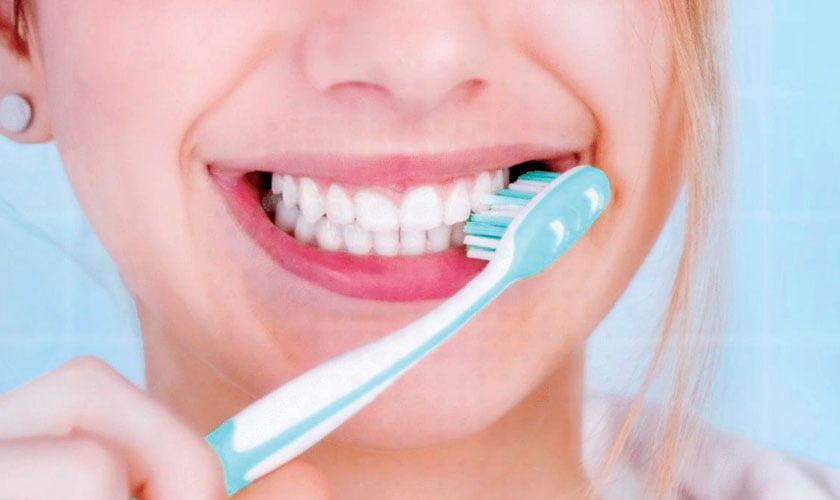
Most chai and coffee stains are superficial, meaning they are manageable and, to a large extent, reversible. Even the simplest of habits can make a huge difference – brushing twice daily with a fluoride toothpaste, rinsing the mouth with water after consuming staining drinks and avoiding constant sipping throughout the day can reduce the buildup of stains over time.
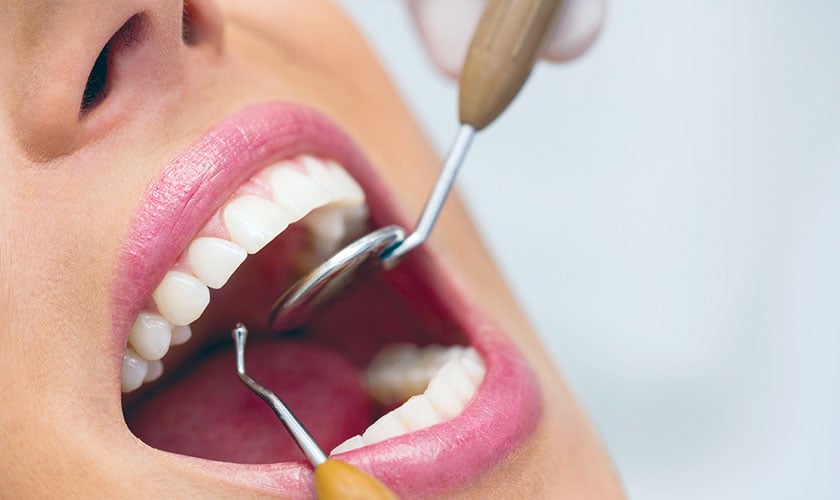
When stains become more established, the next step in management is professional cleaning. Dental scaling and polishing not only eradicates stains, but also remove surface deposits (plaque and calculus), giving our teeth a cleaner appearance and healthier environment to thrive in. It is not a cosmetic luxury, rather it is an integral part of routine preventive dentistry.
Bleaching or whitening procedures are a conservative option to enhance tooth shade. The whitening agents are applied under professional supervision over multiple visits until the desired shade is achieved. This is what people often see being marketed on social media as “instant perfection.”
For more resistant and deeper discoloration, microabrasion is considered, where a few micrometres of enamel harbouring the defiant stain is removed in a controlled manner using an acidic abrasive technique. Macroabrasion is a more extensive form of stain removal indicated in patients who, along with stain removal, desire a broader aesthetic improvement or when the simpler methods are rendered insufficient.
At the far end of the spectrum are veneers and crowns, which are aesthetic and restorative options rather than stain-removal techniques. Veneers cover the front surface of multiple anterior teeth, while crowns, used more posteriorly, encase the entire tooth structure. These are reserved for cases with immense structural damage, severe discoloration or when comprehensive cosmetic transformation is required. While highly effective, they are also irreversible and therefore should not be considered a part of routine stain management.
Intrinsic discoloration, however, is more challenging to manage since it originates within the tooth structure. Its management involves internal bleaching in selected cases, or restorative options like veneers and crown when significant correction is required.
And this is where the real conversation begins.
Somewhere along the line, we forget that a healthy smile does not require perfection with veneers. It doesn’t require comparison with artificial filters. It is simply a smile that reflects life as it is lived. And those spontaneous coffee runs and quiet moments of chai just make the stressful exam days and workload-heavy routines feel a little easier.
Because in the end, it’s not about escalating treatment to chase perfection. It is about knowing where to stop and still smile freely!