In the life-time of Allah’s Apostle (S.A.W), we used to give one sa of food (edible things) as sadaqat-ul-fit’r (to the poor)...

BITS ‘N’ PIECES
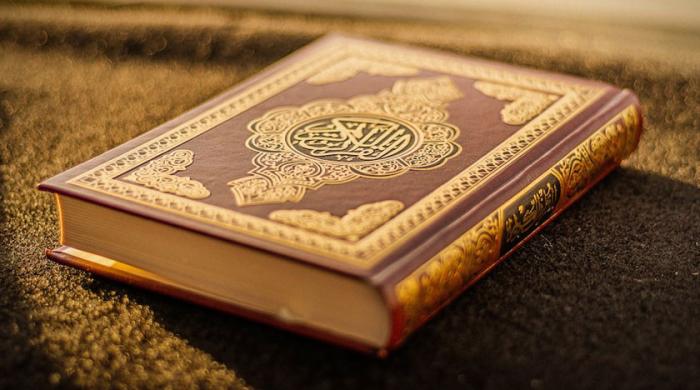
Narrated Abu Said Al-Khudri (R.A):
In the life-time of Allah’s Apostle (S.A.W), we used to give one sa of food (edible things) as sadaqat-ul-fit’r (to the poor). Our food used to be either of barley, raisins (dried grapes), cottage cheese or dates.
Sahih Bukhari, Volume 2, Book 25, Number 586
The Pacific Ocean was named by Ferdinand Magellan because it first appeared calm to him.

The first successful circumnavigation of the Earth was achieved by the Magellan–Elcano expedition between 1519 and 1522, one of the most remarkable voyages of the Age of Discovery. The expedition was originally led by Ferdinand Magellan, a Portuguese explorer sailing under the Spanish flag. Having spent years navigating in the Far East, Magellan believed that the Spice Islands, or Moluccas in present-day Indonesia, could be reached more efficiently by sailing west rather than travelling around Africa.
Spices such as cloves and nutmeg were immensely valuable in Europe, used for preserving food, medicine and trade. Portugal controlled the eastern sea route to Asia under the 1494 Treaty of Tordesillas, which divided newly discovered lands between Portugal and Spain. Determined to secure its own profitable route to the Spice Islands, Spain agreed to fund Magellan’s bold proposal.
When King Manuel I of Portugal refused to support the idea, Magellan turned to King Charles I of Spain, who financed the expedition. On 20 September 1519, five ships carrying about 270 men sailed from Spain. After crossing the Atlantic Ocean, the fleet travelled south along the eastern coast of South America.
The journey was fraught with danger. During the winter at Port St. Julian, several captains staged a mutiny against Magellan. He suppressed the rebellion and executed its leaders. One ship was wrecked and another deserted, leaving the fleet reduced in number. On 21 October 1520, Magellan discovered a narrow passage at the southern tip of South America, later named the Strait of Magellan. After 38 difficult days navigating the 338-mile strait, the fleet entered a vast and seemingly calm ocean, which Magellan named Mar Pacífico, meaning ‘peaceful sea’.
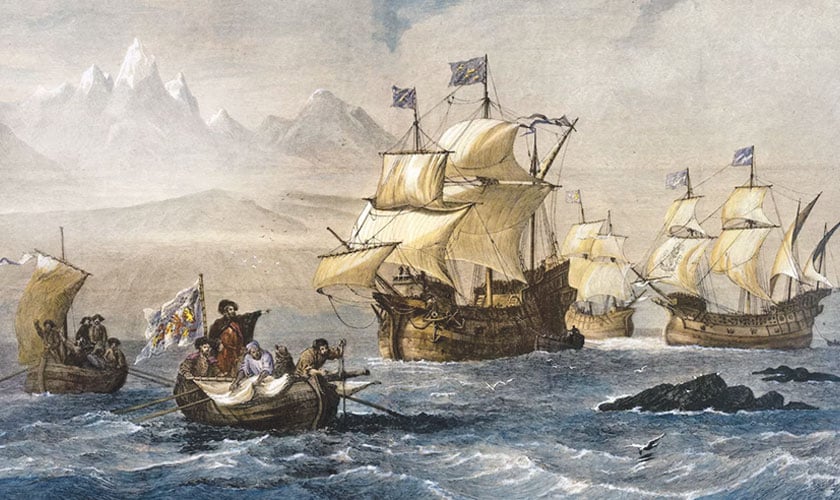
The crossing of the Pacific proved anything but peaceful. Lasting about three months, it brought starvation and scurvy to the exhausted crew. The expedition finally reached Guam and later the Philippines in 1521. There, Magellan became involved in a local conflict and was killed at the Battle of Mactan on 27 April 1521.
After his death, leadership passed to several officers before Juan Sebastián Elcano took command of the remaining ship, Victoria. Sailing west across the Indian Ocean, around the Cape of Good Hope and north along the African coast, Elcano returned to Spain on 6 September 1522. Only 18 of the original crew survived.
Although Magellan did not complete the voyage himself, the expedition achieved the first circumnavigation of the globe, permanently reshaping European understanding of the world. Magellan’s voyage was the opening chapter in the rise of global trade and globalization that defines our world today. It also generated important scientific knowledge, including more information about the earth’s circumference and new understandings of global time.