Where does Pakistan stand in the global innovation race?
COVER STORY
As the world accelerates into an unprecedented era of technological transformation, 2026 marks a critical inflection point where emerging innovations are reshaping entire industries. From artificial intelligence that discovers new scientific breakthroughs to sodium-ion batteries challenging lithium’s dominance, the latest research technologies are no longer confined to laboratories; they’re entering mainstream applications at breakneck speed.
For Pakistan, a nation with 68 percent of its population under 30 and ambitious goals to train one million AI professionals, understanding these global trends isn’t just academic, it’s essential for economic survival and prosperity.
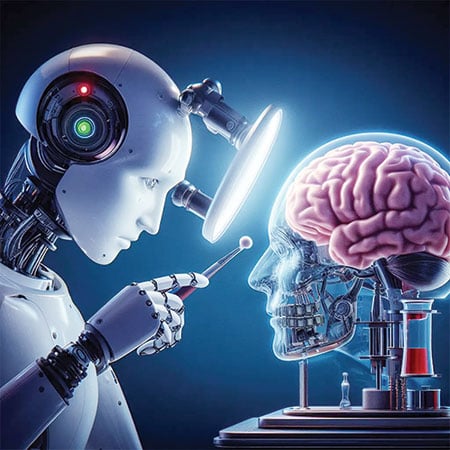
The most transformative shift in 2026 is AI’s evolution from a tool that summarizes research to one that actively participates in scientific discovery. According to Peter Lee, President of Microsoft Research, AI systems are now generating hypotheses, controlling laboratory experiments, and collaborating with both human and AI research colleagues across physics, chemistry, and biology.
This development has profound implications for Pakistani researchers. The country’s scientific community, which has historically faced resource constraints, could leverage AI research assistants to accelerate discoveries in fields critical to national development, from agricultural innovation to pharmaceutical development. The democratization of advanced research tools means that a talented Pakistani scientist with limited lab resources can now compete on the global stage.
Dr. Hassan Raza, a computational biologist at LUMS, sees this shift as revolutionary. “AI is bridging the resource gap between developed and developing nations in research. A graduate student in Lahore can now run simulations that would have required million-dollar equipment just five years ago.”
While lithium-ion batteries have powered the mobile revolution, 2026 is witnessing the commercial breakthrough of sodium-ion technology. These batteries, made from abundant materials like salt, offer a cheaper and safer alternative to lithium, with China leading the charge in manufacturing and deployment.
For Pakistan, this development couldn’t be timelier. With the government showcasing BYD electric vehicle assembly at the ITCN Asia 2026 expo and pushing for localized manufacturing under the Special Technology Zones Authority, sodium-ion batteries present an opportunity to leapfrog directly to next-generation energy storage without betting on volatile lithium supplies.
Industry analysts project that sodium-ion batteries will power grid storage systems and affordable electric vehicles worldwide. Pakistan’s abundant salt resources, particularly at Khewra, could position the country as a future supplier in this emerging market, but only if strategic investments are made now in research and manufacturing capabilities.
One of the most fascinating developments in 2026 research is neuromorphic computing – processors designed to mimic the human brain’s neural networks. Intel’s Hala Point system can simulate 1.15 billion neurons while delivering four to 16 times greater energy efficiency than traditional computing systems.
This technology addresses one of computing’s most pressing challenges: energy consumption. As AI data centres demand gigawatts of power – equivalent to entire nuclear power plants – neuromorphic chips offer a path toward sustainable artificial intelligence.
For Pakistan, facing chronic energy deficits that constrain industrial growth, neuromorphic computing represents both challenge and opportunity. While the country works to attract data centre investments, focusing on energy-efficient computing architectures could provide a competitive advantage in regional markets.
Medical technology in 2026 is witnessing the dawn of personalized gene therapy. Baby KJ, at just seven months old, recently became the first person to receive a customized gene-editing treatment, with clinical trials now planned for bespoke genetic medicines that could be approved within years.
Pakistan’s pharmaceutical sector, already producing generic medications for regional markets, faces a strategic decision: invest in advanced biotech capabilities now, or risk becoming dependent on imported gene therapies in the future. The country’s National AI Policy and upcoming Indus AI Week suggest government recognition of biotechnology’s importance, but sustained investment and international collaboration will be crucial.

Repository intelligence: smarter software development
For Pakistan’s booming IT sector – which has pushed exports toward $4 billion – 2026 brings “repository intelligence,” AI that understands not just individual lines of code but the relationships and history behind entire software projects. According to GitHub’s chief product officer Mario Rodriguez, this context enables AI to make smarter suggestions, catch errors earlier, and automate routine fixes.
This development directly impacts Pakistan’s approximately 300,000 IT professionals and thousands of startups. As local developers compete for international contracts against global talent, repository intelligence tools level the playing field by amplifying individual productivity. A freelancer in Karachi can now deliver enterprise-grade software quality without a large team.
These global research breakthroughs arrive as Pakistan attempts its own technological transformation. The government’s announcement of Indus AI Week 2026, running from February 9 to 15, signals serious intent to move beyond dialogue toward adoption. Federal IT Minister Shaza Fatima Khawaja emphasizes that the event builds on Pakistan’s National AI Policy to promote responsible technology use.
Similarly, ITCN Asia 2026 in Lahore showcases local assembly of global brands including BYD electric vehicles, Google Chromebooks, and Samsung electronics, demonstrating Pakistan’s pivot from pure technology consumption toward manufacturing.
Yet challenges remain formidable. Pakistan ranked 99th in the Global Innovation Index in 2025, reflecting persistent gaps in research and development spending, intellectual property protection, and infrastructure quality. The country allocates far less to R&D as a percentage of GDP compared to regional competitors like India and China.
For Pakistan to capitalize on 2026’s research breakthroughs, several strategic priorities emerge.
First, the country must dramatically increase research and development investment. Current spending remains below 0.3 percent of GDP, far short of the 2 percent to 3 percent invested by innovation leaders. Without this foundation, Pakistan will remain a technology consumer rather than creator.
Second, Pakistan needs targeted bets on specific technologies aligned with national strengths. Sodium-ion battery research leveraging domestic salt reserves, AI applications for agricultural productivity, and energy-efficient computing for power-constrained environments could yield competitive advantages.
Third, the diaspora of talented Pakistani scientists and engineers working globally represents an untapped resource. Creating mechanisms for knowledge transfer and collaboration between overseas experts and domestic institutions could accelerate capability building.
Fourth, Pakistan must fix its education-to-employment pipeline. Training one million AI professionals, as the government envisions, requires not just coding bootcamps but foundational improvements in mathematics and science education from primary school onward.
The upcoming Indus AI Summit on February 9 at Islamabad’s Jinnah Convention Centre will test whether Pakistan can translate policy into practice. With ministers, international delegates, and innovators gathering to chart the country’s AI roadmap, the summit represents a moment of accountability – are these genuine commitments or familiar rhetoric?
The technology breakthroughs of 2026 – from AI-powered scientific discovery to next-generation batteries and personalized medicine – will reshape global economic hierarchies. Nations that successfully harness these innovations will prosper; those that don’t will fall further behind.
Pakistan stands at a crossroads. Its youth bulge could power a digital revolution, or become a liability if jobs don’t materialize. Its recent economic stabilization could fund technological leapfrogging, or evaporate if reform momentum fades.
What’s clear is that standing still isn’t an option. The technology gap between developed and developing nations isn’t narrowing through passive observation; it widens daily. Pakistan needs urgency matching its ambition.
As research laboratories worldwide push boundaries in AI, energy storage, computing, and biotechnology, Pakistan’s response will determine whether the country becomes a participant in the fourth industrial revolution or merely a spectator watching from the sidelines.
The tools are available. The talent exists. The question is whether Pakistan can mobilize the vision, investment, and execution to seize this technological moment before the window closes.
The writer is a NUST IS scholar