The legend I have the privilege of recounting now is more than just a name in a record book to me....
GROUND REALITY
The legend I have the privilege of recounting now is more than just a name in a record book to me. He embodies a kindred spirit I had never met. When I am tired, I think of his discipline. When I am hurt, I remember how he got back up. When I win, I think of his humility. When I lose, I remember his grace.
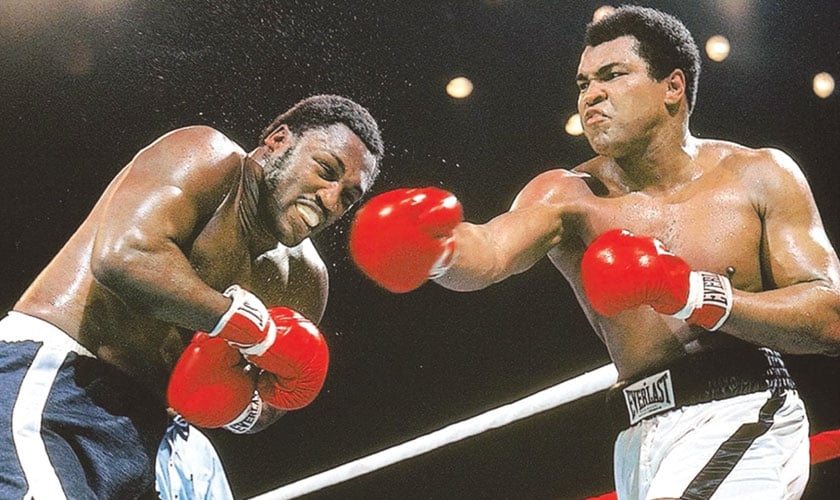
So, who comes to mind when you talk about courage, honesty and true greatness? For me, it has always been Muhammad Ali. In my eyes, he was more than ‘the greatest’. He was truth in a pair of boxing gloves, a fighter inside the ring and a fighter outside it. He was bold, fearless and unbelievably determined.
Born in Louisville, Kentucky, in 1942, the boxer known first as Cassius Clay began his training at the age of twelve. If this were a headline, it would have read from day one: he was extraordinary. He possessed a rare combination of physical talent and fierce mentality. He matched his speed with relentless training, his bravery with absolute conviction and his energy with a champion’s poised confidence.
By the time he won the Olympic gold medal in 1960, his exceptional status had already achieved global recognition. Soon after, the Heavyweight Championship of the World was his, a victory achieved through stunning, never-before-seen speed and tactical elegance. He moved like no heavyweight ever had. His iconic phrase, ‘Float like a butterfly, sting like a bee,’ served as both his philosophy and his visible action, round after round.
What made Ali the best was a champion’s mind in a fighter’s body, an iron will behind lightning-fast fists. He believed that you must plant the flag of victory in your own mind before you can claim any territory in the ring. Saying ‘Victory is mine’ was how he won that inner battle.
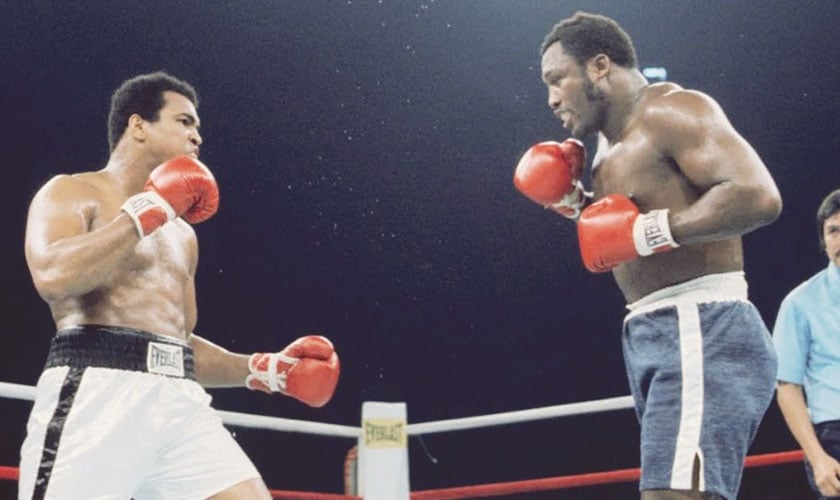
When he said, “I am the greatest,” he was not lying; he was leading, and the first person he had to convince was himself. He taught young people everywhere that if you do not believe you are great, the world will never see your greatness. Ali proved that the spotlight and the trophies arrive only after the inner battle is won. The real work was the soul’s debate he fought with himself every day.
His conviction and nobility earned him a legacy that outshone his championships. In 1964, he shed the name Cassius Clay, converting to Islam and being reborn as Muhammad Ali. This decision was a bold one, especially at a time when America was struggling with racism, discrimination and deep social divisions. Many questioned him, attacked him and criticised his choice, but Ali remained firm. He was a one-man revolution against the ordinary. He chose his own identity and stood proudly in it. He did not just knock out opponents; he knocked down the doors of expectation.
His greatest test came when the US government drafted him for combat duty in the Vietnam War. Ali refused, citing his religious beliefs and moral convictions. He stated that he had no right to take a life that had not threatened his own. He stood for peaceful dialogue rather than coercive power. His refusal caused global outrage and cost him his career, wealth and reputation. Authorities stripped him of his heavyweight title, imposed a boxing ban of more than three years and pursued criminal charges that carried a possible prison sentence. Ali accepted these penalties without regret and refused to back down.
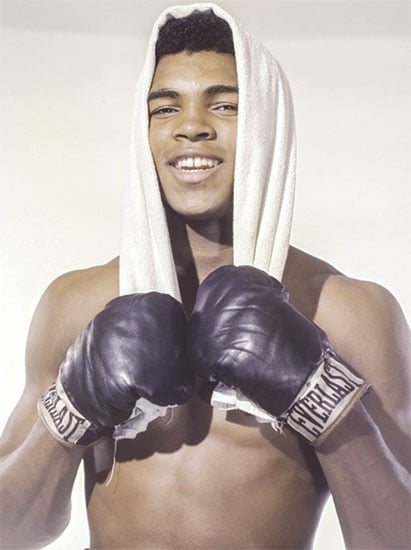
His name became legendary because of one defining act: the courage to stand alone for conviction. Many people disagreed with him at first, but with time, the world recognised the bravery of his stance. He gave up the championship belt around his waist to keep the belt of integrity around his soul. That was the only title that truly mattered.
When he returned to boxing, he gave the world some of the most unforgettable fights in history. From the ‘Fight of the Century’ to the ‘Rumble in the Jungle’ and the ‘Thrilla in Manila’, Ali redefined stamina, intelligence and an unconquerable heart. He fought with passion, strategy and the heart of a lion.
As the years passed, Ali faced health challenges due to Parkinson’s disease, but the champion within him refused to be defeated. He travelled the world not for applause, but as a messenger of peace, a voice for unity and a symbol of kindness. He became a devoted philanthropist, a supporter of youth and a global advocate for human dignity. Even in his later years, he taught us that physical frailty does not dictate the spirit’s posture. He carried himself with grace and strength until the very end.
Today, Muhammad Ali’s legacy stands as a gift to the youth. He turns ‘Do you think I can?’ into ‘I know I can’. ‘It’s risky’ into ‘The reward is worth it’. ‘They said no’ into ‘I will create my own yes’.
He hands young people the tools: a telescope to see distant dreams, a hammer for daily effort and an unbreakable mirror that reflects their own potential. He teaches a simple truth: speak your right in every fight, and let your light reach its height.
Ali once said, “Don’t quit. Suffer now and live the rest of your life as a champion.” This is the generational fight open to all who dare: the scientist questioning reality, the entrepreneur daring to change it, the journalist reporting truth and the activist demanding justice. His life proves that greatness is a choice: discipline over ease, patience over haste, honesty over deceit and courage over fear.
Muhammad Ali remains the greatest not merely because he won in the ring, but because he won in the eyes of history. He inspired generations to aim higher, stand taller and live boldly. His legacy reminds us that a crowd may forget a bloody nose, but it will never forget the heart of a fighter who wipes it away and raises his gloves again.
Whether it was the ‘phantom punch’ that felled Sonny Liston, the poetic rhythm of ‘float like a butterfly’ that mesmerised the world, or the defiant refusal of the Vietnam draft, every chapter of Ali’s life was a lesson in building greatness. That is why he remains the undefeated champion of history, the true ‘Greatest of all time’.